
D5 gives me the courage to promise faster delivery—because I know I can do it.
Principales conclusiones
- La pregunta está vacía. Por favor, introduce un texto para traducirlo.5× Faster Production: D5’s real-time engine cuts render and iteration time dramatically.
- La pregunta está vacía. Por favor, introduce un texto para traducirlo.Higher Profitability: Faster delivery = more projects, higher rates, and repeat clients.
- La pregunta está vacía. Por favor, introduce un texto para traducirlo.Natural Light Realism: Precise lighting and translucency create emotional, believable scenes.
- La pregunta está vacía. Por favor, introduce un texto para traducirlo.Reduced Revisions: Clients approve previews quickly, shortening feedback loops.
- La pregunta está vacía. Por favor, introduce un texto para traducirlo.Accessible Learning Curve: Lucas trains students to reach professional results within days using D5.
Vista general del estudio
- Location: Brazil
- Team Size: 2–3 (up to 5 for large projects)
- Studio Type: Architectural Visualization
- Project Types: Residential, Hospitality, Commercial, Event Design
- Modeling Tools: SketchUp, 3ds Max

When Brazilian architect and visualizer Lucas Castro first saw D5 Render in a YouTube trailer, he didn’t quite believe what he was seeing—global illumination, real-time ray tracing, and cinematic lighting all happening live on screen.
At the time, he had spent years teaching Lumion and delivering visualizations the traditional way: waiting hours for each render, balancing hardware limits, and paying a steep annual license fee.
Then came one pivotal week, “I took a leap of faith. I bought it—and it paid for itself in two months.”
That single decision changed his entire business.
Today, his studio runs faster, delivers more, earns more—and inspires the next generation of visualizers to do the same.
1. Studio Megami: Visualization as a Language
Founded in 2018, Estudio Megami operates from Brazil and serves architects, developers, and construction firms across the globe.
Roughly half of Lucas’s clients are based in Brazil, with the rest spread between Europe (Netherlands, Portugal) y el Estados Unidos, including a long-time architectural partner in California.
The team stays lean—two to three artists, occasionally scaling to five for large-scale projects like Hard Rock Hotel Gramado.
For Lucas, visualization isn’t an add-on to architecture; it’s the bridge that turns ideas into belief.
Some clients can’t imagine a space from a floor plan. A good render is what makes them siente the design.
2. Why D5 Became the Core of His Workflow
Before D5, Lucas relied on Lumion. It worked—but it was expensive and demanding.
Lumion was so heavy that my computer couldn’t handle large projects. I had to split scenes, render small portions, and spend hours waiting.
Then came D5.
The same scenes that once took hours to render now take five minutes at 4K resolution. The real-time lighting engine made testing instant. And D5’s performance made even massive, vegetation-rich environments possible on his setup.
That speed didn’t just make work easier—it made new kinds of projects achievable.
With D5, Lucas began taking on projects that had once been out of reach — larger in scale, richer in atmosphere, and more cinematic in scope. Beyond traditional still images, he started producing videos, event visualizations, and expansive outdoor scenes.
Lea también: Lumion vs. D5 Render: ¿Cuál es mejor para arquitectos?
3. Hero Project: A House in the Mountains of Evergreen, Colorado
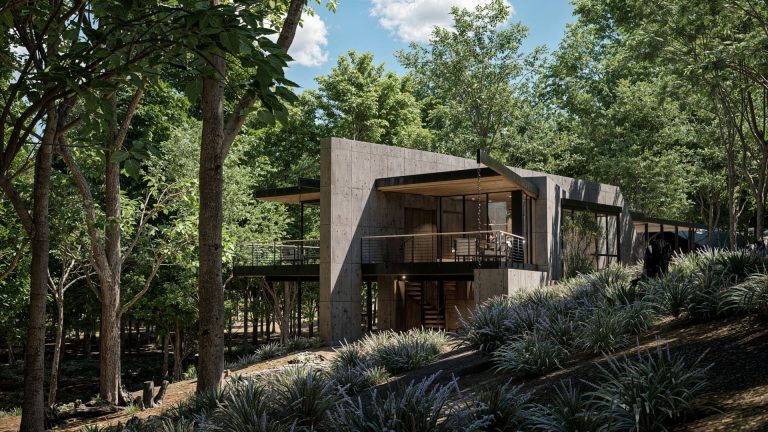
Among Lucas’s portfolio, one project stands out: a mountain residence in Evergreen, Colorado, United States, designed by a Colorado based studio, Sexton Studio.
Lucas was commissioned by Raydon Concepts, led by Brandon Ray Henderson, a long-time collaborator and D5 enthusiast. Together, they have developed a smooth transcontinental workflow—combining Raydon’s creative direction and Lucas’s visualization expertise in D5 Render.
The client, a California-based architect, provided only the SketchUp model. Everything else—the atmosphere, lighting, materials, and storytelling—was up to Lucas.
The Evergreen project challenged everything about large-scale, real-time visualization.
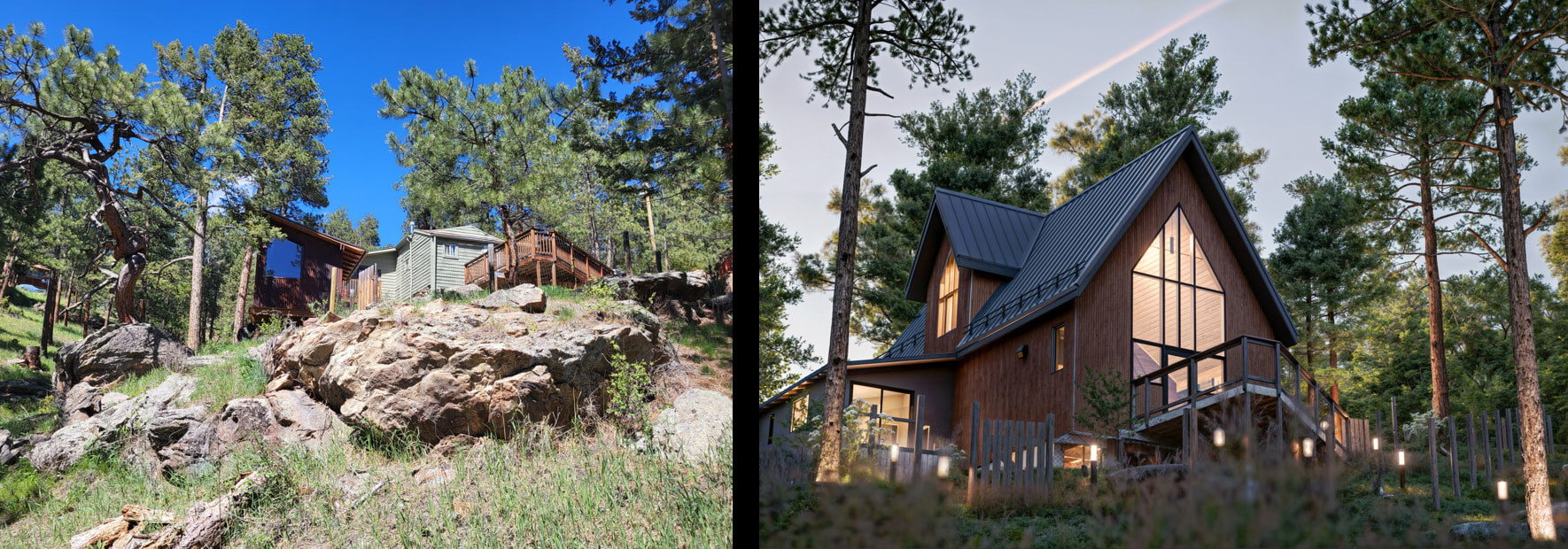
Set in the Rockies, the site spans seven blocks of mountainous terrain, covered in thousands of trees, layered rock formations, and native vegetation that demanded careful realism.
It was one of the heaviest scenes I’ve ever built. Even though D5 is optimized, the vegetation density was insane.
Each 4K image rendered in under five minutes, transforming what would once have been an overnight job into a same-day delivery.
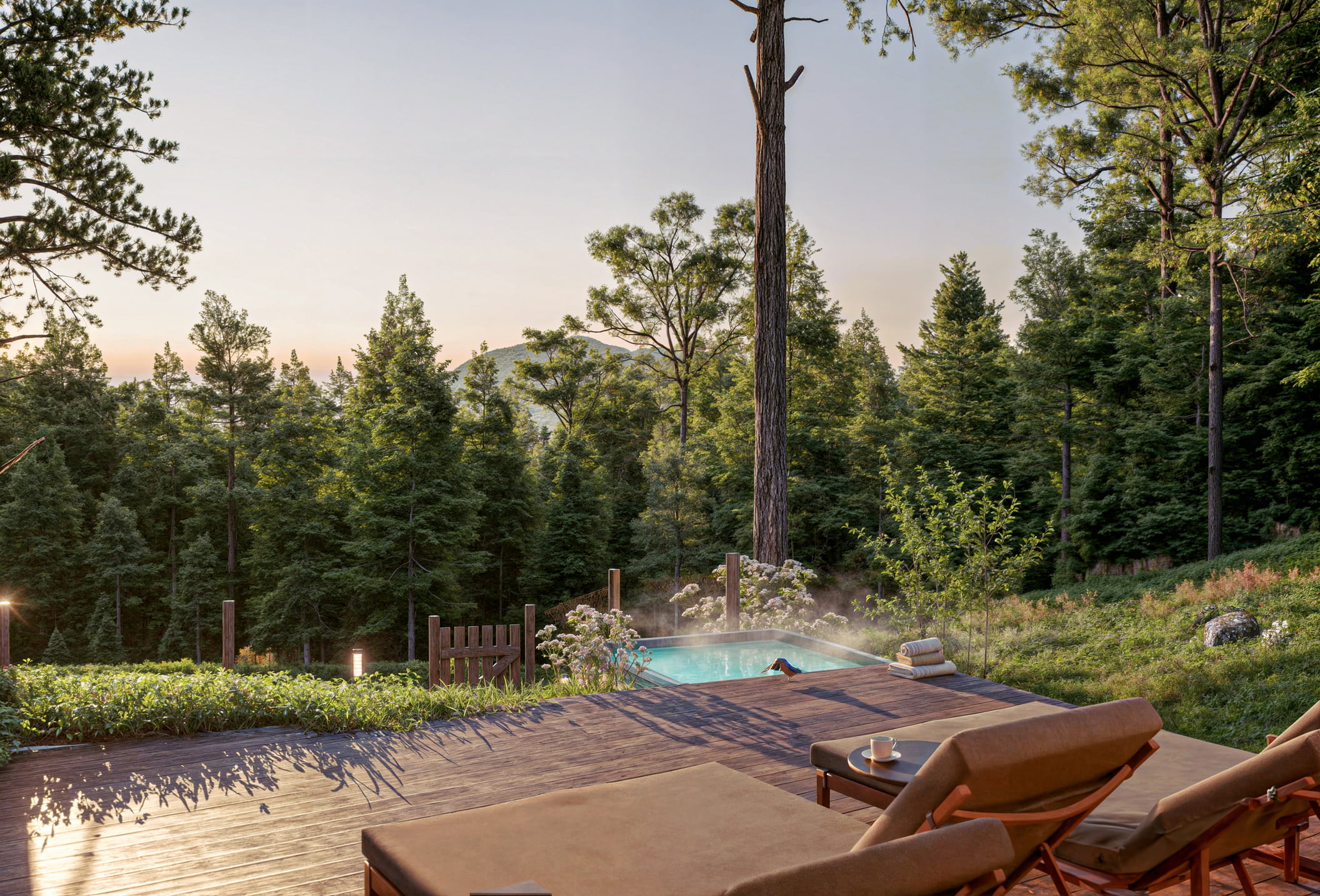
When Lucas delivered the visuals, Sexton Studio immediately shared them online—capturing the serene, tactile spirit of mountain living with near-photographic quality.
He’s now preparing another project for the same client using D5—five times larger.
Lea también: Dominio del paisajismo arquitectónico con D5 Render Terrain Tool
3.1 Designing Emotion Through Light
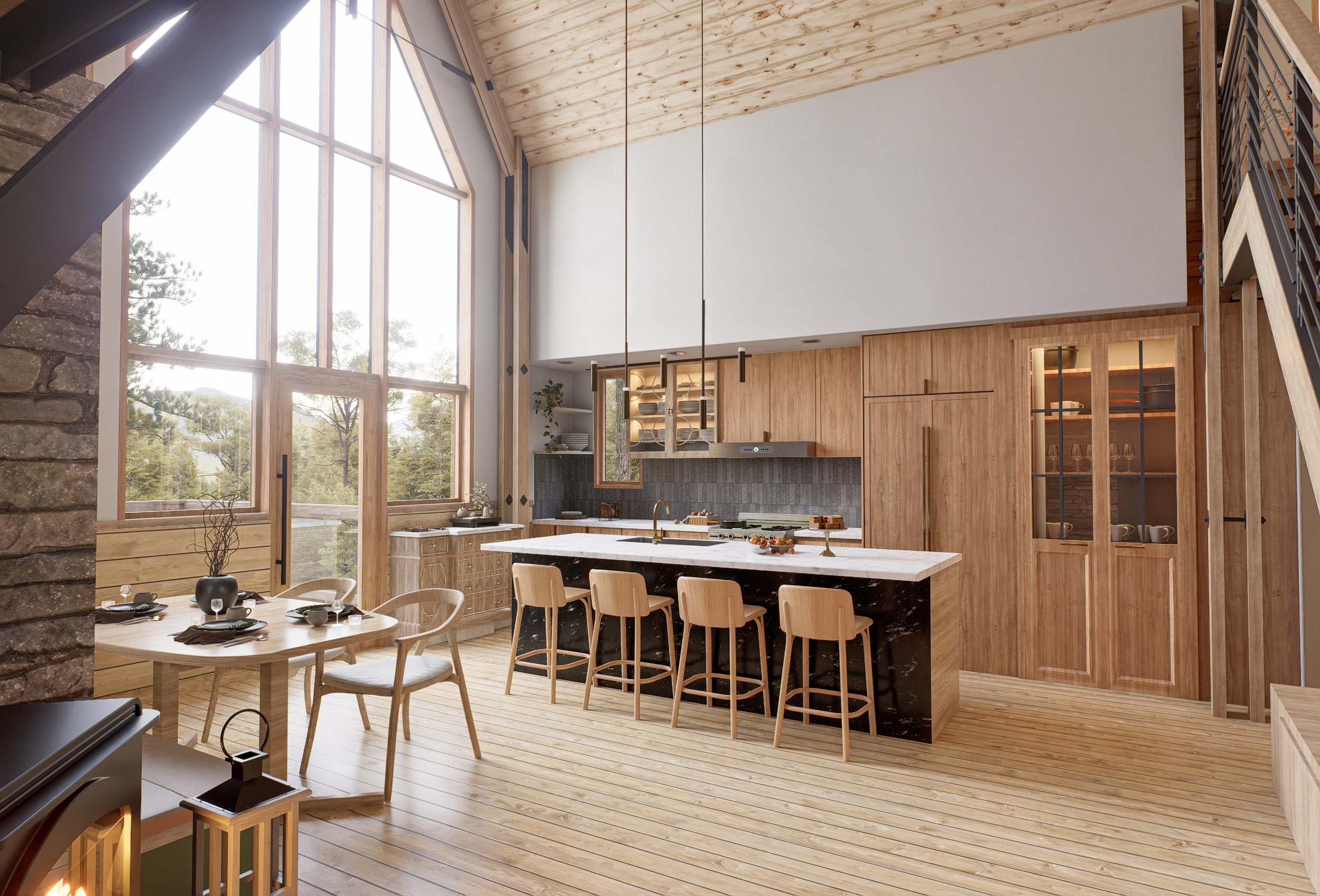
For Lucas, rendering goes beyond geometry and texture—it’s about emotion. “If you know what emotion you want to express, you can set the light to match it. Everything else—materials, colors, details—comes after.”
Every scene begins not with objects, but with light.
He shapes atmosphere before materials, using illumination to breathe life into space—to make viewers siente the story before it’s even built.
The secret behind many of his most striking images is D5’s natural lighting system.
The way the sun hits the leaves in D5—how they glow or darken—is so precise. That’s what makes the scene siente alive.
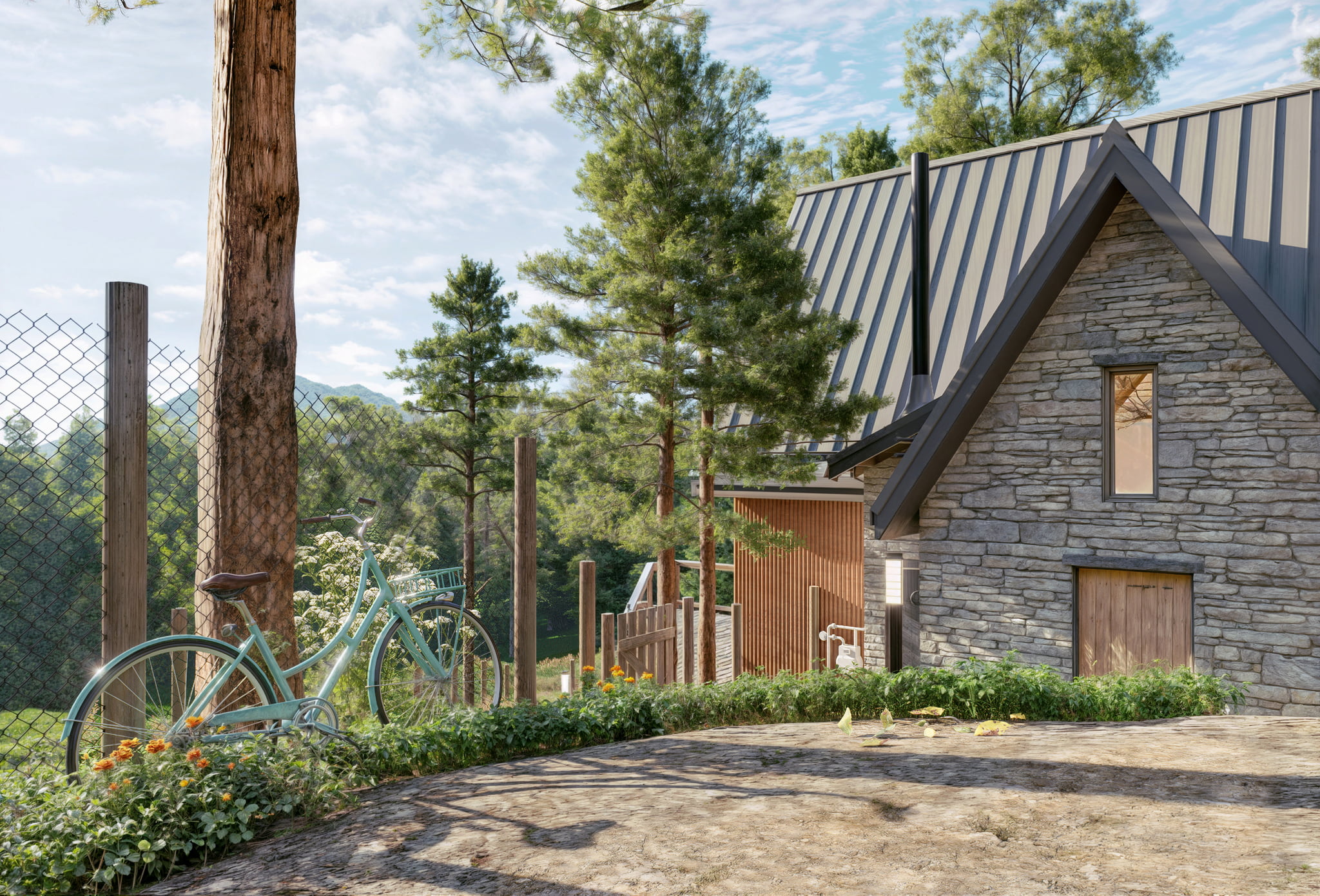
It’s a simple belief that has become the foundation of both his art and his teaching.
4. Teaching the Next Generation of Visualizers
Beyond running Studio Megami, Lucas teaches 3D visualization to students and small firms. He once taught Lumion and V-Ray—but now, he starts every class with D5.
When a student asks to learn V-Ray, I say: try D5 first. It’s easier, faster, cheaper—and the quality is on par.
He calls learing D5 “like playing a video game”—intuitive, responsive, and rewarding even for beginners. Within two days, his students can produce client-ready renders.
For Lucas, this accessibility matters. It allows new designers to focus on creativity, not settings, and helps small studios become profitable without large teams or render farms.
He’s now developing a new online course centered on D5’s Herramientas de IA—AI Make Seamless, AI PBR Material Snap, and AI Agent—to show how technology can empower artistry rather than replace it.
Lea también: La IA en la arquitectura: ¿Cómo transformar el flujo de trabajo con D5 Render?
5. Speed That Redefines What’s Possible
The power of D5 isn’t just in realism—it’s in reliability under pressure.
Lucas recalls an urgent request from an event-planning client who needed 10 images within two days. “She sent the 3D model at night. I finished everything in six hours—and even made a short video as a gift.”
A job that once took 48 hours was done in one-eighth of the time. For Lucas, that kind of agility translates directly into business growth.
- La pregunta está vacía. Por favor, introduce un texto para traducirlo.More projects per month thanks to faster turnaround.
- La pregunta está vacía. Por favor, introduce un texto para traducirlo.Higher pricing power justified by speed and quality.
- La pregunta está vacía. Por favor, introduce un texto para traducirlo.Repeat clients who trust he can deliver under pressure.
D5 gives me the courage to promise faster delivery—because I know I can do it.
5.1 Delivering Clarity—and Fewer Revisions
Real-time visualization also transformed how Lucas collaborates with clients.
Instead of rendering multiple drafts, he sends screenshots straight from D5’s viewport for quick approval.
Sometimes they approve on the first try. What they see in D5 previews already looks like the final image.
That immediacy shortens review cycles, reduces misunderstandings, and builds trust—especially with international clients working across time zones.
5.2 Results That Speak in Numbers
| Impact | Before D5 | With D5 |
|---|---|---|
| Render time (4K) | ~2 hours | ~5 minutes |
| Project turnaround (event scene) | 2 días | 6 hours |
| Revisions per project | 2–3 rounds | 0–1 round |
| Pricing power | baseline | 2–3× higher |
| ROI | slow payoff | Paid back in 2 months |
For Studio Megami, D5 isn’t just software—it’s a business partner that combines speed, realism, and confidence.
It empowers small teams to compete globally, deliver beauty under pressure, and build thriving visualization businesses.
It’s not just faster. It’s quality, simplicity, and confidence. D5 lets me deliver beauty—without stress.
- Lucas Castro, Studio Megami
6. Vea cómo D5 se adapta a su proceso
Cada estudio trabaja de forma diferente. Si quieres ver cómo D5 puede integrarse en tus herramientas de modelado y procesos de visualización específicos, ponte en contacto con nuestro equipo para hablar de tu flujo de trabajo y tus objetivos.
La pregunta está vacía. Por favor, introduce un texto para traducirlo.
7. Su trabajo merece ser el centro de atención
¿Ha transformado D5 tu forma de diseñar, presentar o colaborar? Convierte tu proyecto D5 Render en una historia que inspire a diseñadores de todo el mundo. Comparte tu viaje y deja que el mundo vea lo que es posible.
Al presentar tu proyecto, podrías:
✅ Aparecer en un estudio de caso mundial visto por miles de personas.
✅ Coorganice un seminario web de D5 y muestre su experiencia
✅ Intervenga en actos oficiales del D5 y eleve su presencia en el sector
Esto es más que un reportaje: es tu oportunidad de hacer crecer tu voz, construir tu marca e inspirar a una comunidad mundial del diseño. Comparta sus historias aquí.
 English
 Español
 Français
 한국어
한국어 日本語
日本語