
Tabla de contenido
- Parámetros ajustables del material de vidrio en D5 Render
- Cómo hacer vidrio estriado
- Cómo hacer vidrio tintado de negro
- Cómo hacer vidrio esmerilado
- Demostración de renderizado
El vidrio es uno de los materiales más habituales en la arquitectura y el diseño de interiores modernos. Es como un puente que conecta los espacios exteriores e interiores. Aunque crear vidrios bonitos con reflejos y refracciones nítidos puede resultar complicado en los motores de renderizado tradicionales, en D5 Render es realmente pan comido.
En este artículo, presentaremos en detalle cómo puedes hacer el material de vidrio que necesitas en D5.
Parámetros ajustables del material de vidrio D5
Grosor
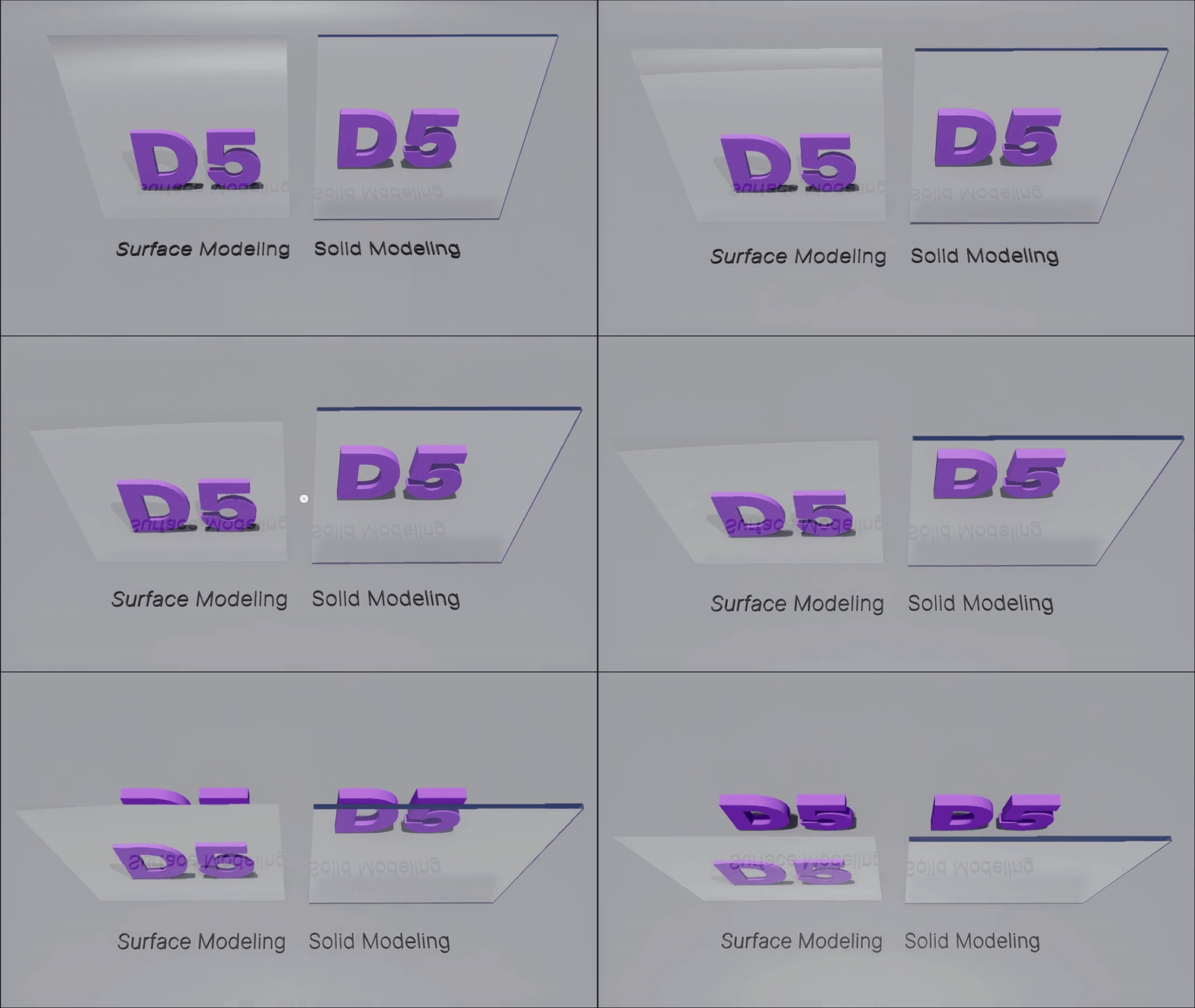
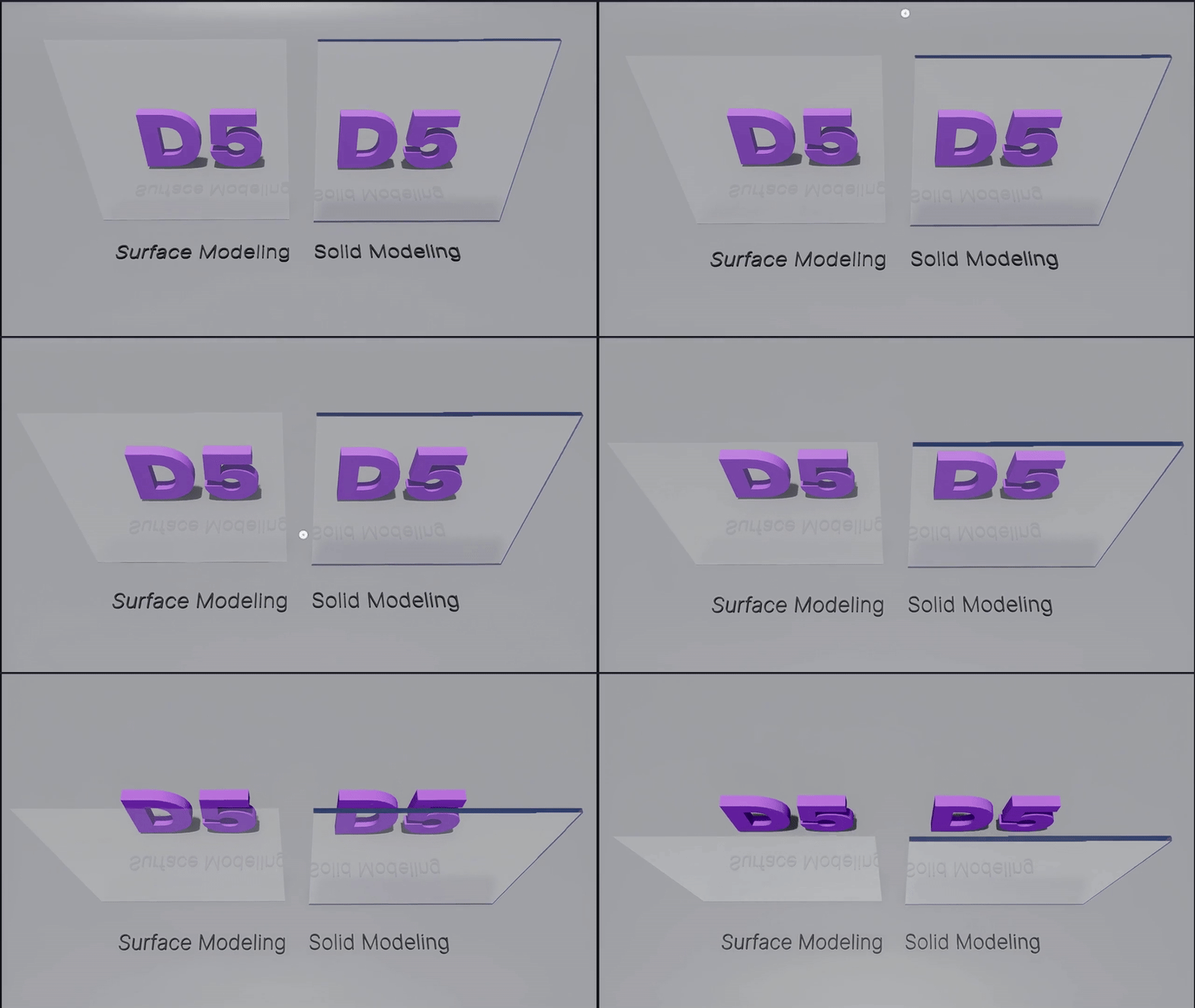
Básicamente, existen dos formas de modelar: una es el modelado sólido, que significa construir modelos de forma geométricamente correcta; la otra es el modelado de superficies con solo facetas visibles para mantener el archivo del modelo ligero.
Cuando se aplican materiales de vidrio a este último, pueden tener refracciones incorrectas. Para solucionarlo, no es necesario volver a modelar en el software DCC. Activa la opción “Grosor” en D5 Render en su lugar. El vidrio tendrá inmediatamente una refracción correcta, lo cual es bastante conveniente.
Transparencia
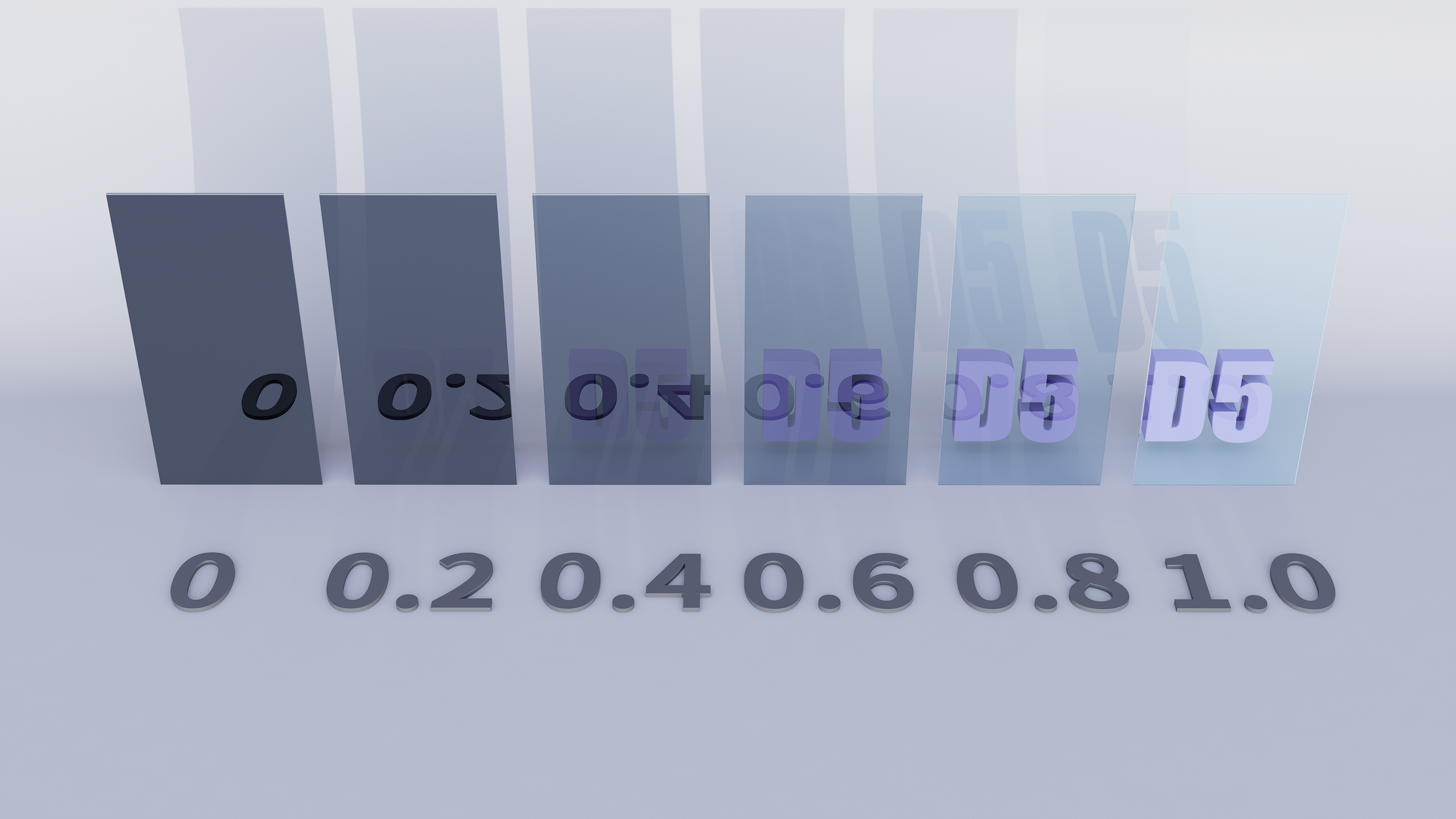
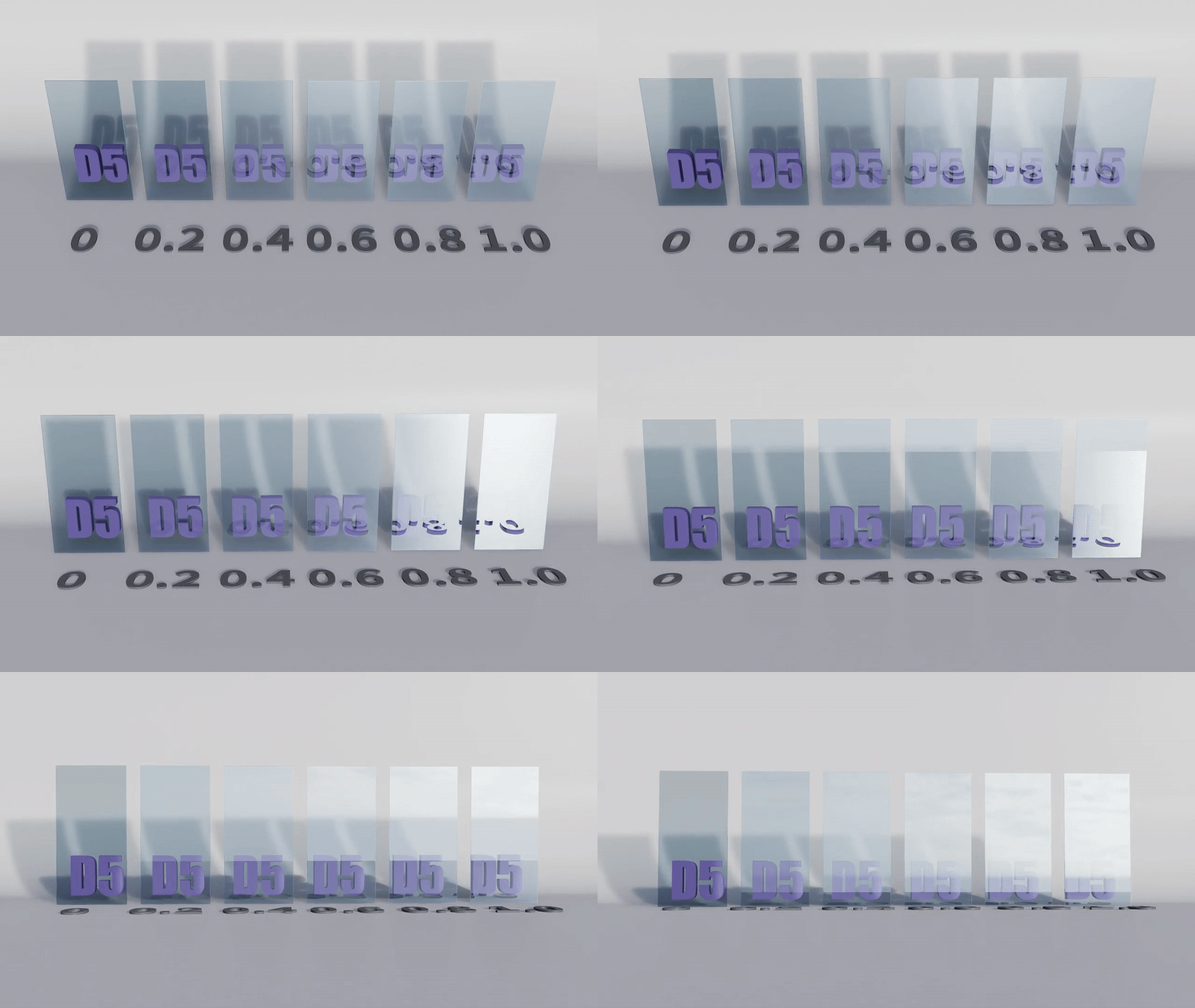
Al ajustar la Transparencia, puedes decidir cuánta luz puede pasar a través del material de vidrio.
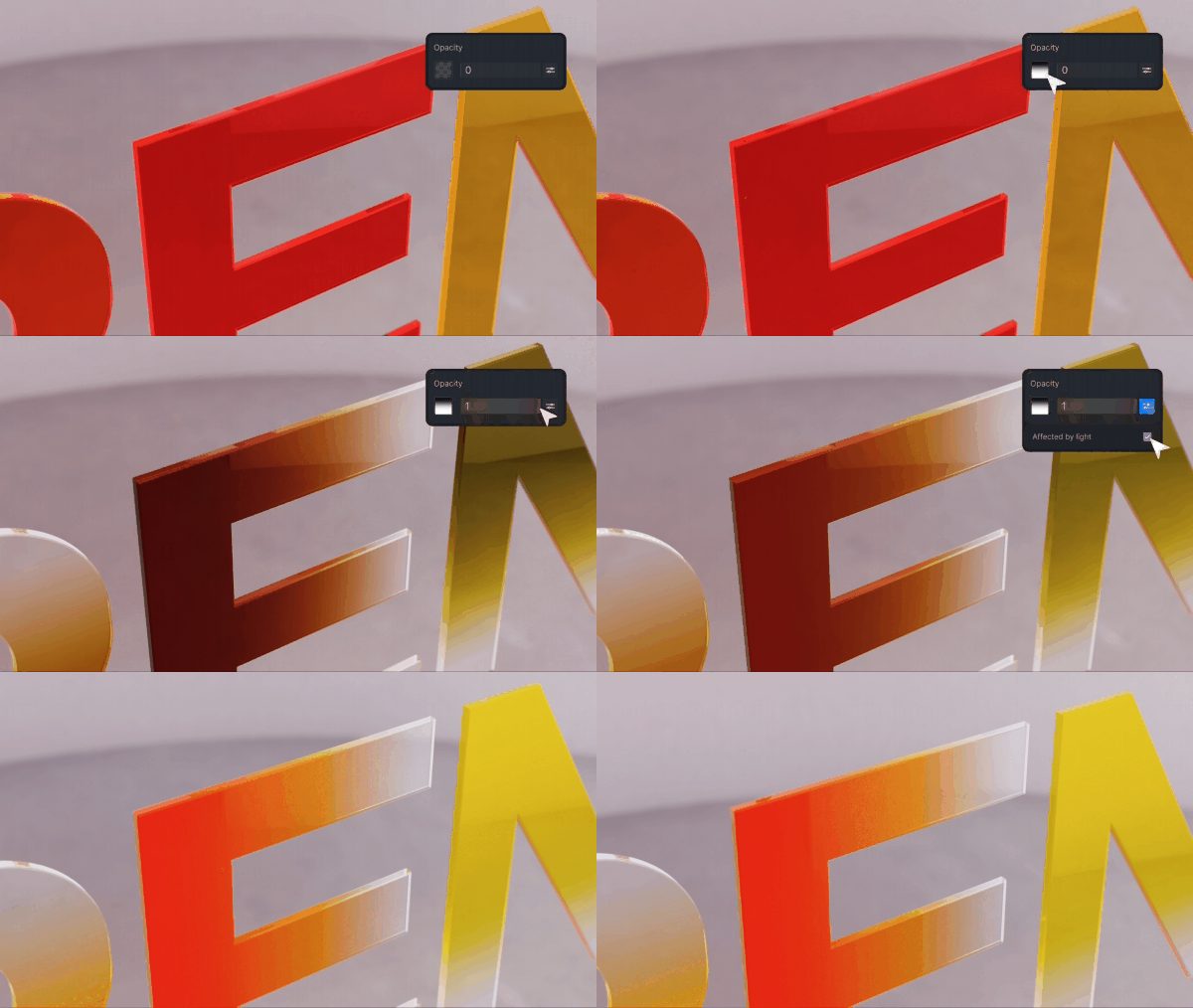
Logra efectos impresionantes como el cristal de degradado de color activando la opción ‘Afectado por la luz’. Ajustar el valor de opacidad y usar mapas en blanco y negro para controlar el patrón de opacidad permite una interacción dinámica con la luz.
Rugosidad
Controla qué tan suave es la superficie del vidrio.
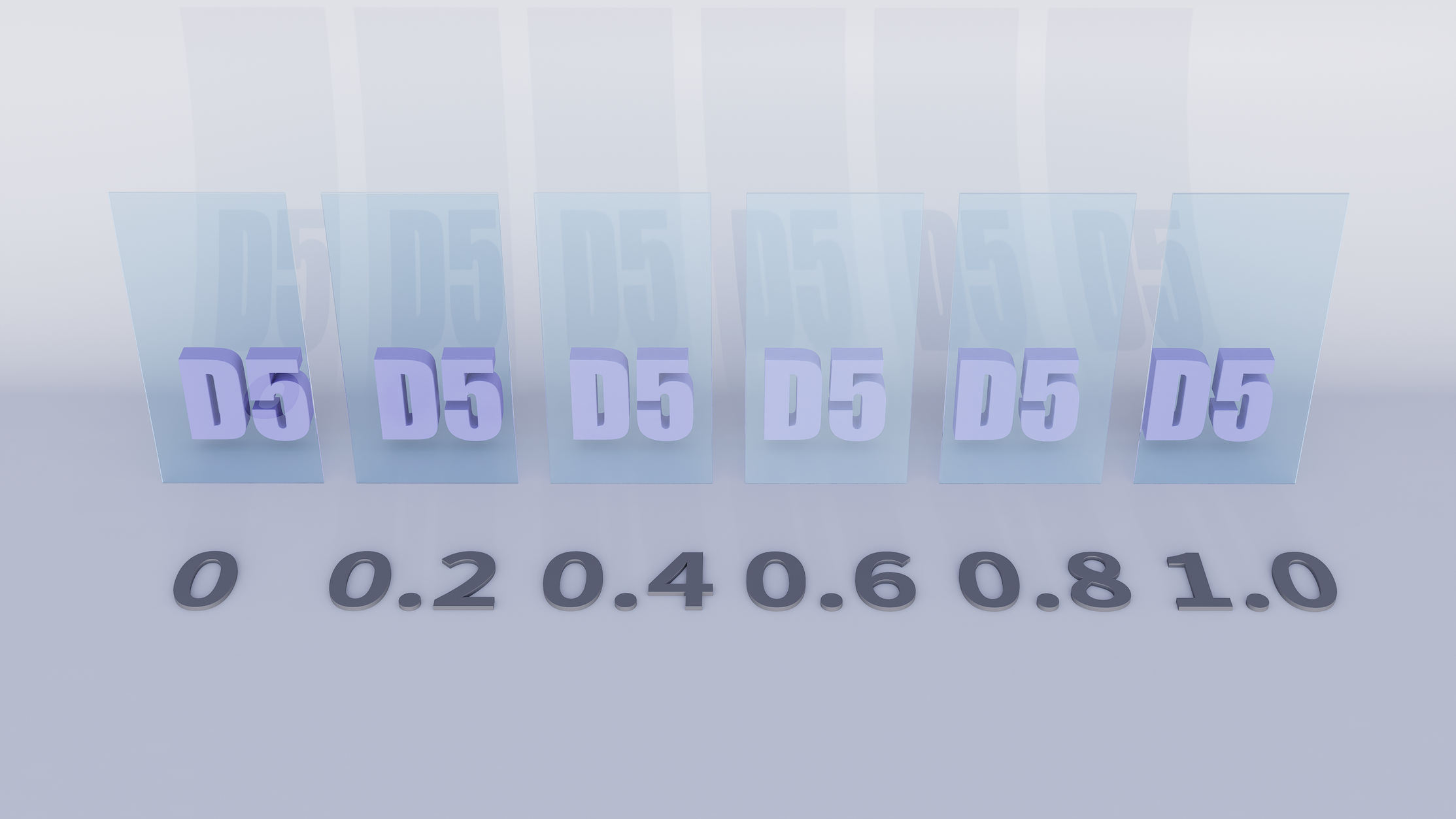
Por ahora, el efecto del vidrio esmerilado hecho con Rugosidad puede no ser evidente. Así que presentaremos un método para hacerlo en la parte posterior de “cómo hacer vidrio esmerilado”.
Especular
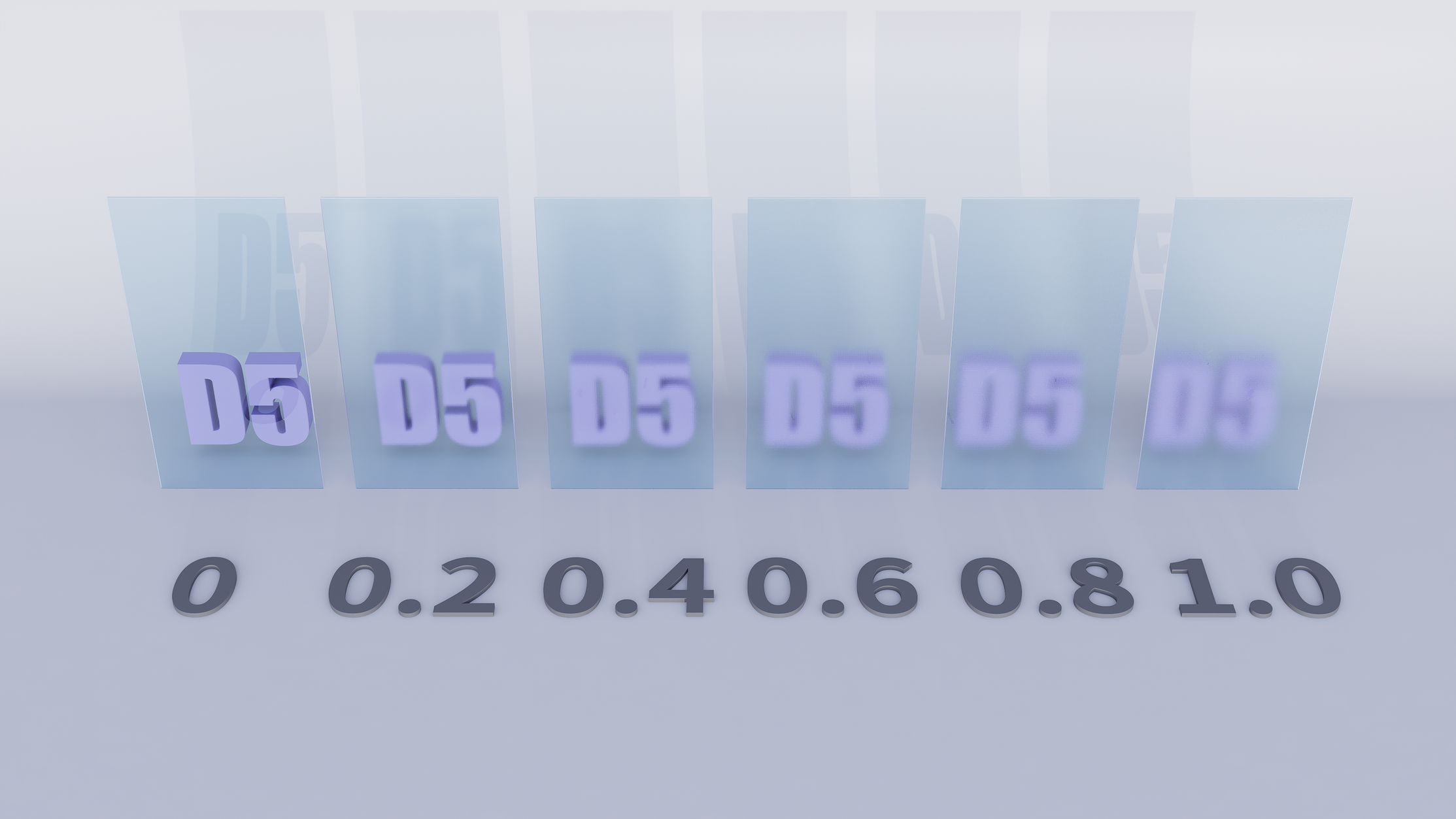
El parámetro Specular influye en cuánta luz se reflejará en el material del vidrio.
Color
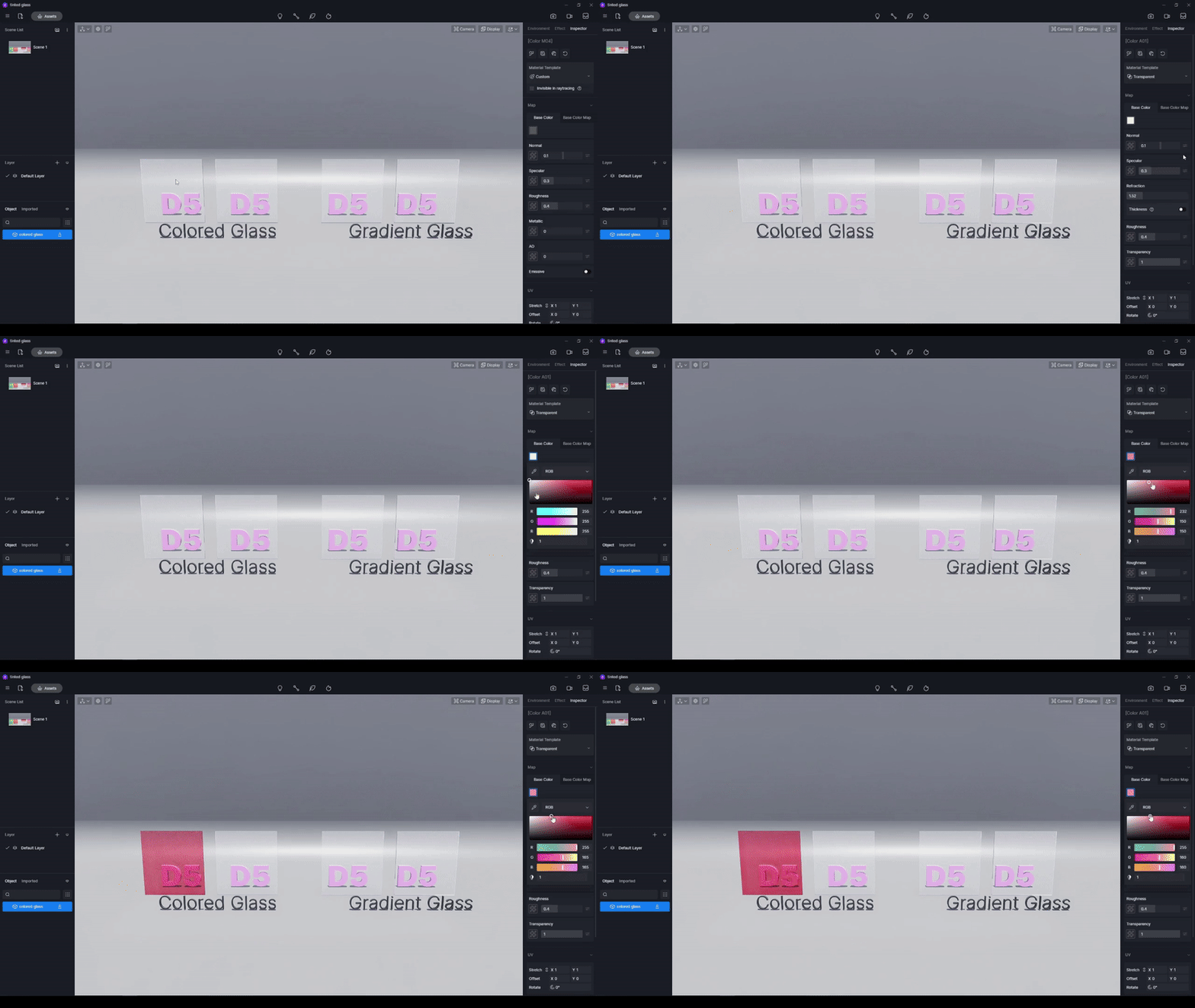
Puedes crear gafas de color sólido cambiando el color base, o gafas de color degradado con un mapa.
Cómo hacer vidrio estriado
Observando las fachadas de vidrio en el mundo real, podemos ver que tienen un reflejo parecido a ondas. Esto se debe a que el vidrio suele tener ligeras protuberancias en su superficie debido a la tecnología de procesamiento.
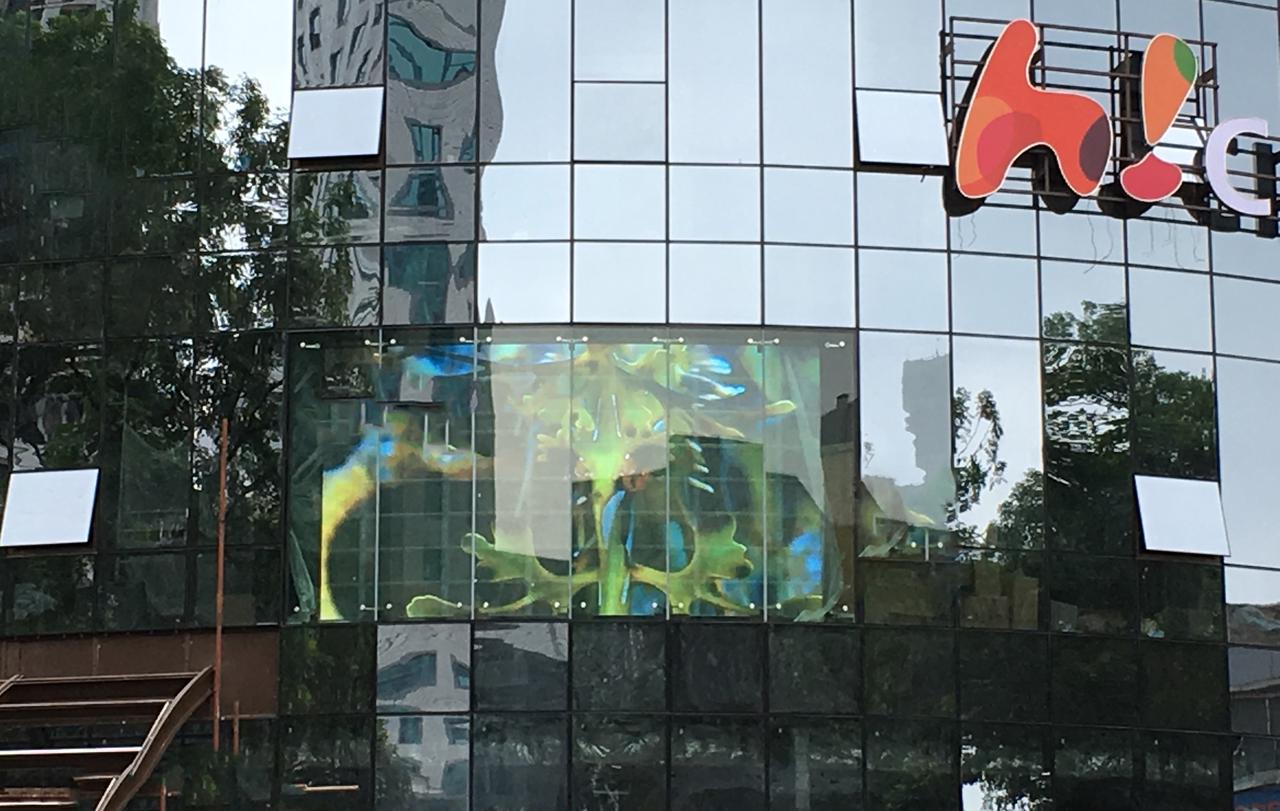
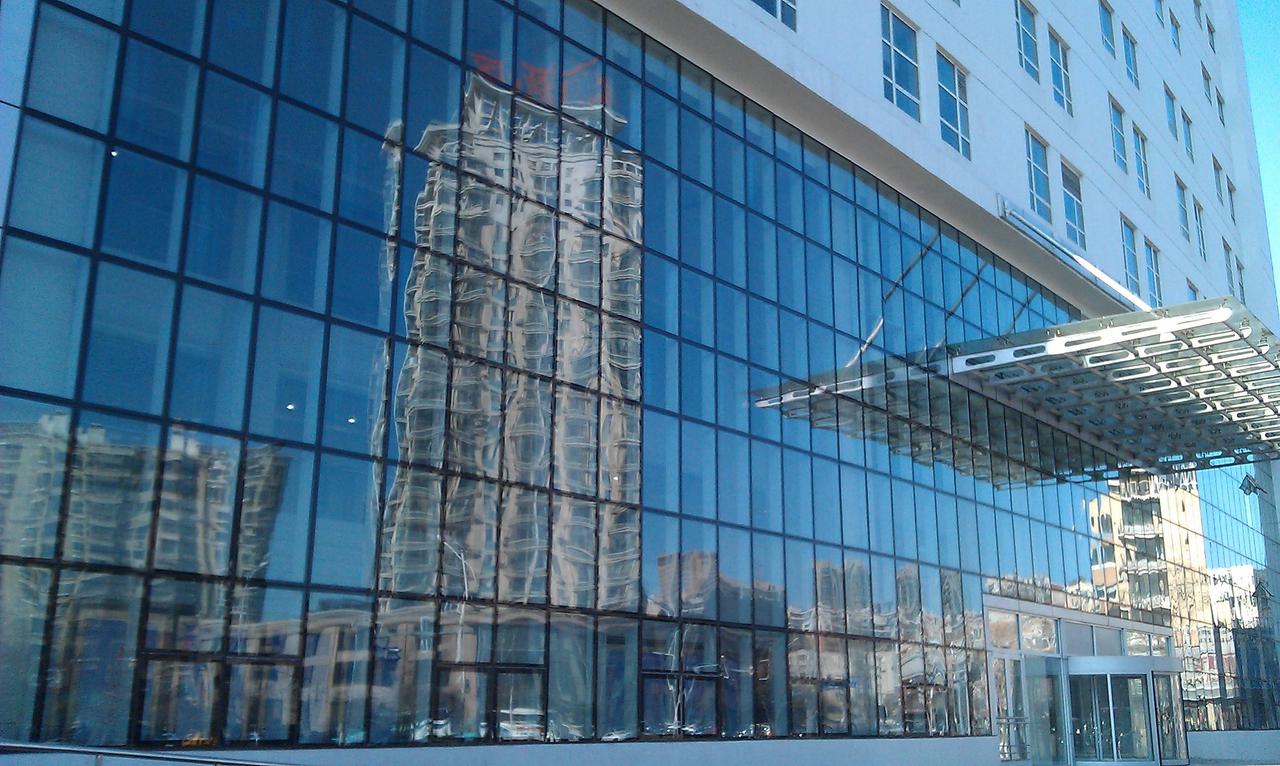
Entonces, ¿cómo se logra este efecto?
Solo necesitas uno Mapa normal.
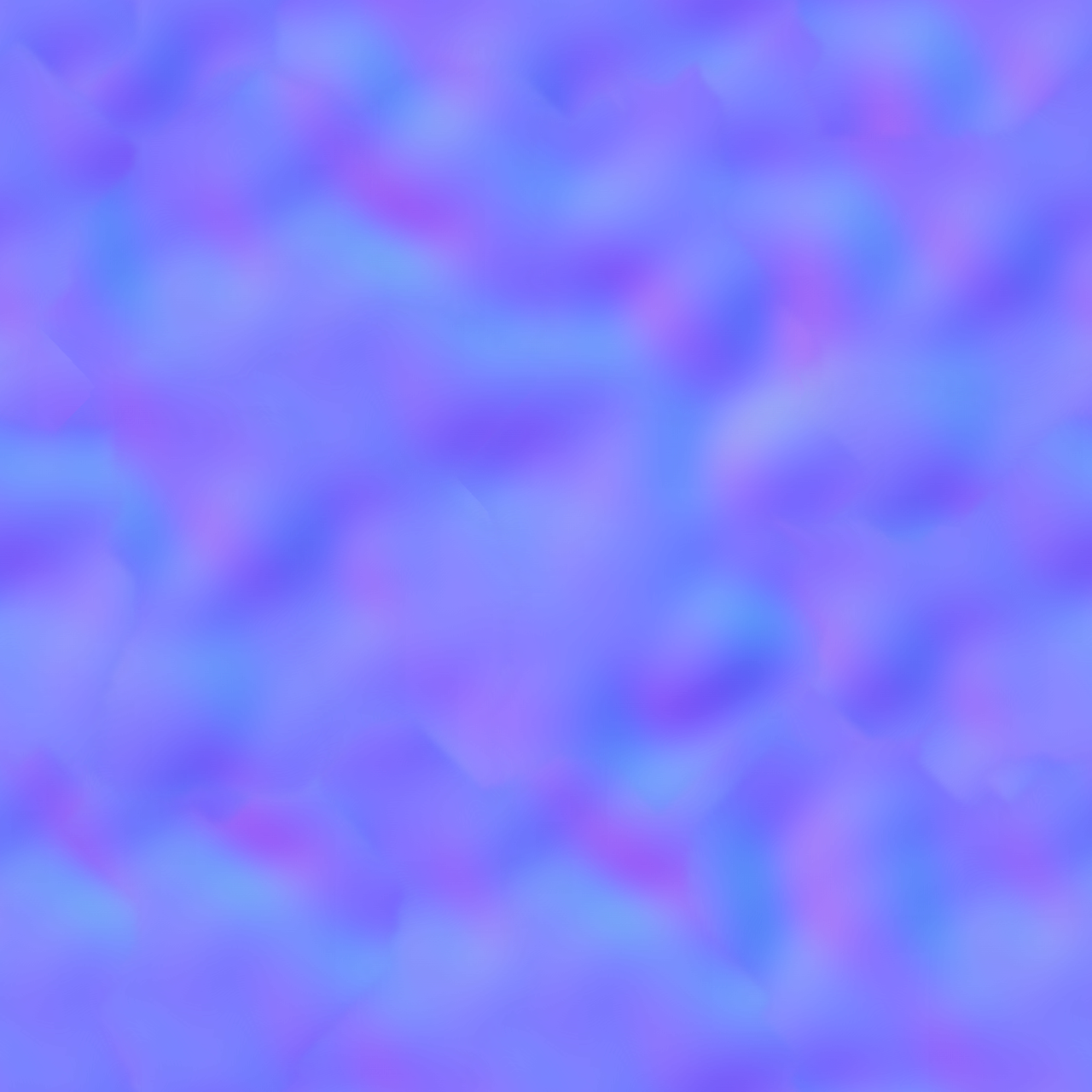
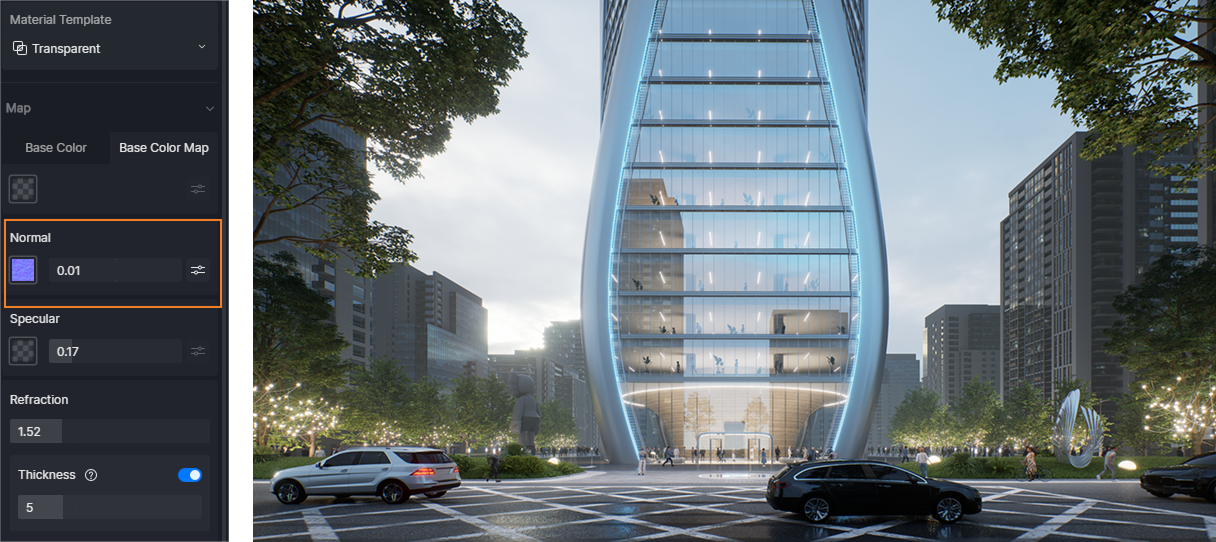
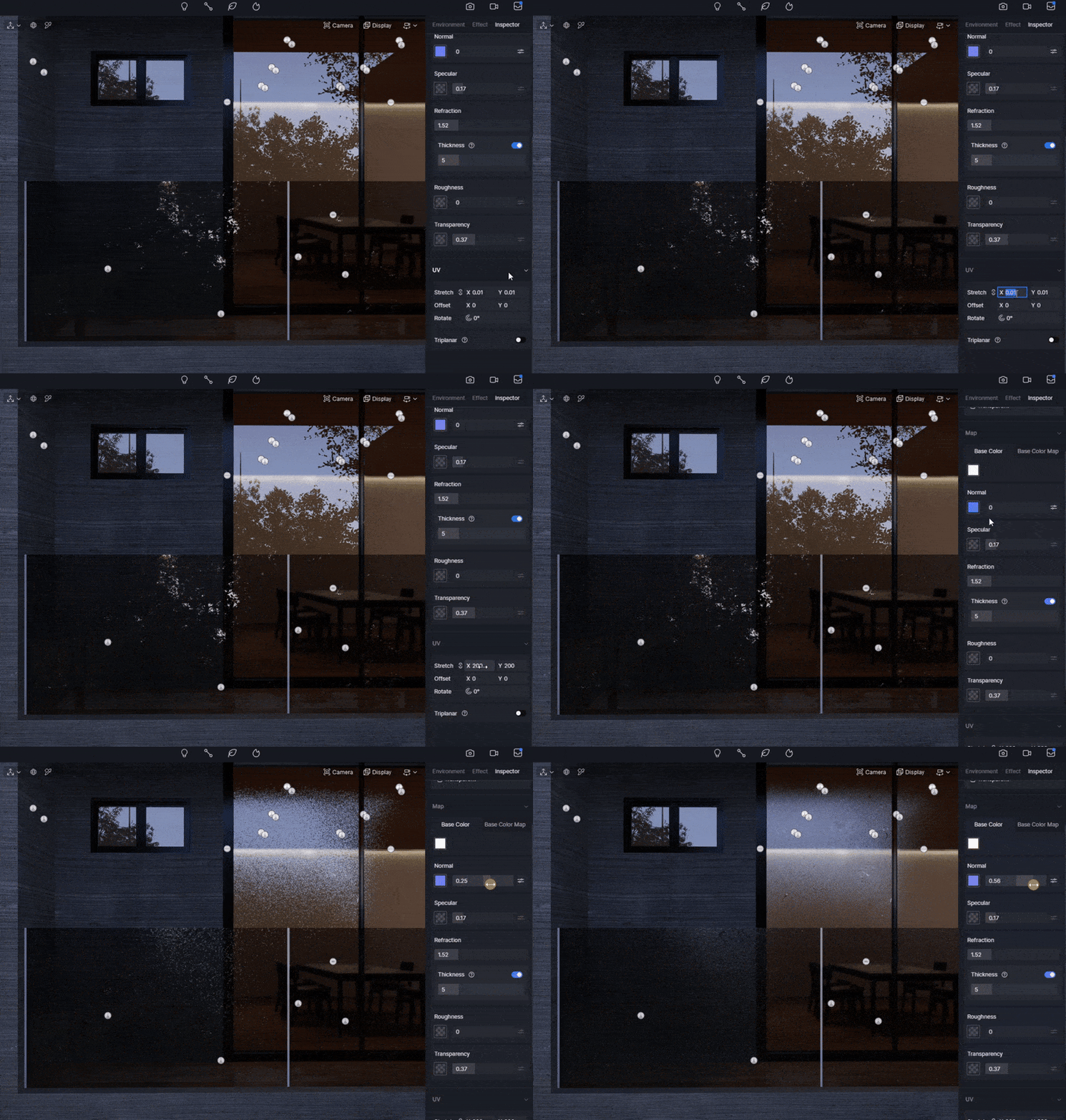
Toma este edificio como ejemplo. Para simular esos reflejos ondulados en el cristal, solo necesitas importar un mapa de normales, reducir su valor UV y aumentar el Intensidad normal un poco.
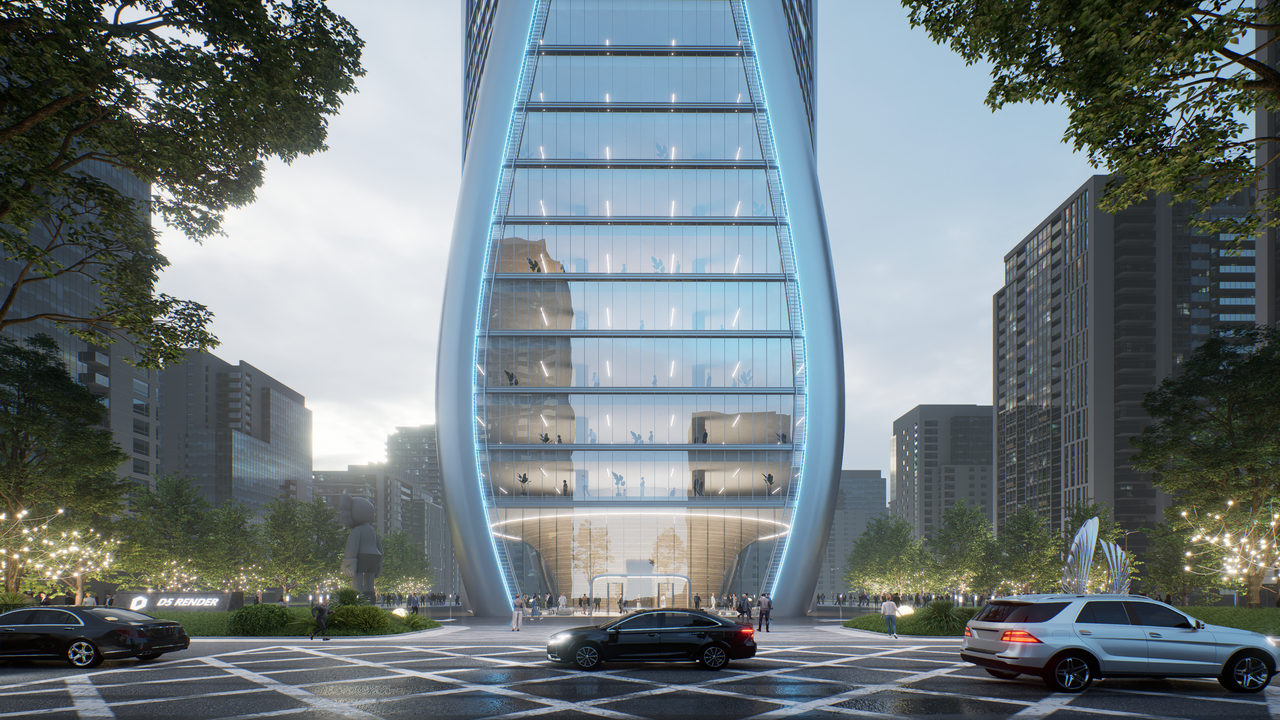
Un mapa normal también puede hacer magia cuando quieres hacer copas estriadas.
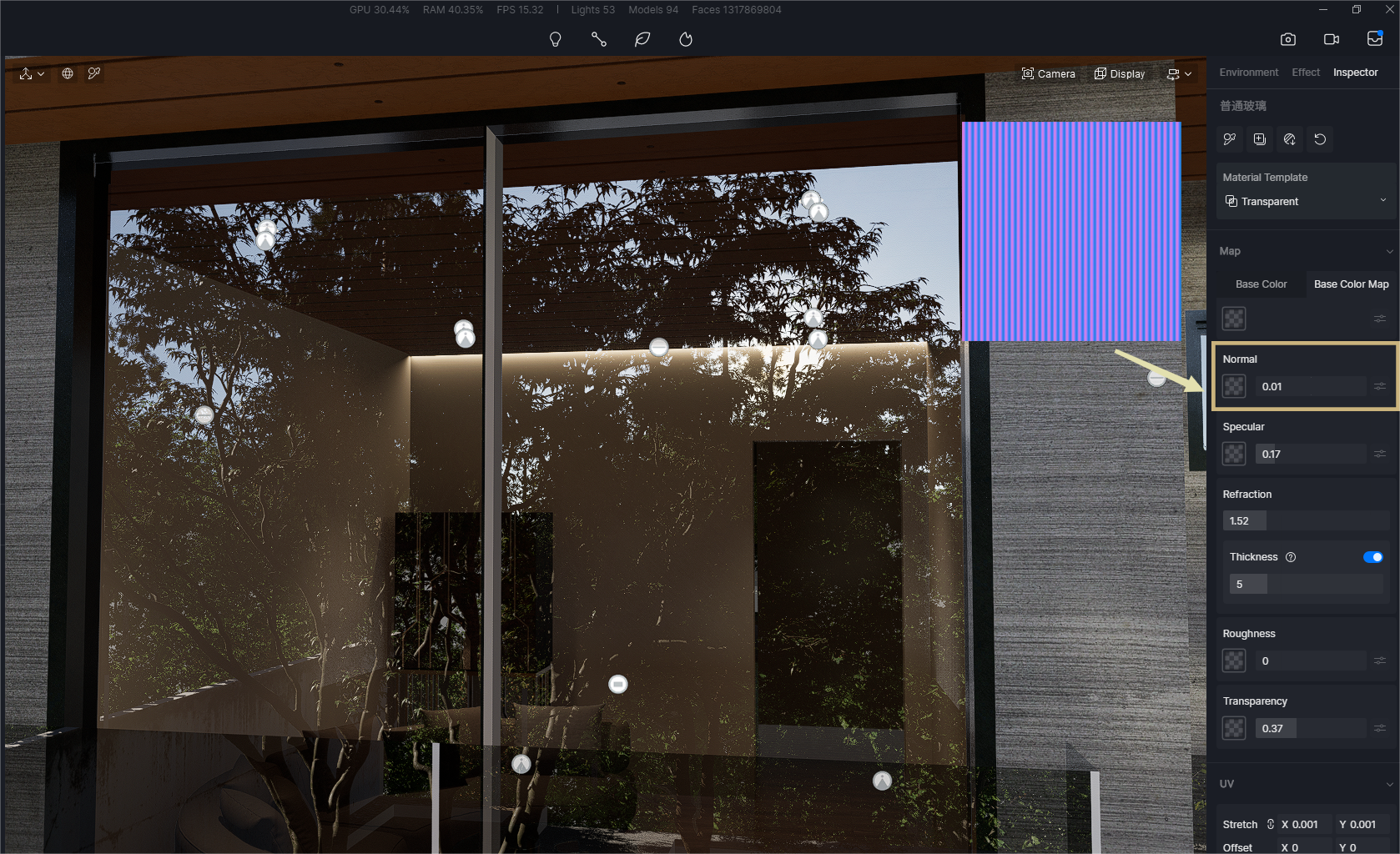
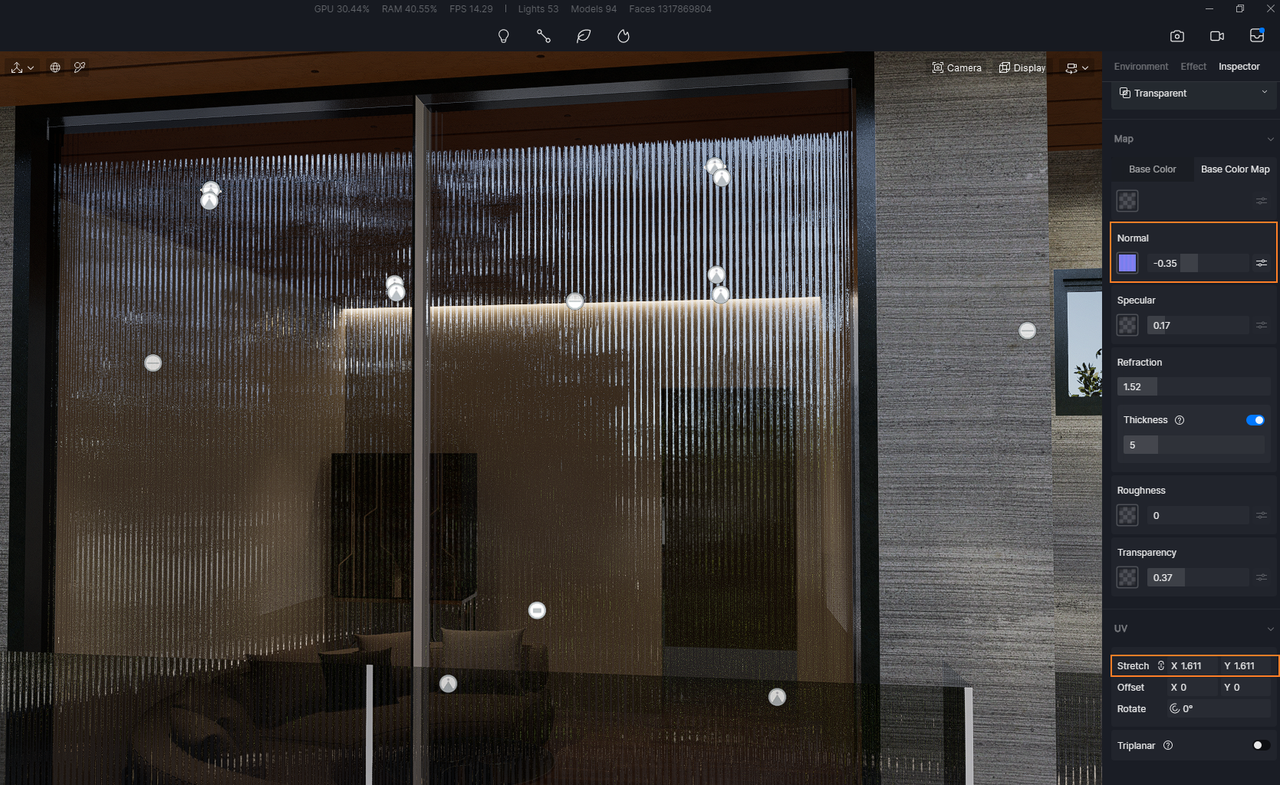
Estos pequeños cambios podrían ser el toque final de tu escena.
Cómo hacer vidrio tintado de negro
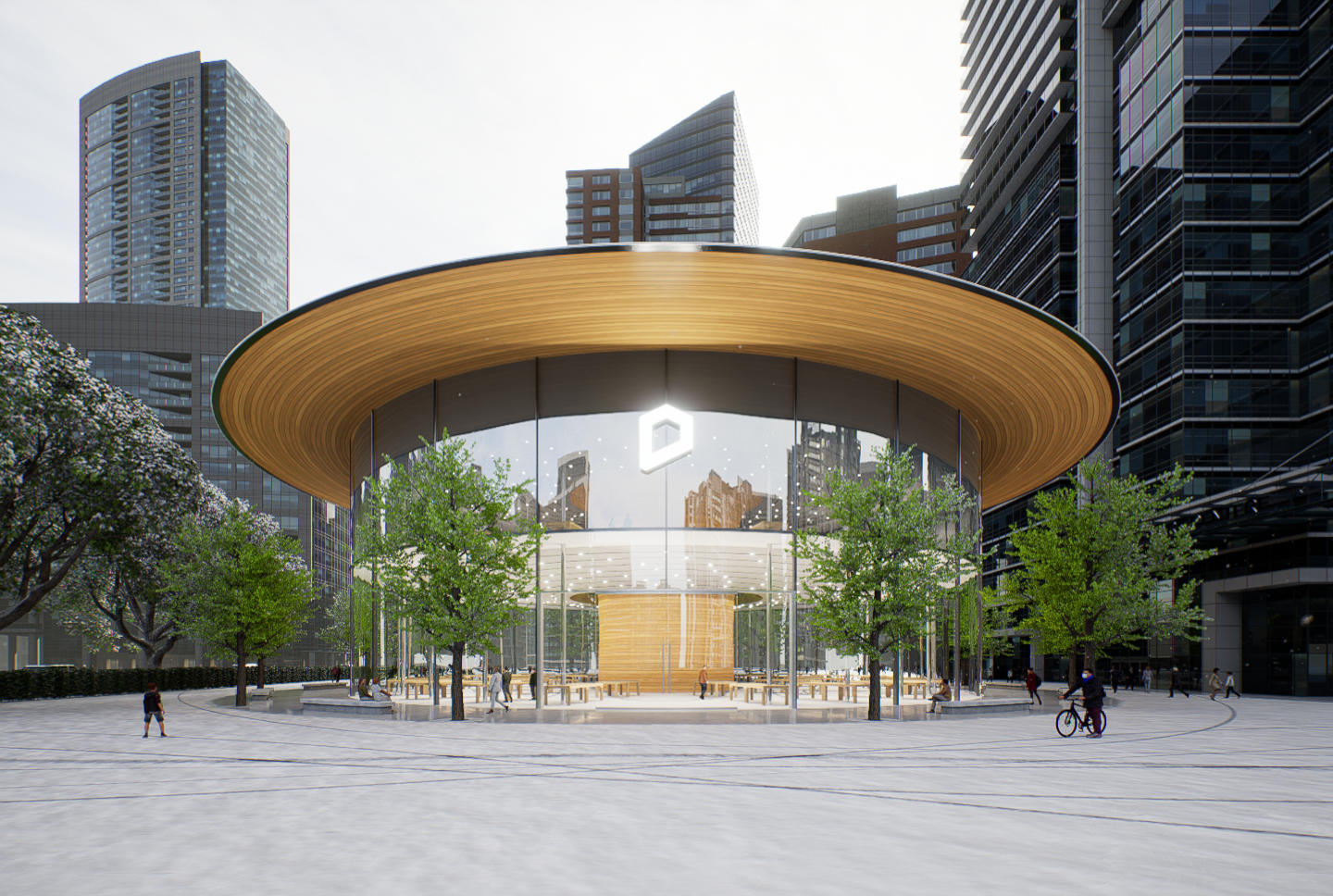
En realidad, es bastante fácil hacer una fachada de vidrio degradado como la que se muestra arriba.
Primero desplaza la superficie del modelo de la fachada. Cambia el material de la superficie desplazada a Personalizado con un mapa normal de negro a blanco.
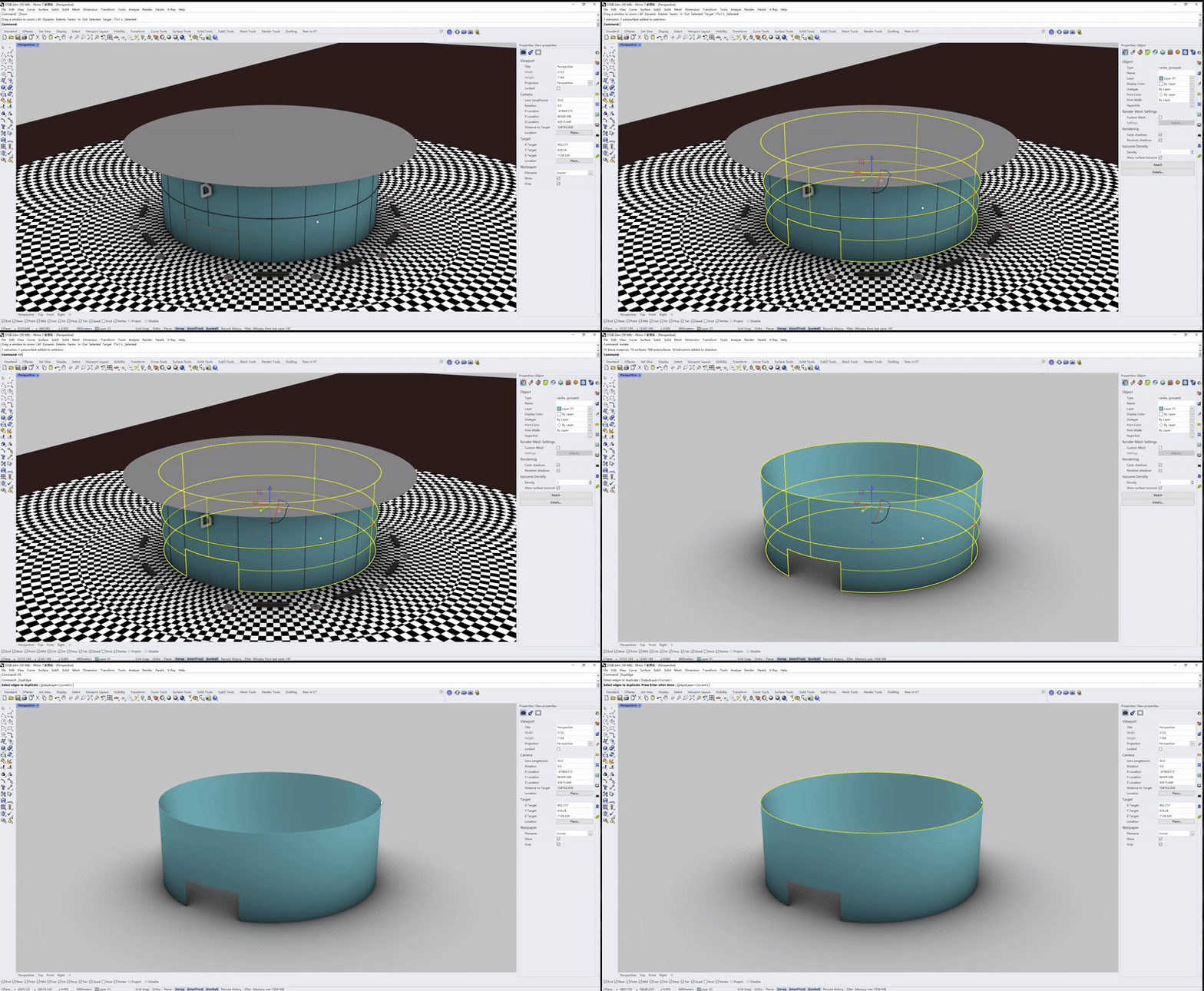
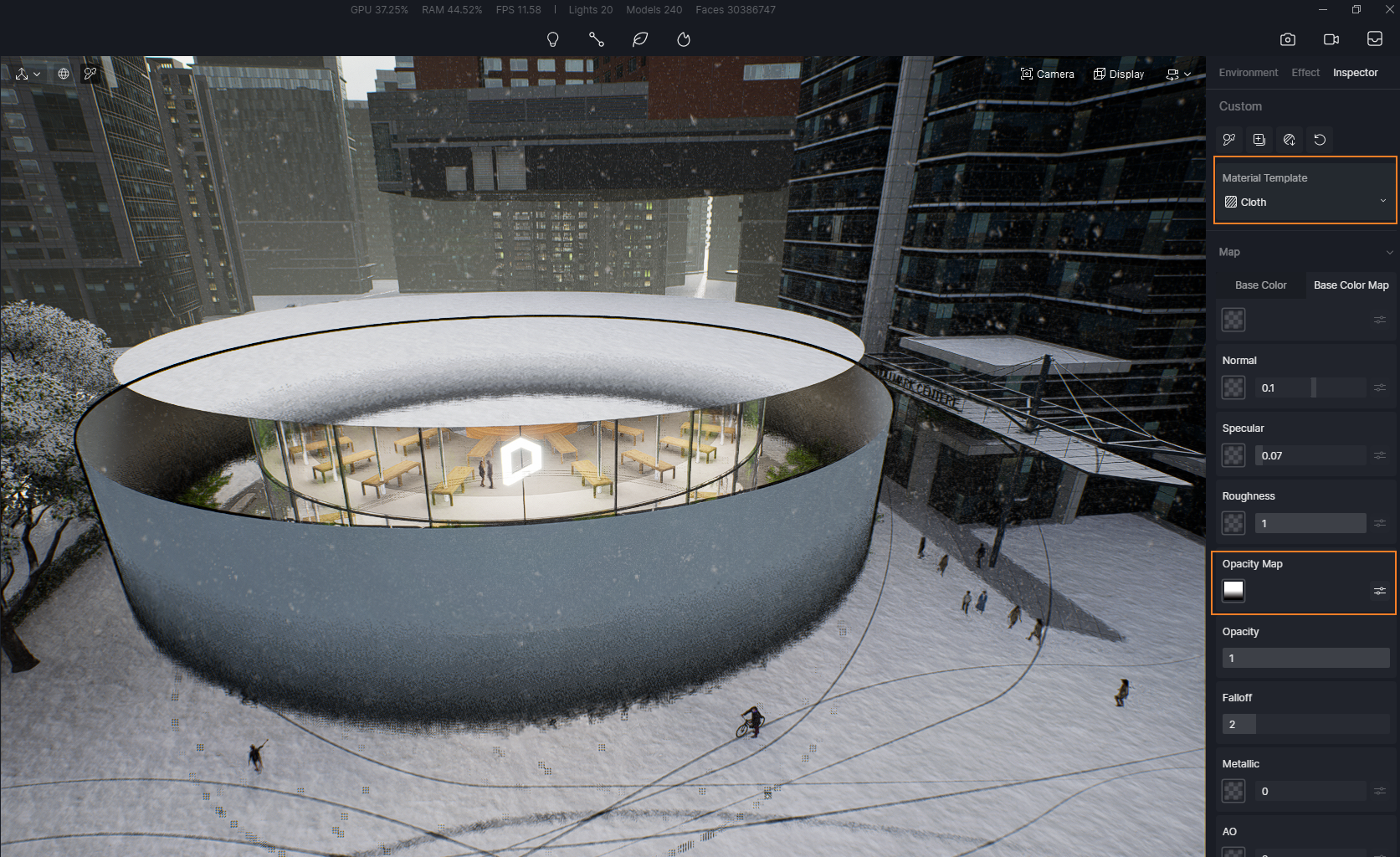
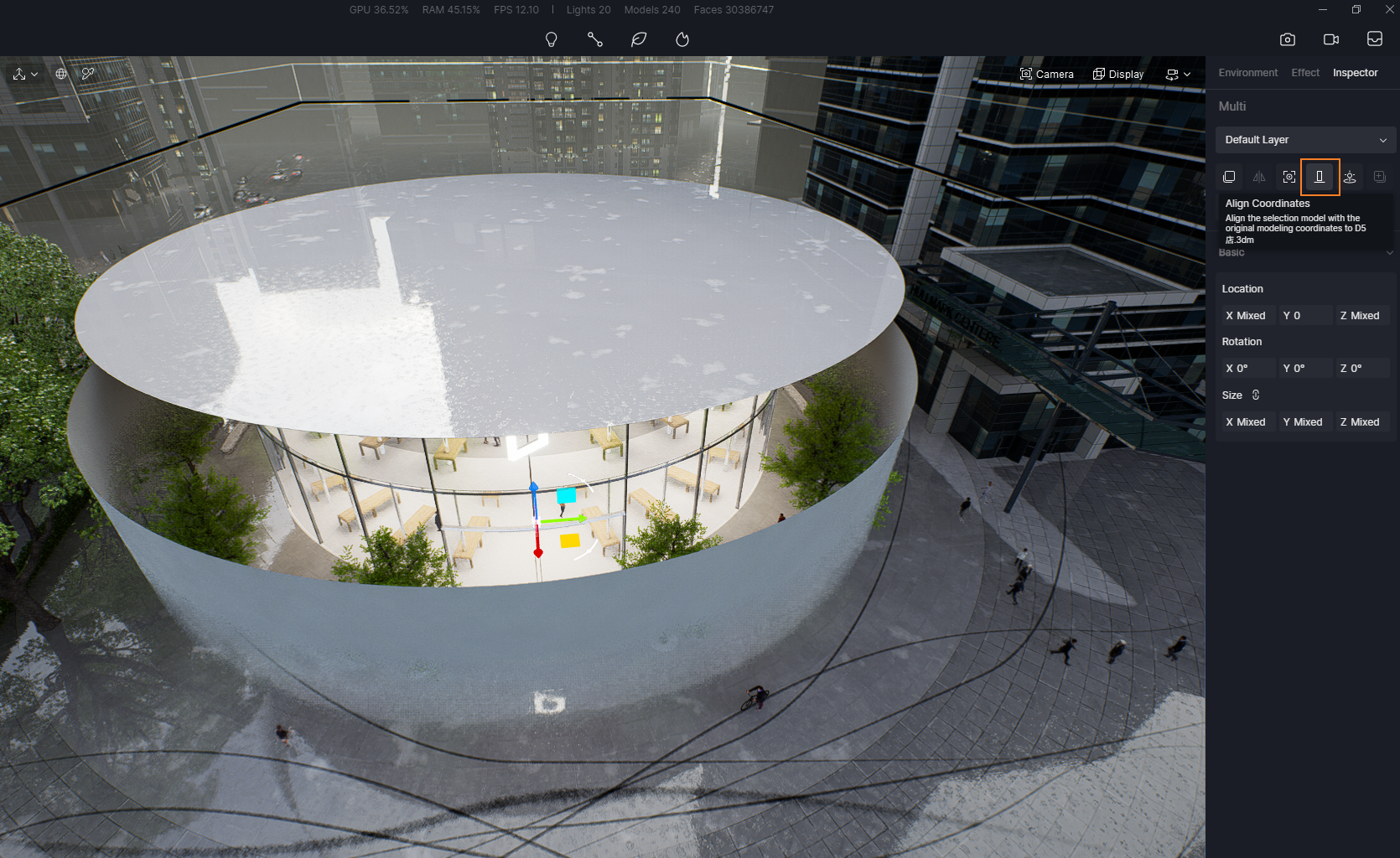
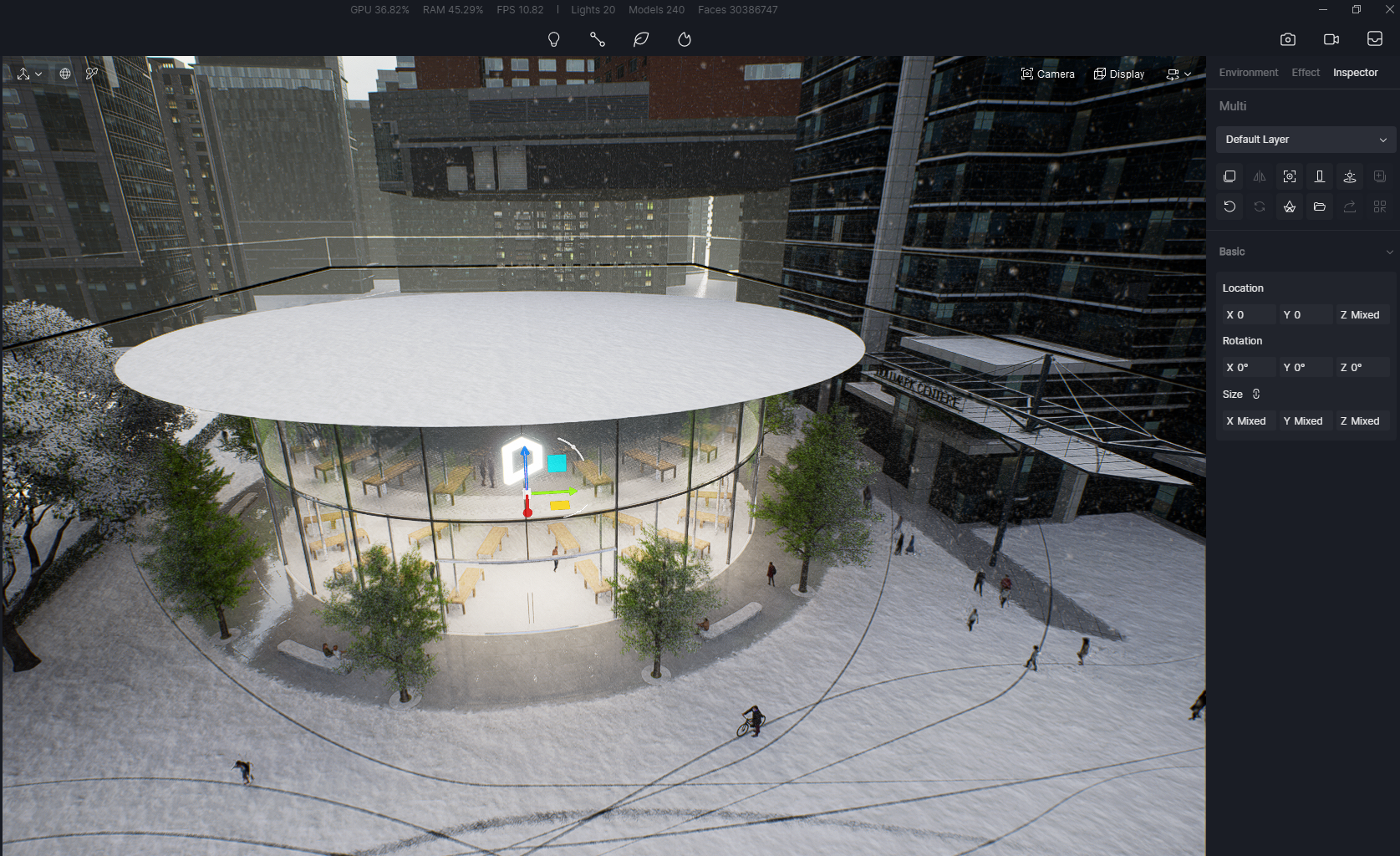
Después de importarlo a D5 Render, puedes dar a la superficie del desplazamiento la textura de Tela. Luego agrega un mapa de degradado de negro a blanco en la columna de Opacidad. Alinea el modelo de superficie y el modelo de fachada.
Cómo hacer vidrio esmerilado
Aquí tienes un truco para hacer vidrio esmerilado en D5 Render:
Agrega un mapa normal, estira sus UV y aumenta la intensidad.
¡Listo! Eso es todo lo que necesitas hacer.
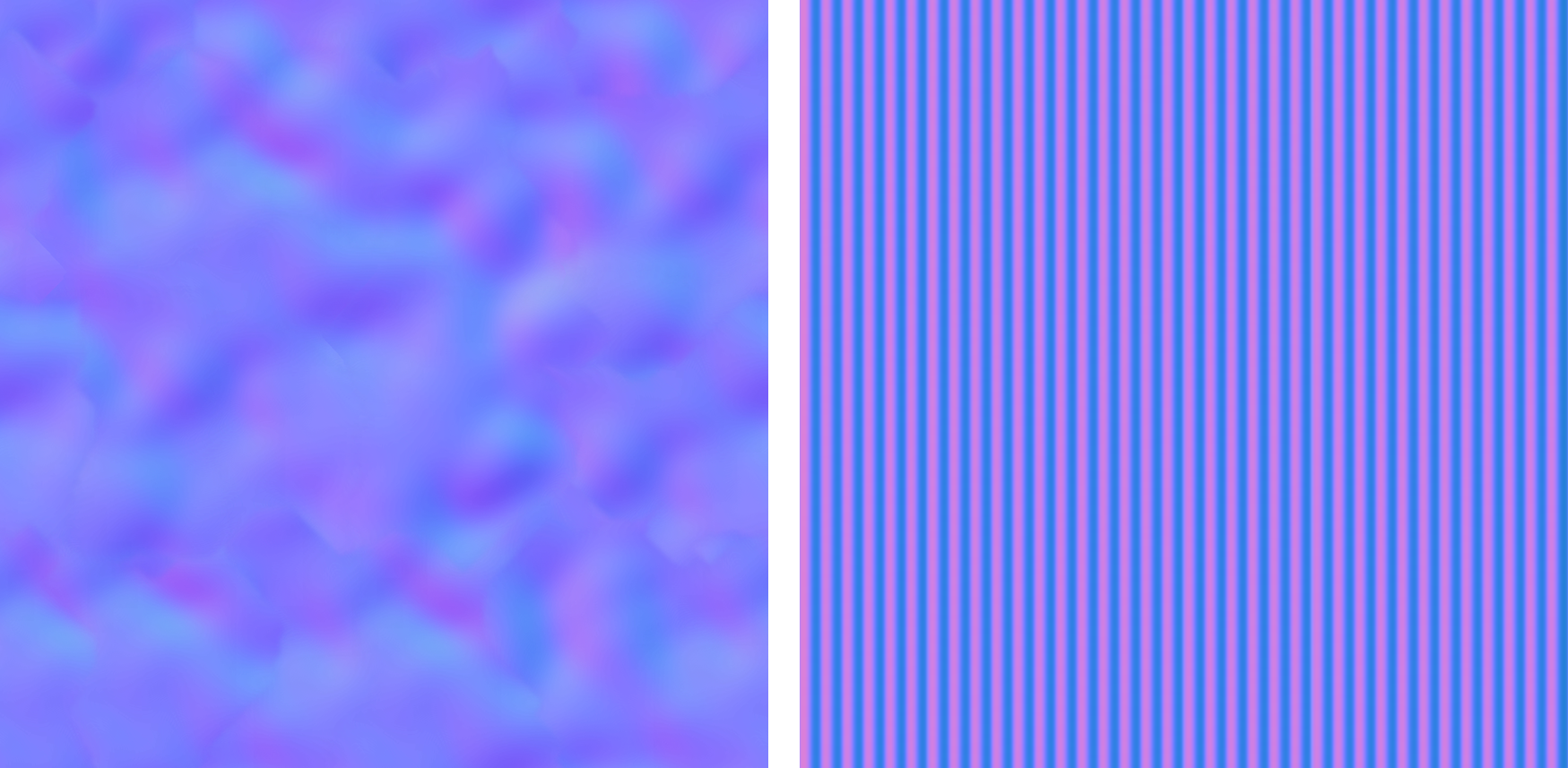
Aquí está el mapa Normal que usamos en el artículo:
 English
 Español
 Français
 한국어
한국어 日本語
日本語