
Principales conclusiones:
- The competition tested more than rendering speed: Finalists were challenged to communicate atmosphere, story, and architectural intent under intense real-time pressure.
- The competition rewarded not only photorealism, but also atmosphere, storytelling, and architectural intent.
- AI accelerated production, not creativity: Students used AI to speed up workflows, while human judgement still shaped atmosphere and meaning.
- The live final reflected a new design workflow: Students designed, visualised, and iterated simultaneously — revealing how real-time tools are reshaping architectural education.
By the time the countdown clock began, the atmosphere inside ASA Architect’26 Expo had already shifted into something closer to a studio crit than a conventional competition.
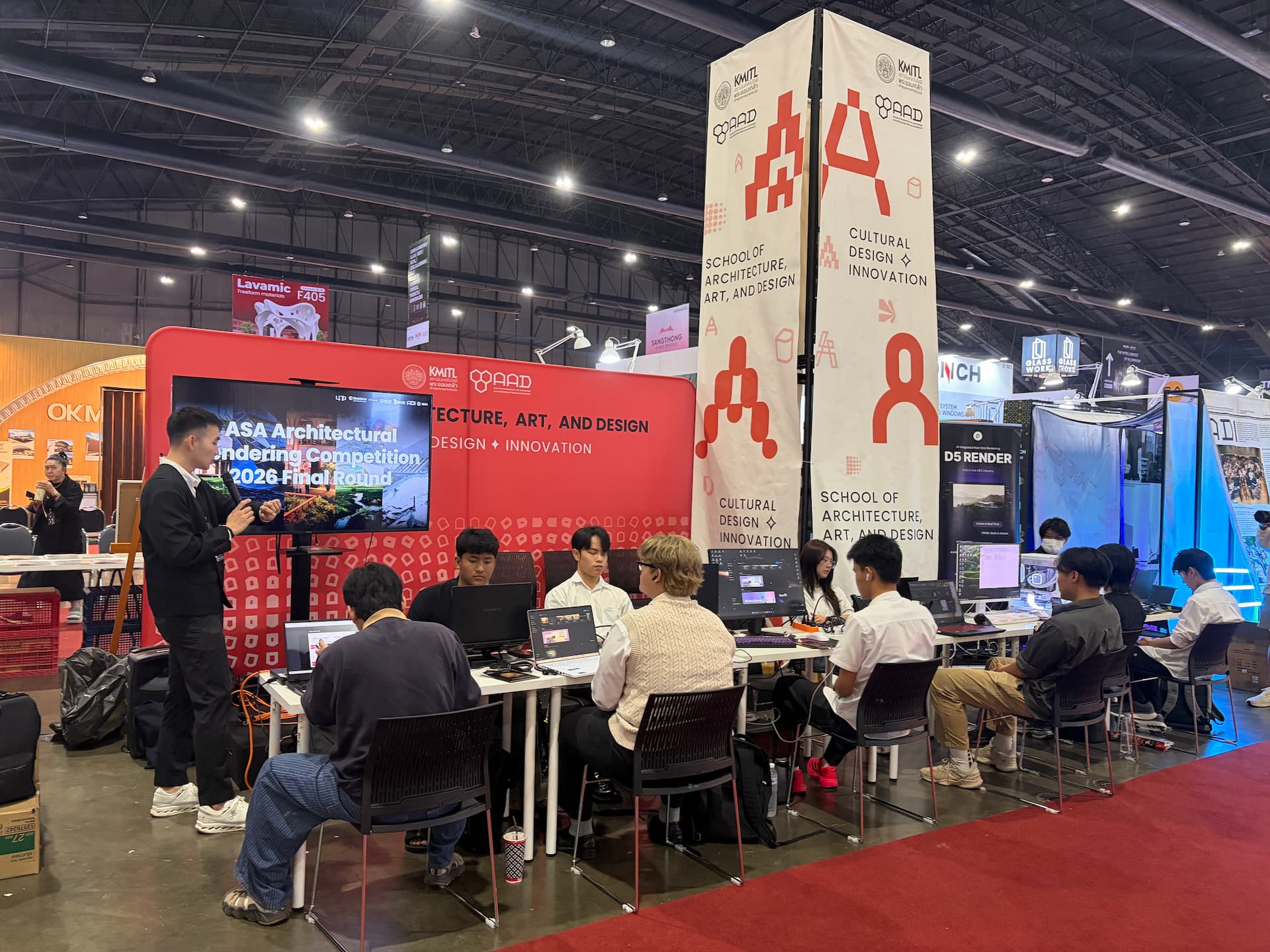
Ten architecture students sat behind glowing monitors, each facing the same challenge: produce a fully resolved architectural image and a 10-second animation in just two hours. The model was only revealed on-site. There would be no overnight rendering, no extended post-production, and no second attempt.
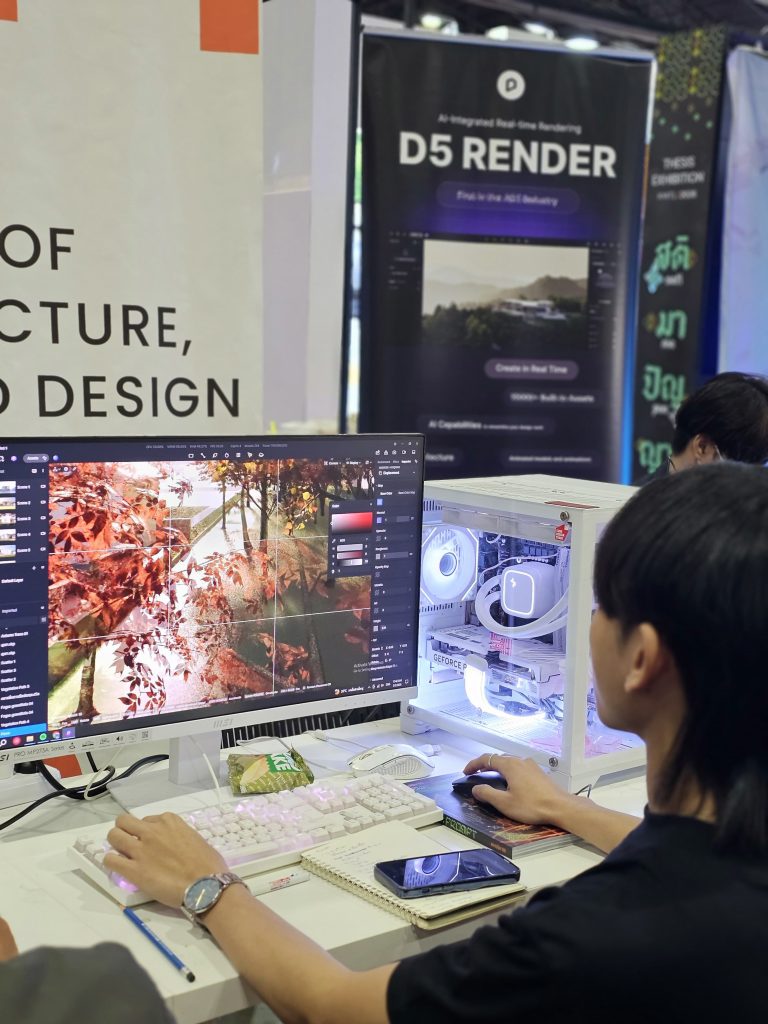
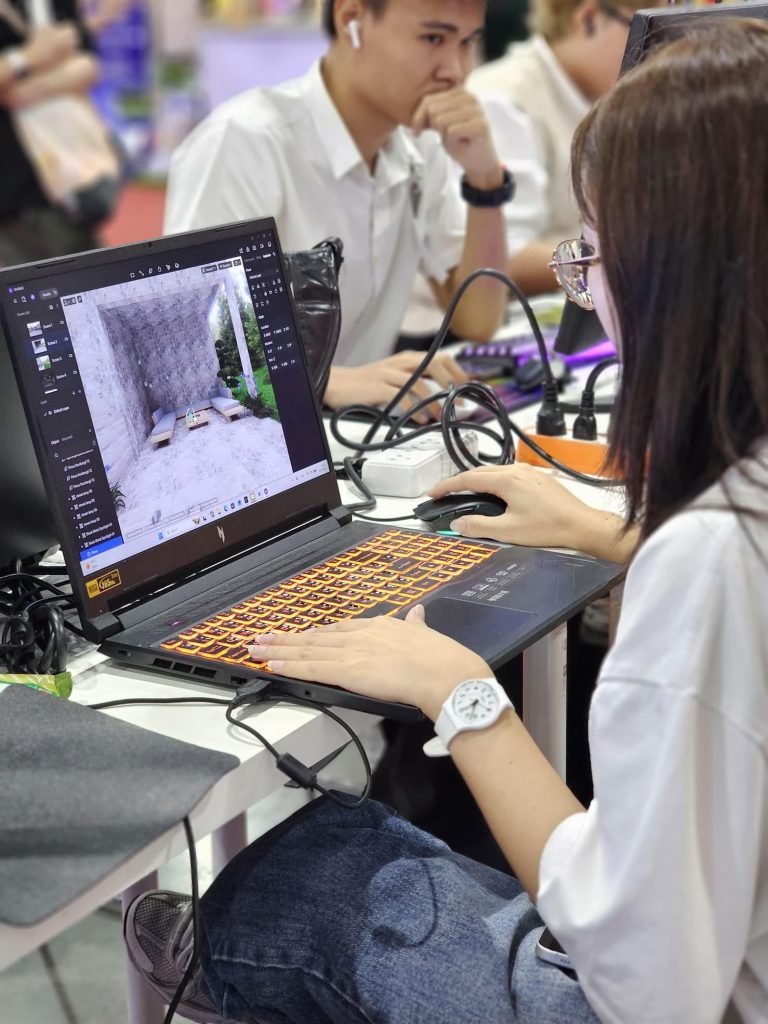
One finalist had travelled more than twelve hours by bus from Chiang Mai to Bangkok to compete. Another arrived carrying a desktop PC from Khon Kaen, unwilling to risk performance limitations during the final round. Students worked under the pressure of real-time rendering, rapid decision-making and constant iteration.
At first glance, the ASA Architectural Rendering Competition 2026 appeared to be a showcase of technical skill. In practice, it revealed something far more significant: a generation of architecture students learning to design, visualise and shape architectural intent simultaneously.
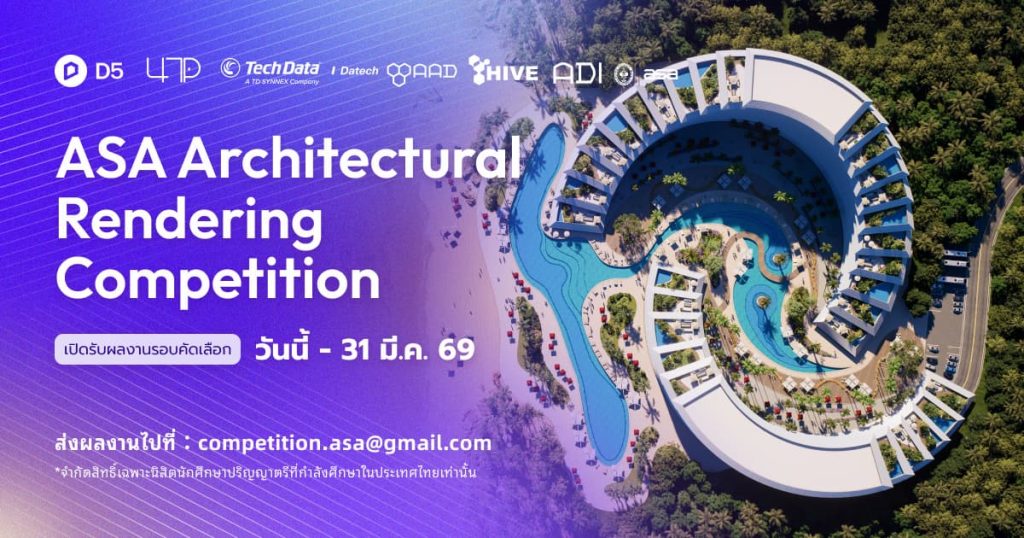
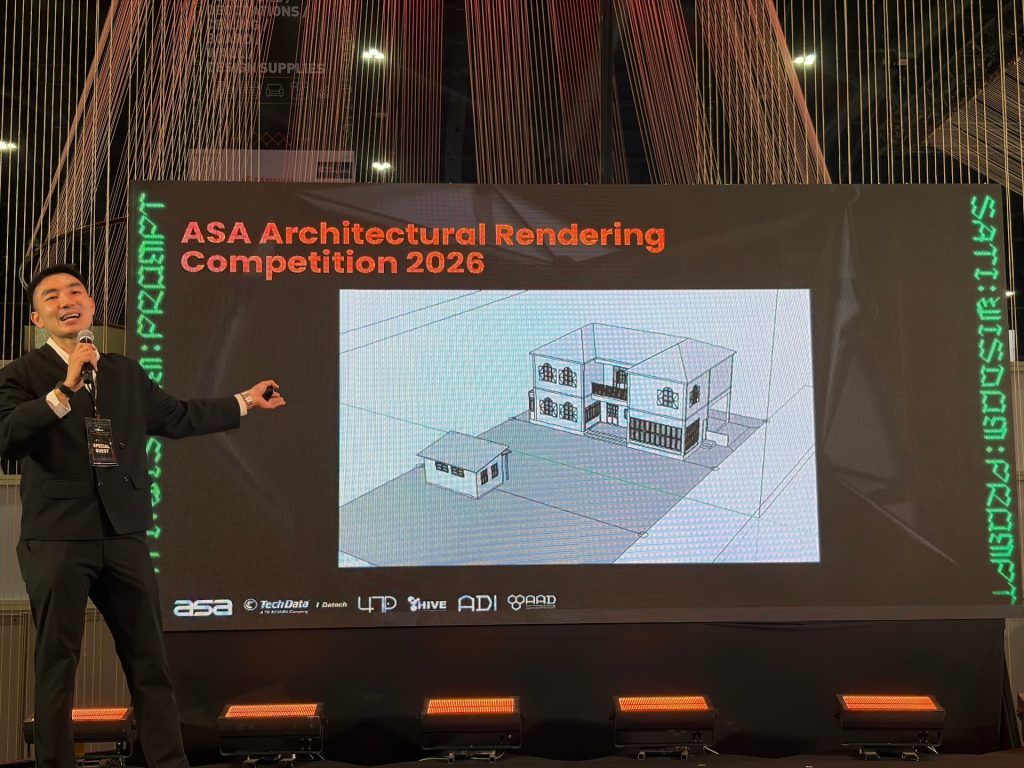
Event OverviewHeld as part of ASA Architect’26 Expo and organised in collaboration with the Association of Siamese Architects under Royal Patronage (ASA), KMITL, D5, and Tech Data, the competition brought together architecture students from universities across Thailand through an open-call selection process before narrowing the field to ten finalists for a live two-hour rendering challenge. Participants were required to produce both a final image and a short animation entirely on-site, testing not only technical ability, but also workflow strategy, visual storytelling and decision-making under pressure.
More Than a Rendering Contest
The judging criteria themselves offered the clearest indication that the competition was not simply rewarding photorealism.
Architectural communication and storytelling each accounted for 30 percent of the total score, outweighing technical expertise, which represented 25 percent. Composition and innovation followed behind.
For ดร.พร้อม อุดมเดช Prompt Udomdech, Director at the Office of the International Interdisciplinary Architecture Program, Faculty of Architecture, Art and Design, King Mongkut’s Institute of Technology Ladkrabang (KMITL), and one of the organisers behind the event, that weighting reflects a larger shift taking place within architectural practice itself.
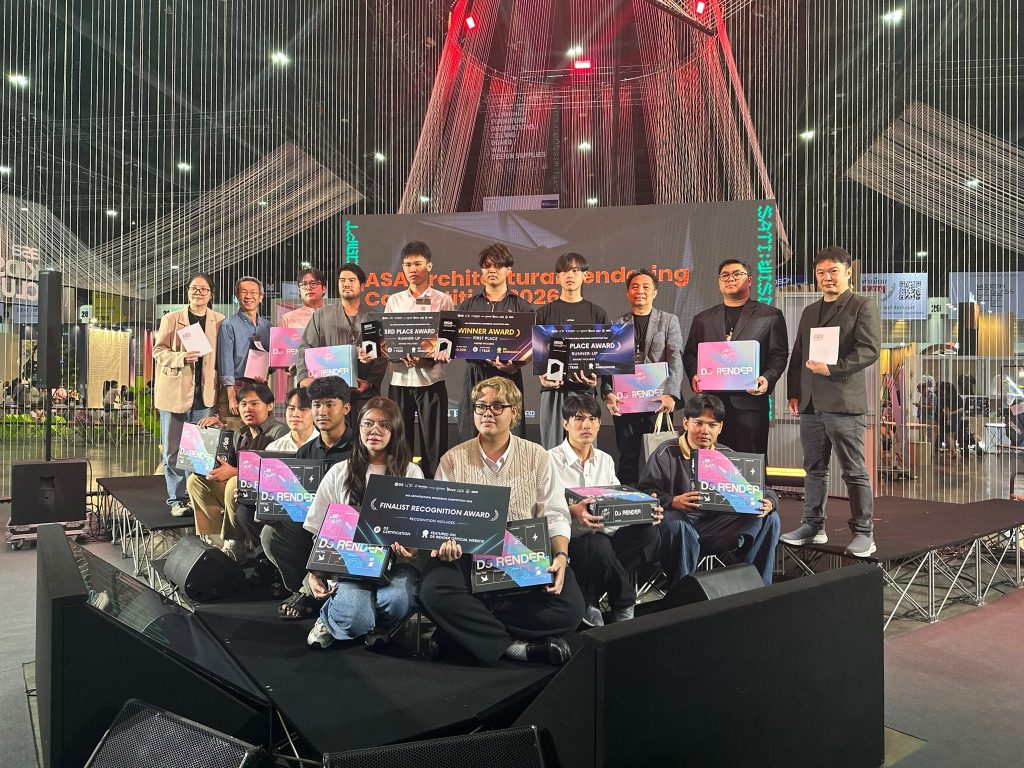
“The main focus is obviously 3D visualization and architectural rendering,” he explained during the event. “But I think what it truly fosters in students is completing the full design workflow cycle before they graduate and enter the workforce.”
Historically, architectural visualisation has often existed at the end of the process. Students spend weeks developing plans, sections, diagrams and technical details before rushing through the final rendering stage immediately prior to submission. Visualisation becomes presentation rather than part of the design process itself.
Real-time rendering has begun to dismantle that sequence.
Instead of designing first and visualising later, students are increasingly able to evaluate atmosphere, materiality, lighting and spatial relationships while the project is still evolving. Rendering is no longer separated from architectural thinking. It becomes part of it.

From Overnight Rendering to Real-Time Iteration
Dr. Prom describes himself as having lived through every phase of architectural visualisation, from hand-painted perspectives to offline rendering workflows and today’s AI-assisted real-time environments.
“There was a time when you rendered overnight and only saw the result in the morning,” he recalled. “Whether it turned out well or not was anyone’s guess.”
That uncertainty shaped both architectural education and professional workflows for decades. Rendering required commitment. Iteration was expensive. Experimentation was limited by time.
What unfolded during the competition demonstrated how radically those conditions have changed.
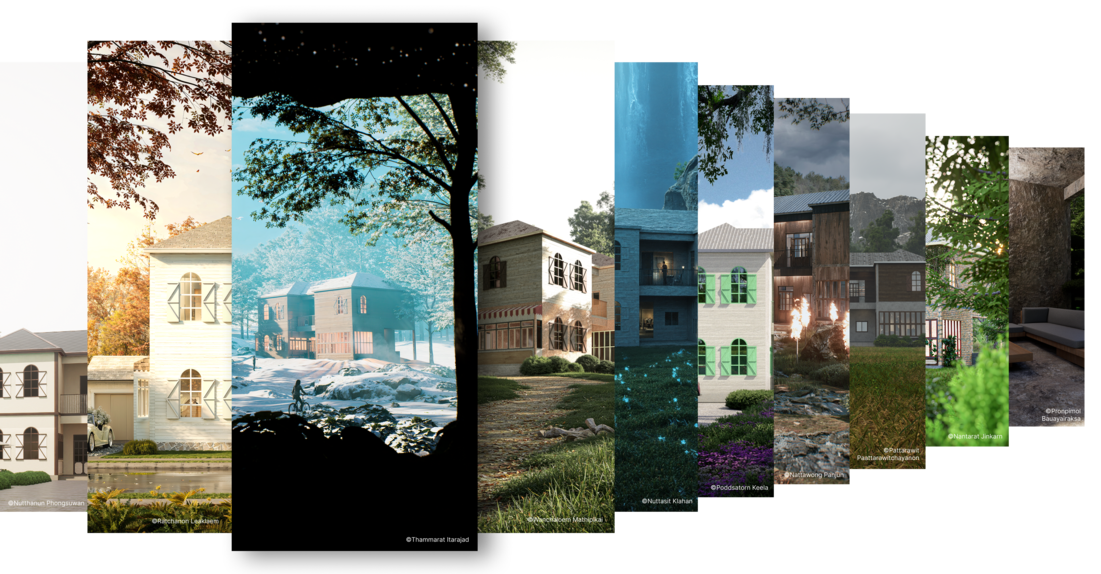
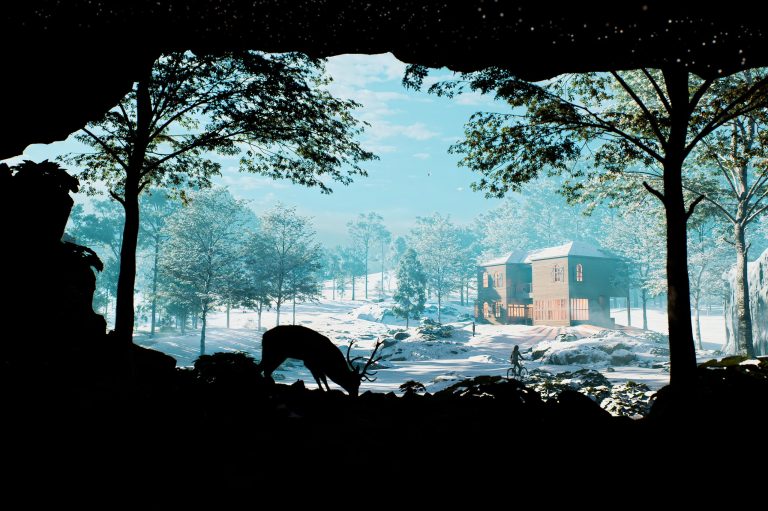
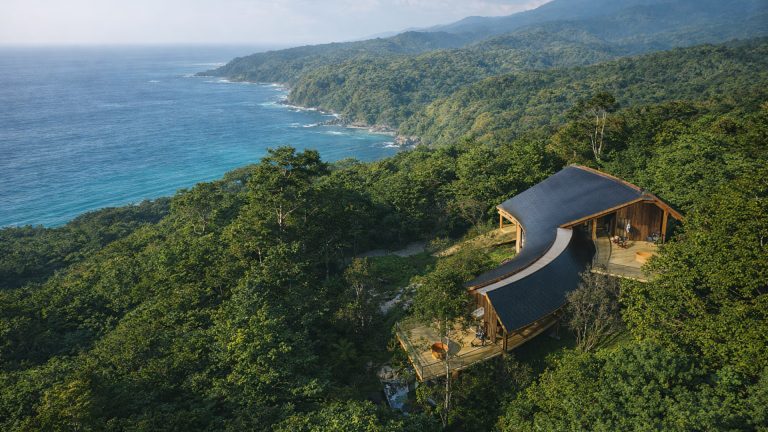
Renders created by the contestants using D5 Render
Within the two-hour final, students continuously adjusted lighting conditions, terrain, vegetation, atmosphere, fog, LUTs, composition and camera framing while seeing the results immediately on-screen.
The workflow no longer revolves around waiting for output. Instead, the design process becomes increasingly conversational and iterative.
For educators, this creates a larger challenge than simply introducing new software into classrooms.
“We can no longer teach the way we used to,” Dr. Prom said. “Before, we taught students to finish the design first, then handle the presentation later. Now we need to teach them to develop the design and render in real time simultaneously.”
Closing the Gap Between Imagination and Understanding
The implications extend beyond speed alone.
One of the recurring themes throughout the competition was the role of visualisation as a shared language between architects, instructors and clients.
“In the past, when we were working on a design, we could picture in our own heads what the end result would look like — but the client couldn’t see it,” Dr. Prom explained. “When students design, they have that vision in their heads, but the instructor can’t see it.”
Real-time workflows collapse that gap.
Instead of relying on abstract explanation or delayed output, students can now communicate atmosphere and spatial intent while the project is still developing. Tutors see the same image the student sees. Design feedback becomes more immediate and collaborative.
The competition therefore became less about producing final images and more about testing how effectively participants could communicate architectural ideas under pressure.
Designing Atmosphere Under Pressure
That emphasis was visible in the winning project by Thammarat Itarajada, a second-year architecture student from Chiang Mai University.
Rather than focusing on technical spectacle, his concept centred on something quieter: “life and warmth in the middle of winter.”
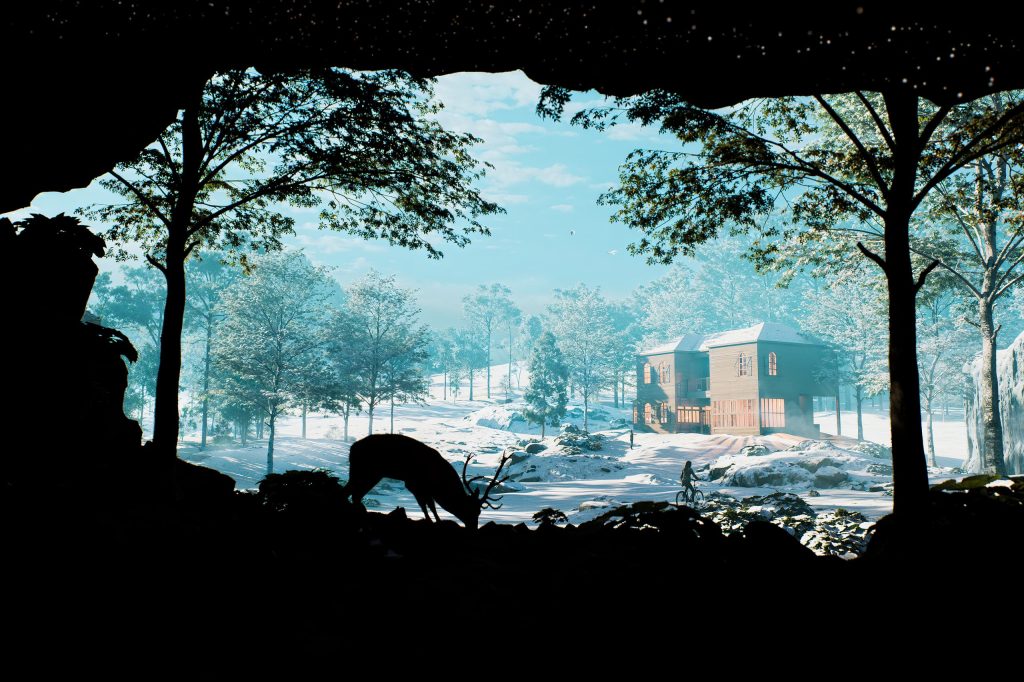
Asked what made his work stand out, he did not mention rendering quality or realism. Instead, he pointed to atmosphere and the sense of life within the image.
His workflow was equally methodical. Before the competition, he repeatedly practised rendering within the same two-hour limit imposed during the final round. During the live session, he followed an almost production-like sequence:
assigning materials → setting cameras → sculpting terrain → placing vegetation → refining lighting and atmosphere → rendering → selective AI post-processing → photo overlays
The process reflects a mindset increasingly common among younger designers: rendering is no longer a standalone skill, but part of a broader system of workflow management, storytelling and communication.
Even his use of AI remained deliberately restrained.
“AI makes things faster and more realistic,” he said, “but composition and conveying the intended feeling are still the responsibility of the human designer.”
That distinction quietly echoed the philosophy underpinning the entire competition.
Technology may accelerate visual production, but architecture still depends on human judgement, atmosphere and intent.
A Glimpse of Architectural Education’s Next Phase
The ASA Architectural Rendering Competition 2026 revealed more than technical skill or increasingly capable software. It offered a glimpse into a broader shift already underway in architectural education.
Visualisation is no longer confined to the final stages of project delivery. Instead, it is becoming embedded within design thinking itself — shaping how students iterate, communicate and understand architecture in real time.
For the students involved, the competition functioned less as a rendering contest and more as a rehearsal for a profession whose workflows are rapidly changing.
 English
 Español
 Français
 한국어
한국어 日本語
日本語