
重要なポイント
- Visualization is a core design tool at Rojkind Arquitectos, used to test atmosphere, materiality, and spatial experience from the earliest stages.
- Real-time workflows enable faster, more informed design decisions, especially for complex projects and international competitions.
- Technology supports storytelling, helping the studio communicate architecture as a lived experience rather than just a visual representation.
スタジオ概要
- 場所 メキシコ
- チームの規模 ~50
- スタジオのタイプ Architecture and design studio focused on experiential, cultural, and large-scale urban projects
- プロジェクトの種類 Cultural buildings, civic projects, commercial architecture, mixed-use developments, urban masterplans, installations, and residential projects
- モデリングツール: Rhino 8
As projects grew in scale and complexity, Rojkind Arquitectos found their old visualization workflow introducing friction—slowing iteration and interrupting the design process. The shift to D5 was driven not by speed alone, but by the need for continuity. By integrating real-time visualization directly into their modeling workflow, the studio regained the ability to test atmosphere, material, and spatial relationships as decisions were made—restoring fluidity between concept and evaluation.

Competition First: Designing Under Pressure
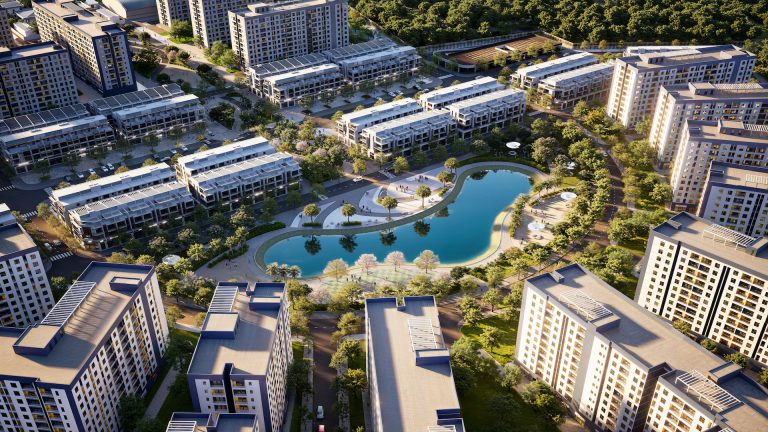
In the studio’s recent award-winning international competition project in Tirana, Albania, Rojkind Arquitectos faced a challenge defined by scale, complexity, and time pressure. The proposal required not only a strong architectural concept, but a clear articulation of how the project would operate within a dense urban context—across massing, public space, movement, and atmosphere.
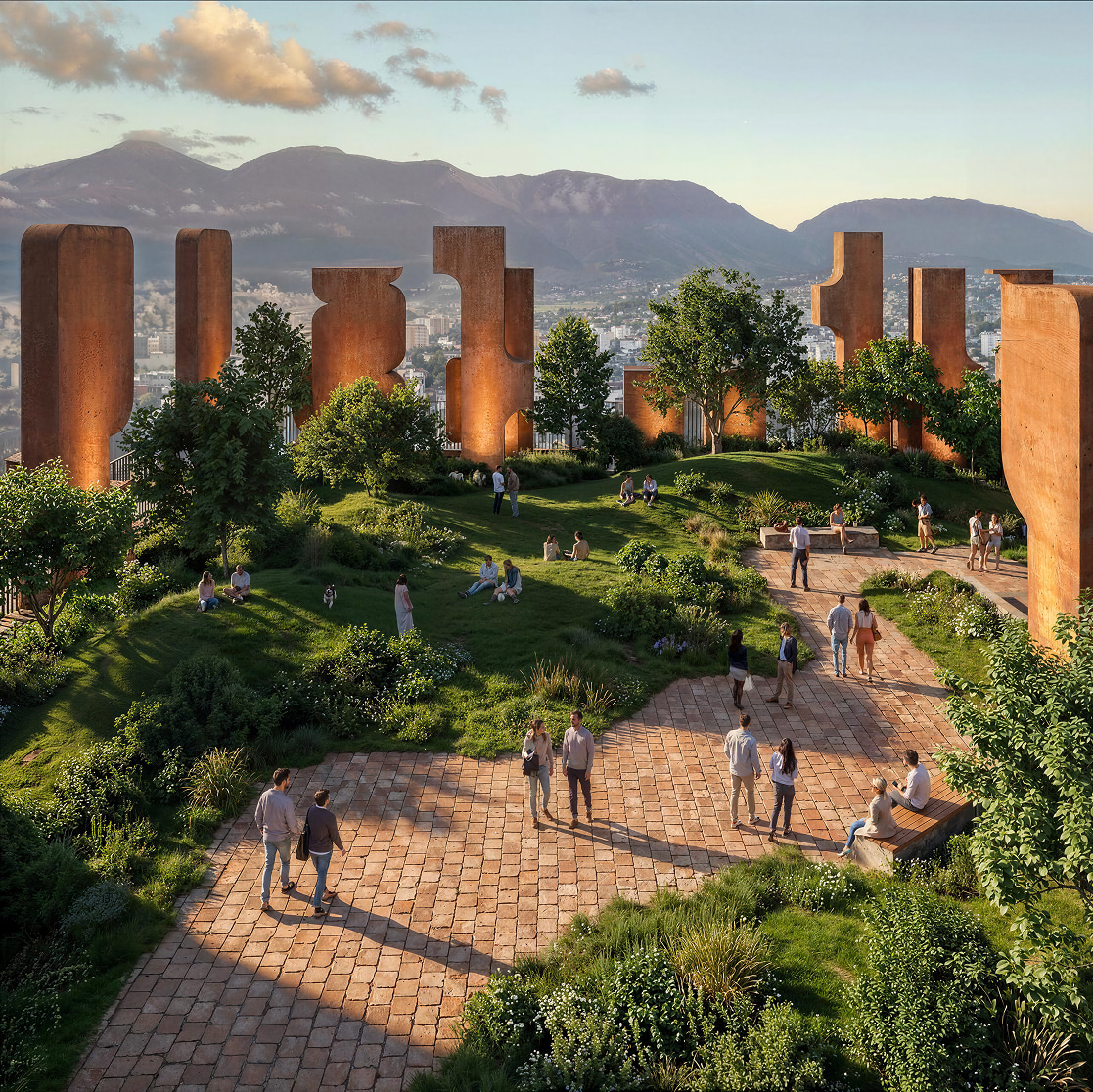
Working within compressed timelines, the team relied on real-time visualization to iterate quickly while maintaining clarity. Leveraging the Cesium integration within D5 Render, large-scale context was generated directly within the workflow, allowing the project to be evaluated at a metropolitan scale. Volumes could be tested against the city, public space could be understood in sequence, and perception could be assessed across different vantage points.
Visualization was not deferred to the end of the process. It operated continuously, supporting decisions as they were made. Spatial relationships, material expression, and lighting conditions were refined in parallel, allowing the project to maintain coherence under pressure.
This approach reframed the competition workflow—from a linear progression toward images into a continuous loop of testing, evaluation, and adjustment, where visualization actively shaped both design and narrative.
Designing for Experience
For Rojkind Arquitectos, architecture is not conceived as an object placed in space but as atmosphere. Light, material weight, texture, and spatial compression are treated as variables that shape how people move, gather, and feel.
Program provides a framework, but emotional response guides the work. Questions of scale, light, and sequence inform decisions from the outset, positioning imagination as a responsibility rather than an abstraction. Architecture is understood as something that must be experienced before it is built.
When Tools Interrupted the Process
As project scale increased, earlier visualization workflows introduced constraints. Large urban proposals required extensive contextual modeling and dense geometries that placed pressure on performance. Slowdowns, instability, and long rendering cycles disrupted iteration.
What should have supported exploration instead introduced delay. Review cycles extended, adjustments became more cautious, and the pace of decision-making slowed.
The issue was not representational capability, but the interruption of process.
こちらもお読みください: 手動設定を捨てる:Archviz用D5 Render AIシーン生成
Switch to D5: A Unified Workflow and Collaborative Decision-Making
An experiential approach cannot rely on drawings alone. Plans and sections establish spatial logic, but they cannot fully convey perception, material presence, or atmosphere. Visualization is therefore embedded directly within the design process, where models are used to test ideas rather than illustrate them.
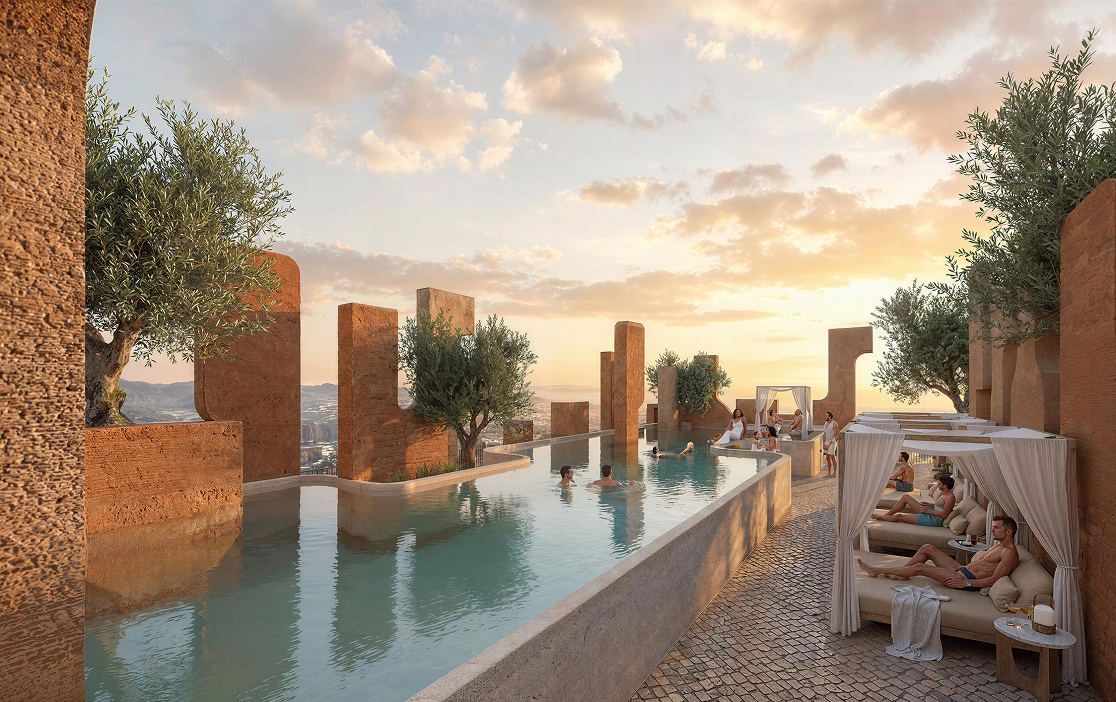
Integrated with Rhino, D5 enables real-time evaluation of proportion, material relationships, and light. Adjustments are reflected immediately, allowing designers to move fluidly between exploration and validation without interrupting the workflow.
This shift also restructures collaboration. Rather than separating modeling and visualization across tools or roles, the studio operates within a shared real-time environment where concepts, materials, and lighting are developed simultaneously. The result is a more continuous process, with reduced handoff friction and tighter alignment across iterations.
The adoption of a unified D5 workflow consolidates visualization into a single system. Material studies can be evaluated more quickly, alternatives compared in parallel, and more work produced in-house. Through D5 for Teams, shared environments support multi-user collaboration while maintaining clear structure across responsibilities.
Visualization becomes part of daily operations, supporting decisions as they are made.
こちらもお読みください: AI Atmosphere Match for smarter and more precise lighting adjustments
Material Studies on D5 and Spatial Evaluation
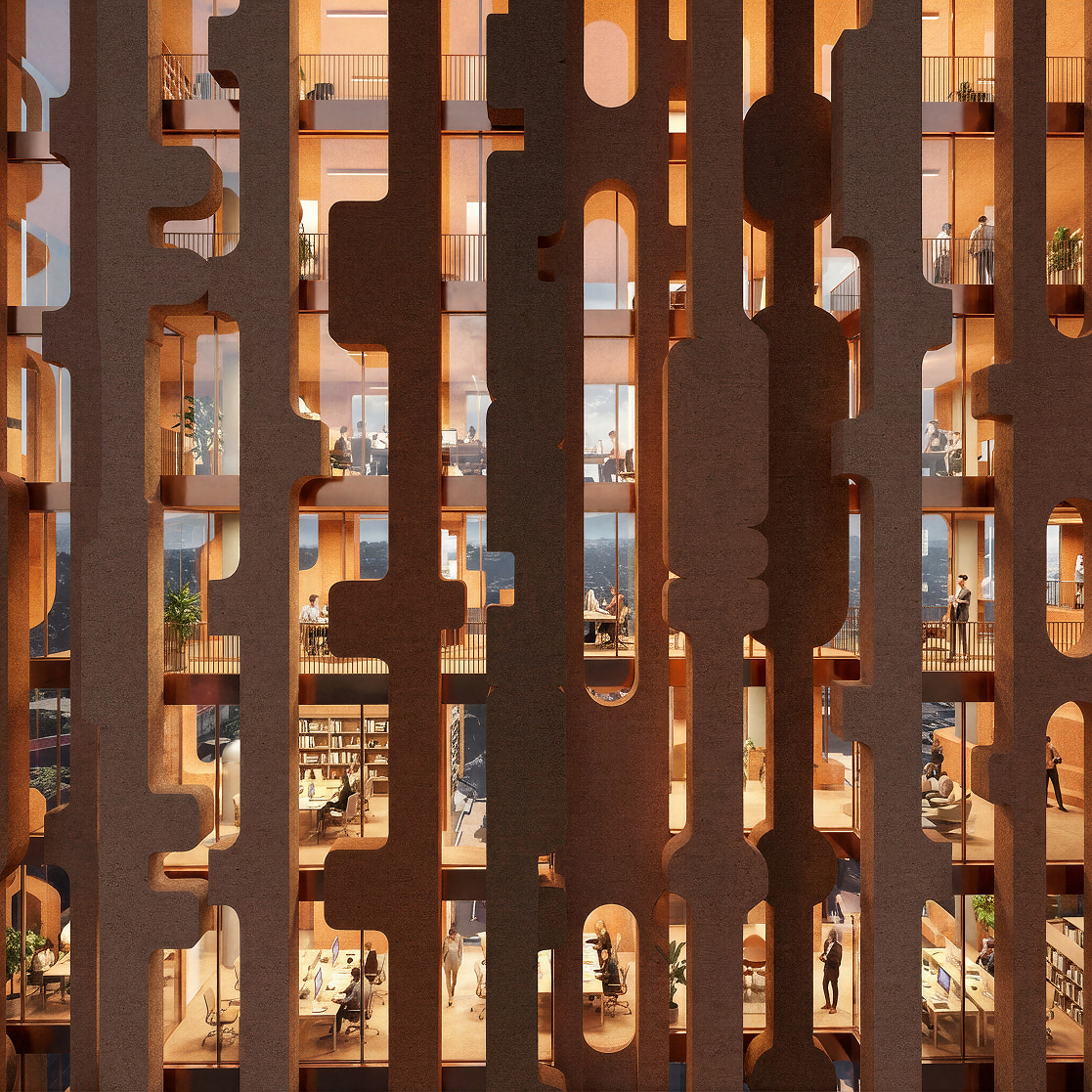
The studio’s work often explores robust geometries and strong material presence, where architecture depends on the precise articulation of weight, texture, and depth. These qualities require evaluation beyond abstraction.
With D5, materials are tested as spatial conditions. Surface articulation, layered assemblies, and lighting interactions can be assessed directly, enabling a more accurate understanding of how architecture will perform. Iteration cycles are significantly reduced, allowing broader exploration within the same timeframe. Concrete massing and textured facades are no longer approximated but experienced through light and spatial perception during design development.
D5 allows us to articulate atmosphere, material expression, and spatial intensity with clarity and precision.
—Michel Rojkind, the founding partner of Rojkind Arquitectos
こちらもお読みください: D5 Renderで建物のファサード設計と敷地計画を効率化する方法
まとめ
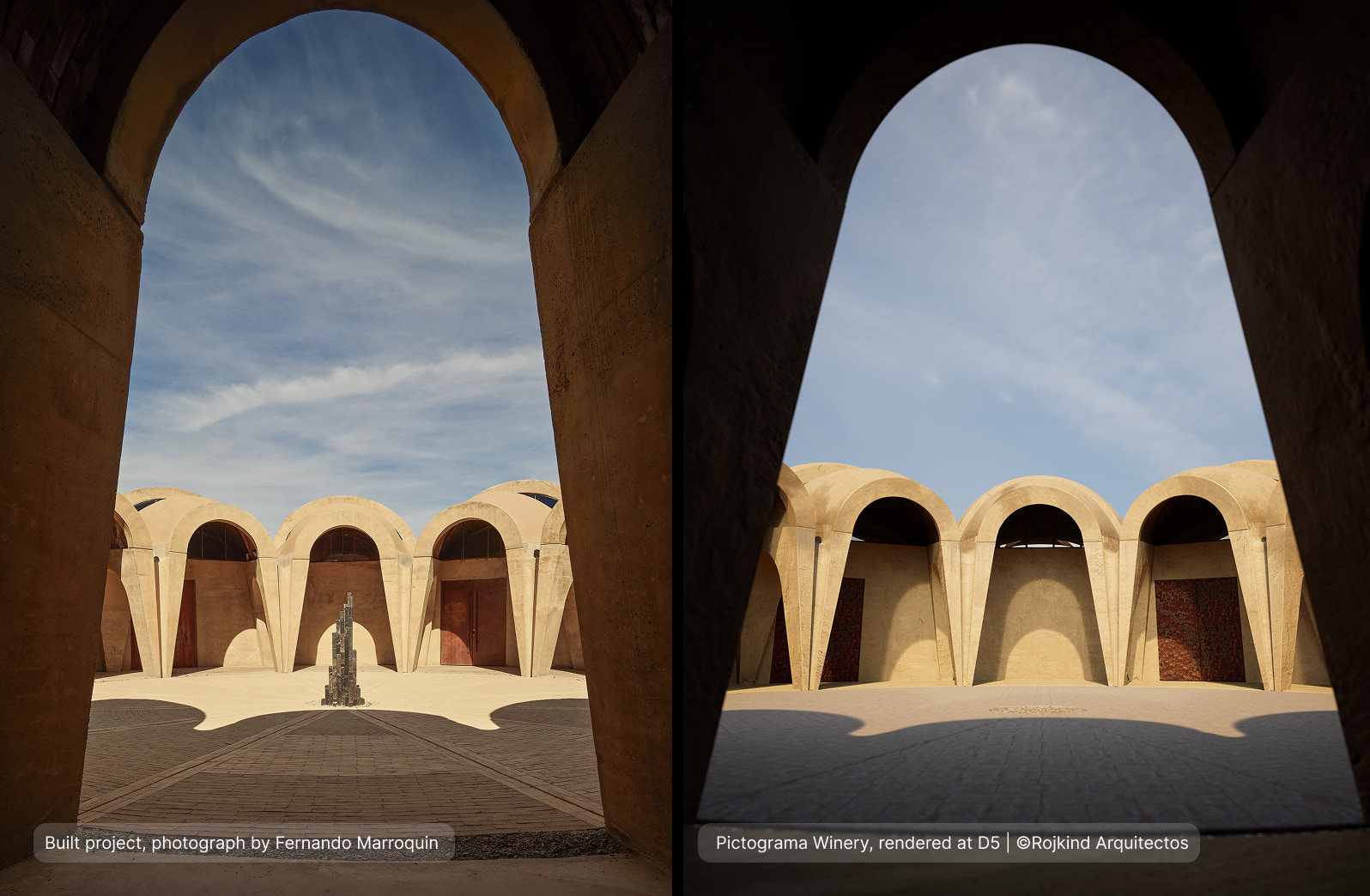
For Rojkind Arquitectos, real-time visualization represents a shift in how architecture is developed rather than simply how it is presented. By embedding visualization into the design process, the studio strengthens its ability to test, evaluate, and communicate spatial ideas with clarity.
Visualization becomes a medium through which architecture can be understood before it is built—not as representation, but as a condition to be tested, understood, and refined before construction.
D5がお客様のプロセスにどのように適合するかを見る
このワークフローがお客様のチームをどのようにサポートできるか、ご興味がおありですか?価格についてのご相談、デモのご予約、またはD5がお客様のデザインプロセスにどのようにフィットするかをお聞きになりたい場合は、弊社までご連絡ください。.
あなたの仕事は注目に値する
D5は、あなたのデザイン、プレゼンテーション、コラボレーションの方法を変えましたか?あなたのD5 Renderプロジェクトをストーリーにして、世界中のデザイナーにインスピレーションを与えましょう!あなたの旅を共有し、可能性を世界に伝えましょう。.
プロジェクトを提出することで、以下のことが可能になる:
数千人が目にするグローバルなケーススタディで紹介される。
✅ D5 ウェビナーを共催し、専門知識を紹介する。
✅ D5の公式イベントで講演し、業界での存在感を高める。
これは単なる特集ではありません。あなたの発言力を高め、ブランドを構築し、グローバルなデザイン・コミュニティを刺激するチャンスなのです。. あなたのストーリーをここで共有してください。.
 English
 Español
 Français
 한국어
한국어 日本語
日本語