
How AHH & Partners Uses Real-Time Visualization to Balance Speed, Affordability, and Realism
As Vietnam’s cities continue to expand, housing has become both an urban necessity and an architectural challenge. Across Hanoi, Hai Phong, and emerging industrial provinces, architects are being asked to deliver housing at increasing speed and scale while responding to growing expectations around affordability, livability, and visual quality. Within this evolving landscape, visualization has become central to how projects are designed, evaluated, and communicated long before construction begins.
Key Takeaways:
- Vietnam’s housing boom is reshaping architectural workflows: Studios are being pushed to deliver larger housing projects faster while balancing affordability, livability, and visual quality.
- AHH & Partners prioritizes realistic visualization: Rather than creating overly polished marketing imagery, the studio uses rendering to reflect what can realistically be built within social housing constraints.
- Real-time tools are integrated into the design process: AHH combines Archicad, SketchUp, D5 Render, and AI-assisted workflows to accelerate iteration, coordination, and decision-making.
- Efficiency has become essential for smaller firms: As Vietnam’s real estate market grows increasingly competitive, streamlined visualization workflows help compact teams manage large-scale projects more effectively.

Studio Overview
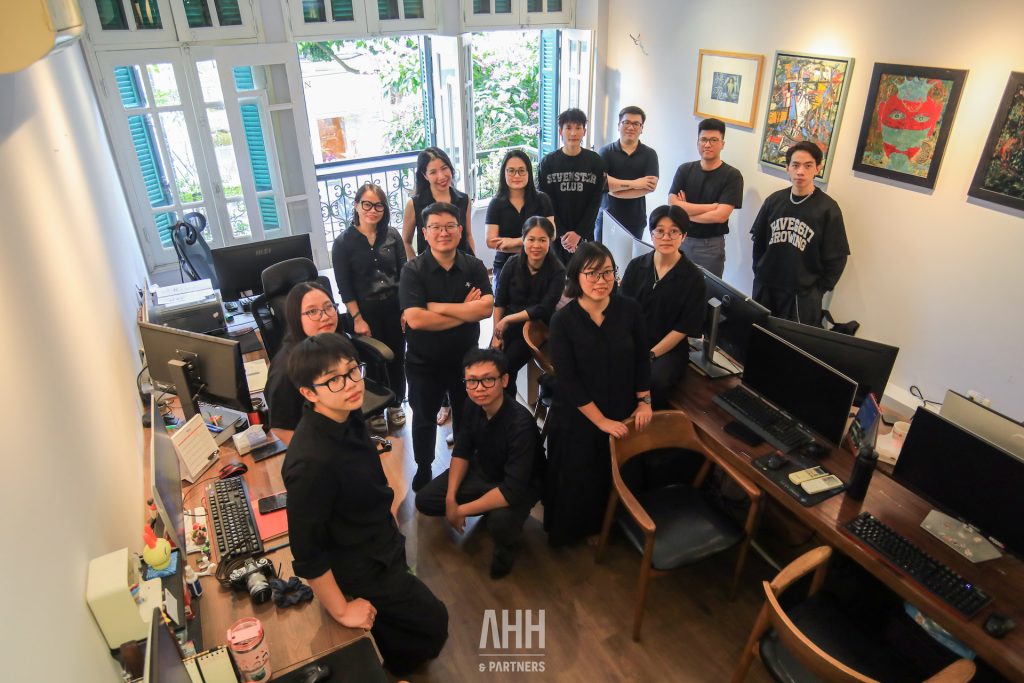
- Location: Hanoi, Vietnam
- Team Size: ~20 architects, including 3 dedicated visualization artists
- Studio Type: Architecture and urban development consultancy
- Project Types: Social housing, serviced apartments, commercial and residential developments, urban masterplans
- Modeling Tools: Archicad, SketchUp
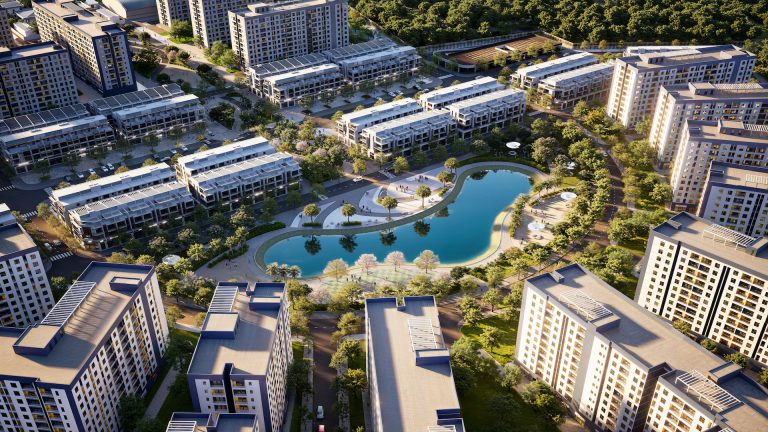
For Hanoi-based AHH & Partners, these pressures shape much of the studio’s work. Founded in 2017, the practice focuses primarily on commercial and residential developments, with nearly 80 percent of its portfolio dedicated to Vietnam’s social housing sector, including worker housing and high-rise residential projects. Alongside affordable housing developments such as Yen My II Social Housing in Hung Yen Province, the studio has also developed projects like the 25-storey Central Point Hai Phong serviced apartment tower, reflecting the parallel growth of Vietnam’s housing demand and real estate economy.
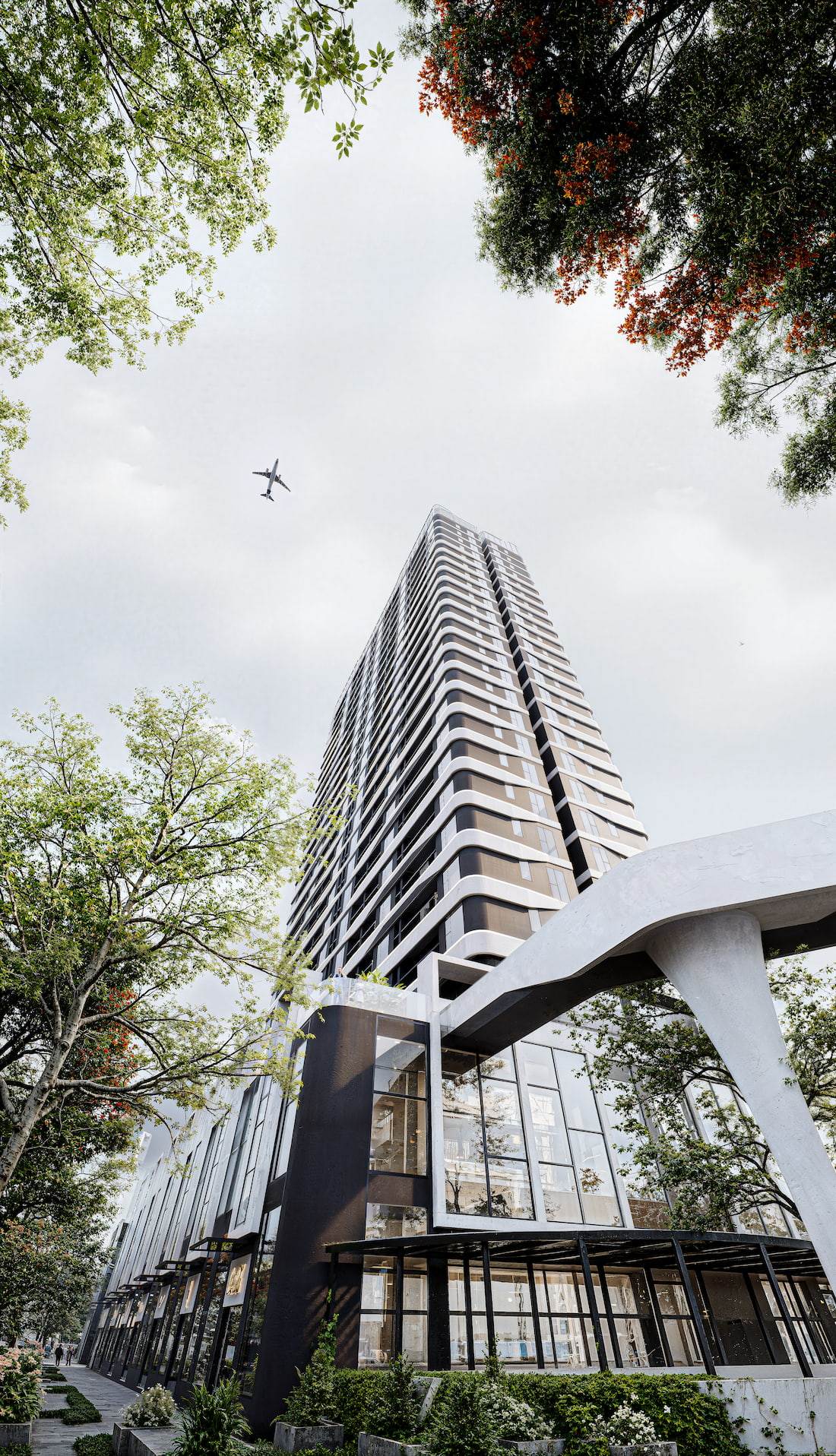
Unlike many real estate visualizations that prioritize polished marketing imagery, AHH approaches rendering through a more pragmatic lens. For the studio, visualization is not simply about aspiration. It is about translating architecture into something believable, buildable, and closely aligned with lived reality.
Also read: Archviz Review: Rendering a Commercial Plaza with D5 Render
Visualization and the Question of Realism
Vietnam’s social housing sector requires architects to balance affordability, spatial quality, construction cost, and delivery speed. According to AHH & Partners, those constraints directly shape how the studio approaches visualization.
We try to focus more on people-orientated visuals. What is being portrayed in the visualization is what is actually being built.
That distinction has become increasingly important within Vietnam’s competitive housing market, where projects are often marketed long before construction begins. Developers now regularly request aerial perspectives, cinematic walkthroughs, and immersive imagery to differentiate projects within crowded urban developments.
For AHH, however, rendering is not used to exaggerate architecture beyond realistic construction outcomes. Instead, D5 Render helps the team evaluate how material choices and spatial decisions will perform within actual project constraints.
In social housing, there’s always a budget we have to stick to. If we opt for cheaper materials, how will that affect the final product? Visualization helps clients understand those decisions.
Also learn: Tips You Must Know to Render the Perfect Architectural Aerial View
Building a Real-Time Workflow
Within the studio, visualization is deeply integrated into the architectural process rather than treated as a separate production stage. AHH’s workflow begins in Archicad, where planning layouts and building forms are developed before models are refined through SketchUp and transferred into D5 Render.
AI-assisted tools also play a role during the conceptual phase. The studio experiments with Gemini alongside Vietnamese AI-based platforms to quickly explore façade studies, atmospheric qualities, and early-stage spatial directions.
We want AI to increase productivity while not losing the creative side of design. Especially in Vietnam’s market, which is growing very fast, efficiency becomes very important.
This workflow has become particularly valuable for a compact practice managing large-scale residential developments. Although AHH employs approximately 20 architects, only a small portion of the team focuses directly on visualization production while remaining actively involved in architectural decision-making.
Transitioning Toward Real-Time Visualization
Before adopting D5 Render, the studio primarily relied on Lumion and Enscape. While both platforms supported real-time workflows, AHH found them increasingly difficult to scale alongside the growing speed and complexity of its projects.
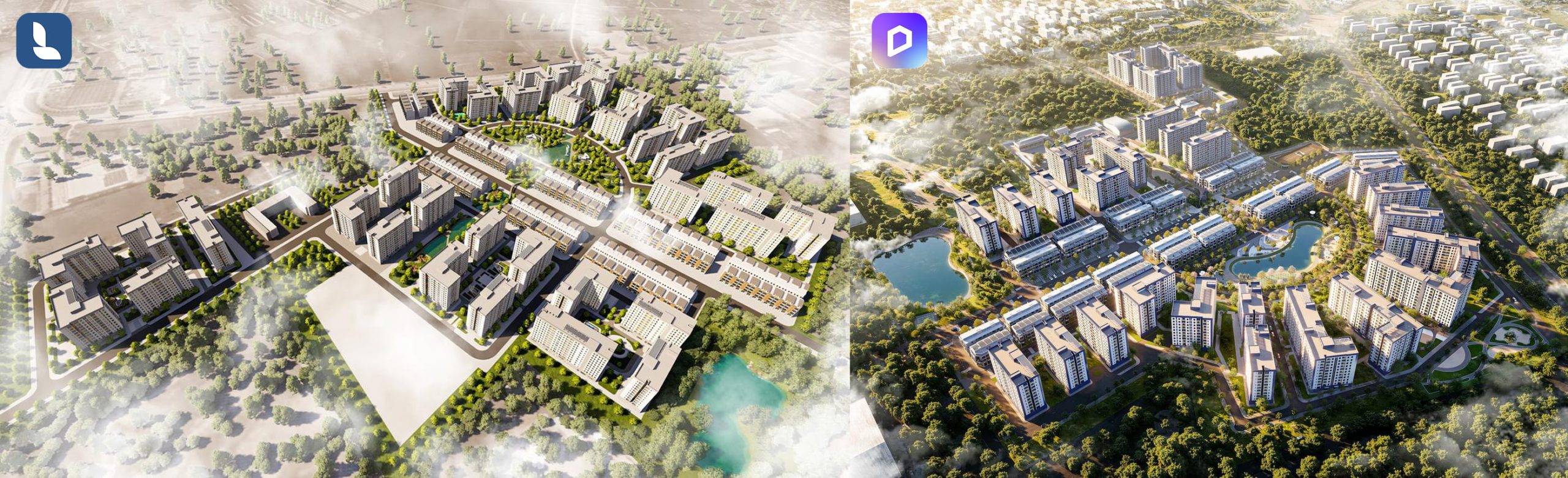
A major turning point emerged through the studio’s use of Archicad. According to the team, D5’s LiveSync compatibility significantly streamlined the production process.
That was one of the strongest points for us. Having LiveSync with Archicad removed a lot of the middle process.
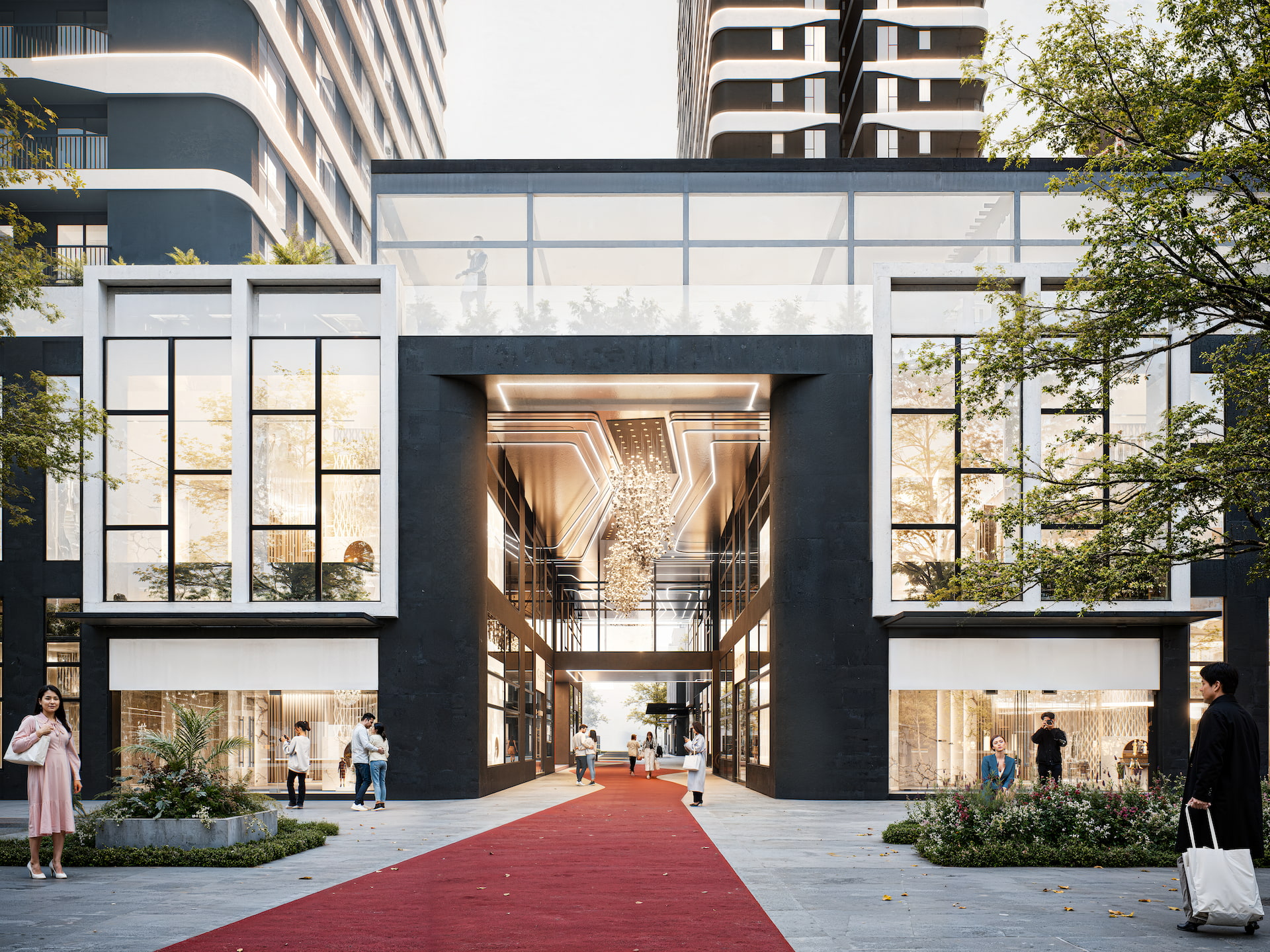
Several older projects originally visualized in Lumion were later rebuilt entirely inside D5 because reconstructing scenes within the new platform became more efficient than continuing revisions through previous workflows. According to AHH, the transition improved visualization efficiency by approximately 70 percent across certain projects.
Today, features such as Scatter and Smart Planting play a central role in the production of large-scale masterplans and residential environments, where landscape population and environmental detailing would otherwise require extensive manual coordination.
Also learn: AI Agent for Landscape Design: smart plant recommendation, auto plant scatter, and more
Designing Within Vietnam’s Expanding Housing Landscape
Vietnam’s rapidly growing real estate market continues to reshape the demands placed on architecture firms, particularly within the housing sector. As projects increase in scale and speed, studios are being pushed to work more efficiently while maintaining increasingly sophisticated forms of visual communication.
For AHH & Partners, real-time visualization has become part of that broader shift. Rather than treating rendering as a purely promotional tool, the studio uses visualization to communicate housing that feels grounded in how people will ultimately live, occupy, and experience these spaces.
Because the real estate market is growing so rapidly, you have to become more efficient to stay competitive
 English
 Español
 Français
 한국어
한국어 日本語
日本語