
How one of Mexico’s leading experiential agencies uses real-time rendering to accelerate pitches, refine atmosphere, and align event design with execution.
Key Takeaways
- Speed: D5 cuts visualization time by 1–2 days per project versus traditional renderers.
- Realism: Clients report the real event looks identical to the event design render.
- Scalability: Faster iteration lets designers handle 2–3 projects per week.
- Ease of learning: New users reach production level in under two months.
- ROI: Savings from software and time efficiency enable team growth and higher pitch throughput.
Studio Overview
- Location: Mexico
- Team Size: 14 (9–12 designers using D5)
- Studio Type: Experiential marketing and event production agency (BTL, hybrid, and digital events)
- Project Types: Corporate events, brand activations, showrooms, congresses, music festivals, and large-scale experiential installations
- Modeling Tools: 3ds Max, Rhino

In experiential marketing, visualization functions less as presentation and more as persuasion. Before construction begins, before staging is installed, and before audiences enter the space, the event already needs to feel convincing.
For ifahto, one of Mexico’s leading experiential marketing agencies, this requirement shapes the entire design process. Working across large-scale activations, corporate events, music festivals, and immersive brand environments, the studio relies on visualization not only to communicate spatial layouts, but to establish mood, atmosphere, and audience perception early in development.
“Visualization is everything,” explains Aldo Moreno Cisneros, industrial designer at ifahto. “It’s how clients connect emotionally with the project and understand what the experience will become.”
Founded more than three decades ago, ifahto operates within a fast-moving, pitch-driven industry where proposals are often expected within days — sometimes hours. In that context, rendering workflows cannot operate as isolated production stages. Visualization must evolve alongside the concept itself.
Designing Immersive Brand Activation Pitches
ifahto’s projects begin with a collaborative briefing process involving executive, production, and creative teams. Spatial concepts are developed primarily in 3ds Max and Rhino before moving into D5 Render, where atmosphere, lighting, material expression, and audience perspective are refined in real time.
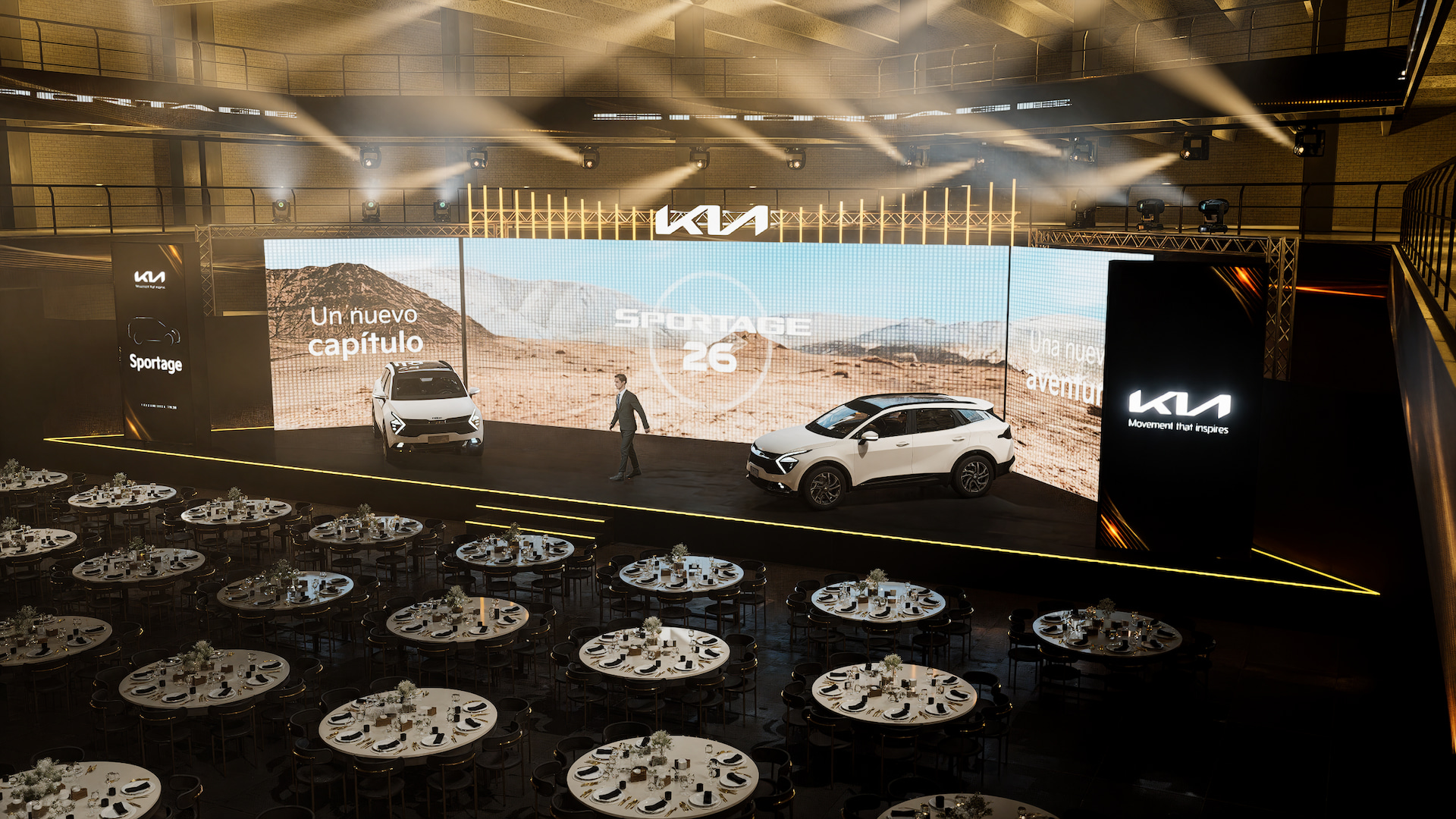
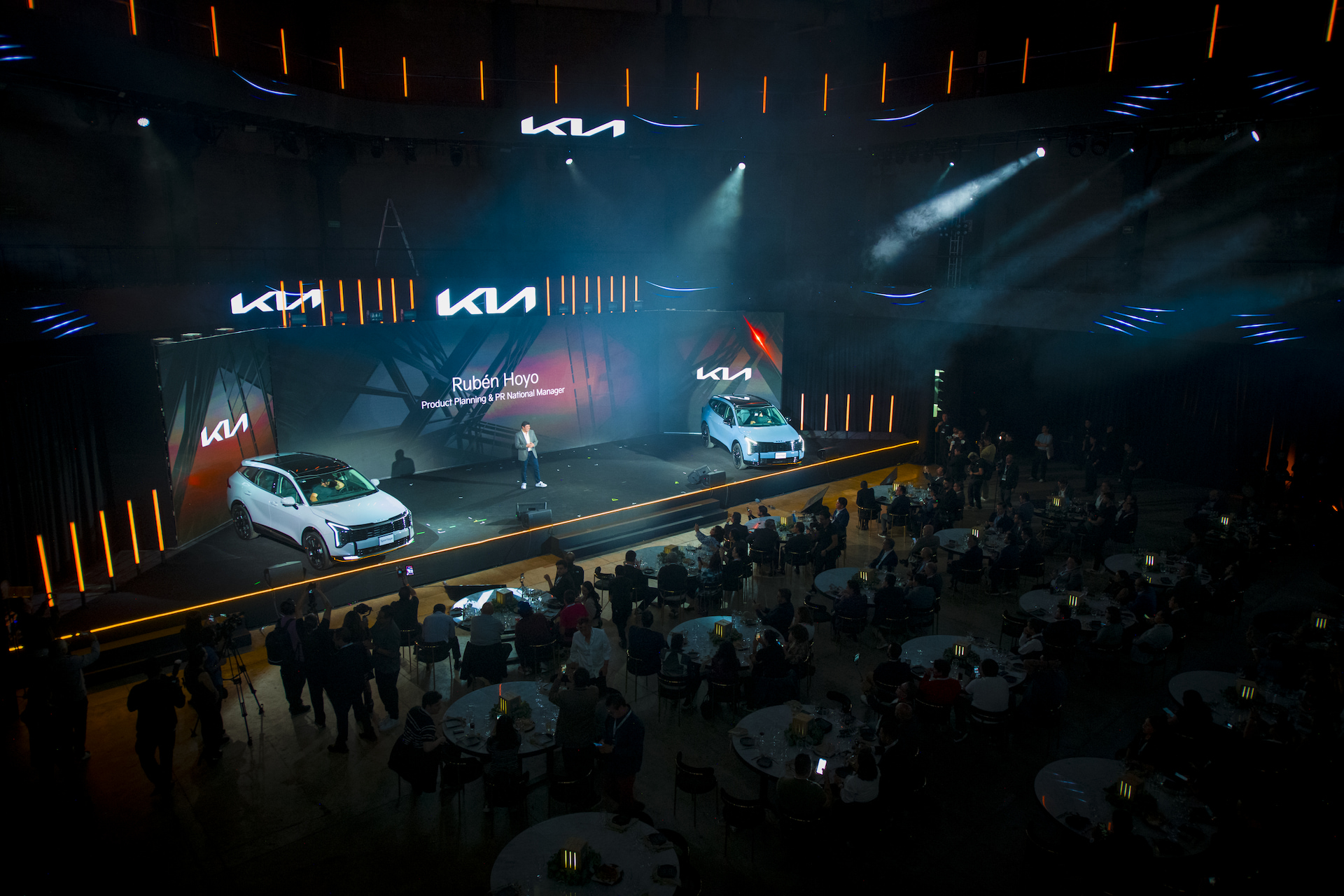
From immersive entertainment activations to large-scale corporate galas, the objective remains consistent: translating emotion and brand identity into environments audiences can immediately understand and respond to.
Fog, lighting, projection effects, and camera movement become part of the narrative framework rather than decorative additions. Visual atmosphere is calibrated early, allowing teams to evaluate how spaces will feel long before physical installation begins.
For ifahto, this continuity between concept and visualization is essential to both creative alignment and client confidence.
Also read: Mastering Neon, Fog & Rain in D5
Real-Time Rendering in Action: Lighting, Layout, and Crowd Flow
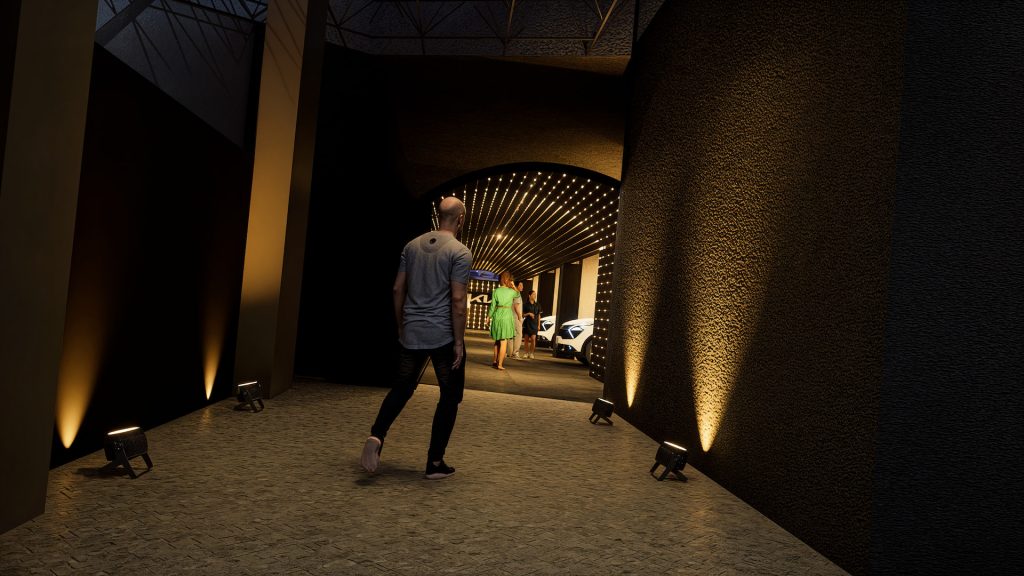
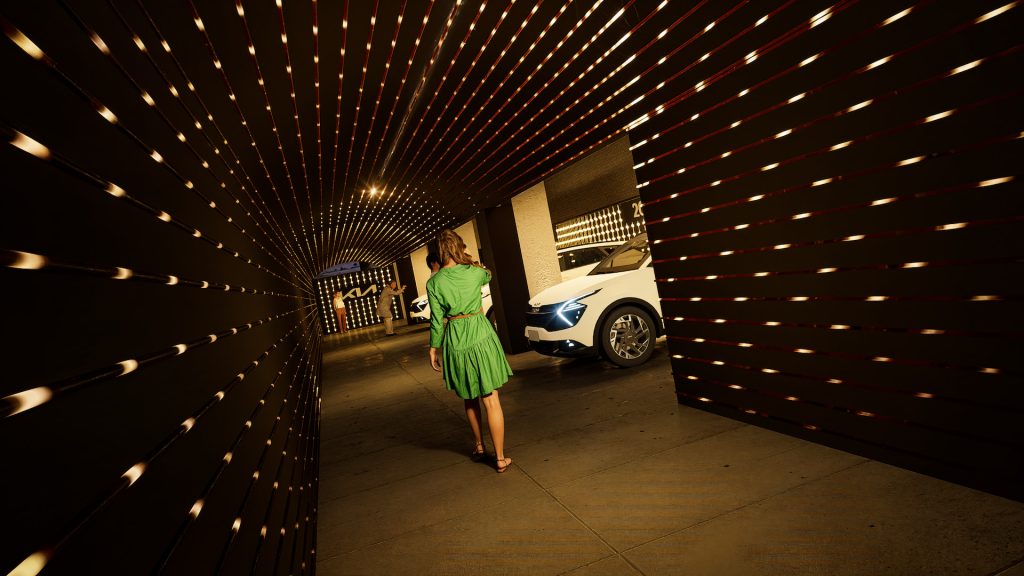
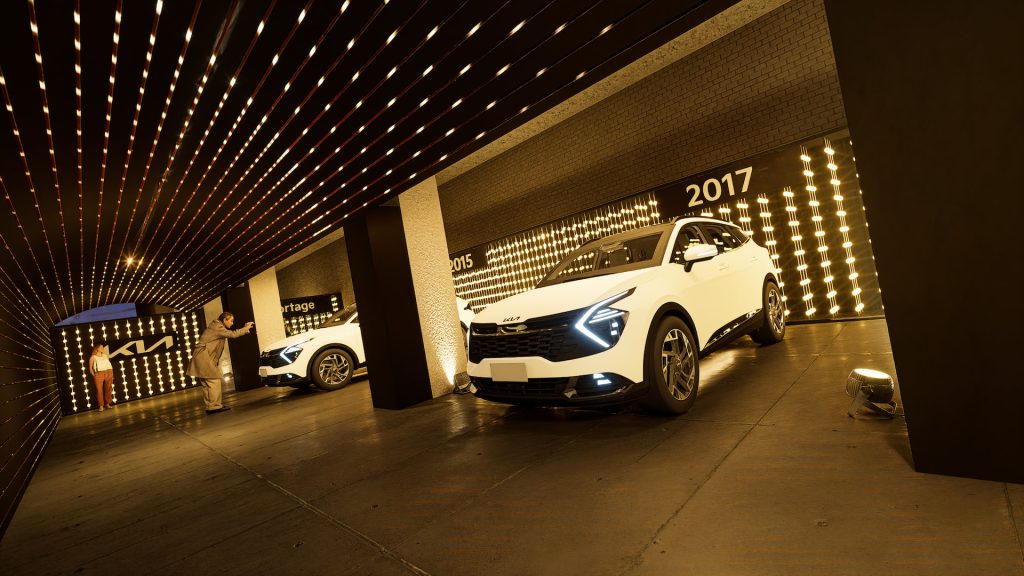
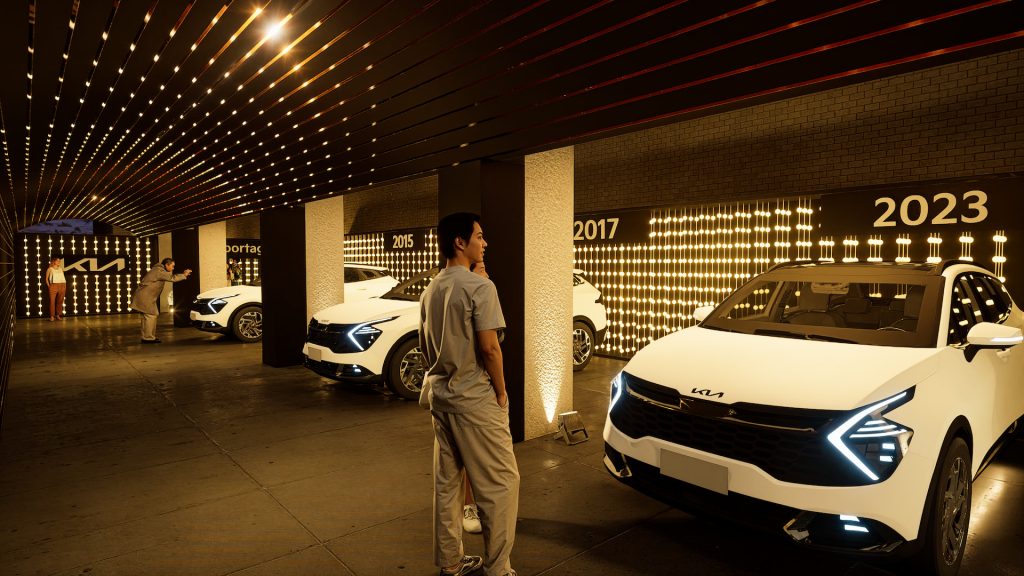
Visualizing circulation of events
The studio uses D5 to previsualize nearly every aspect of an event environment, including stage lighting, projection mapping, furniture layouts, circulation, and crowd flow. Subtle adjustments to atmosphere or audience composition are evaluated continuously during development, helping the team maintain consistency between presentation and execution.
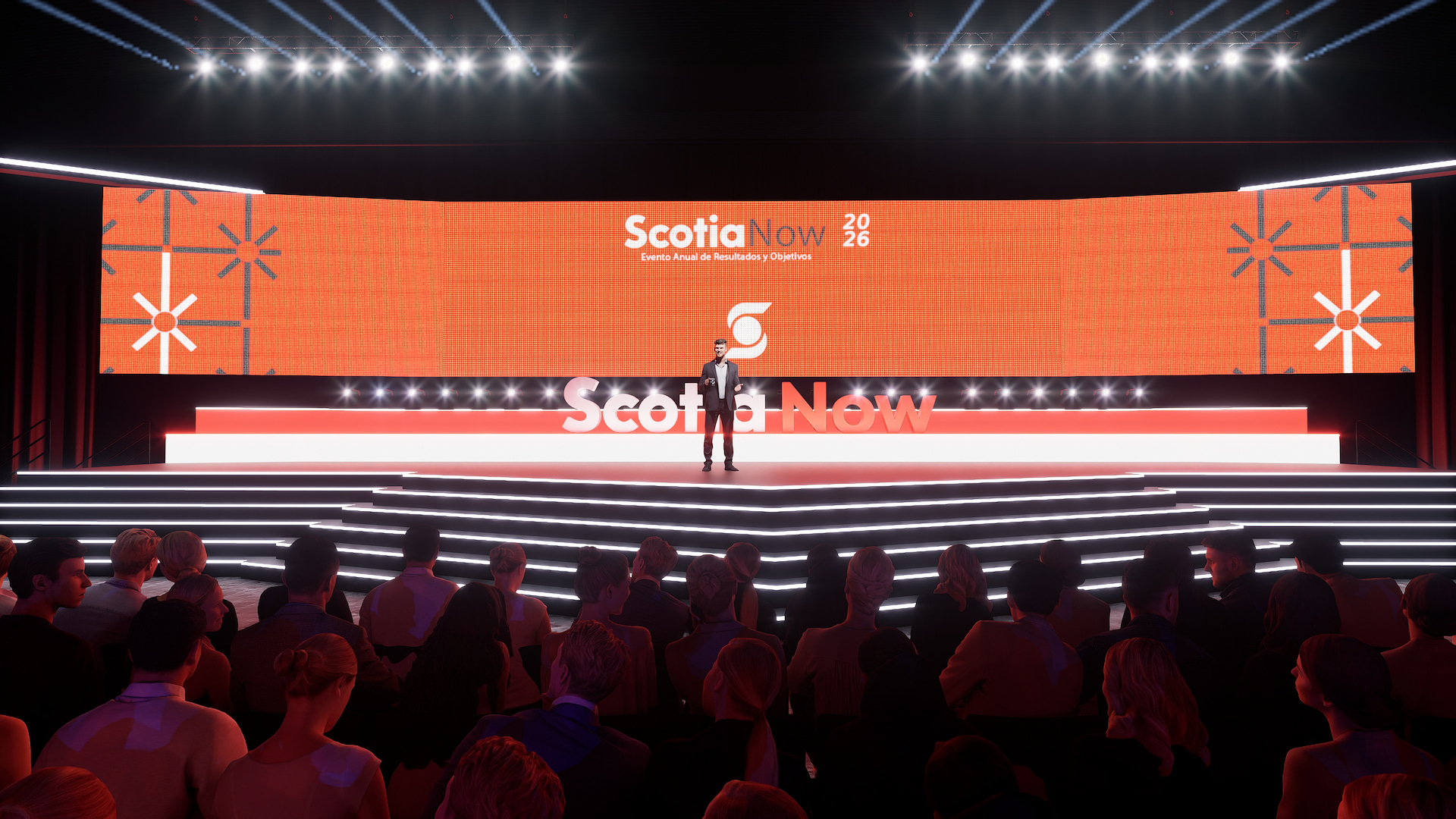
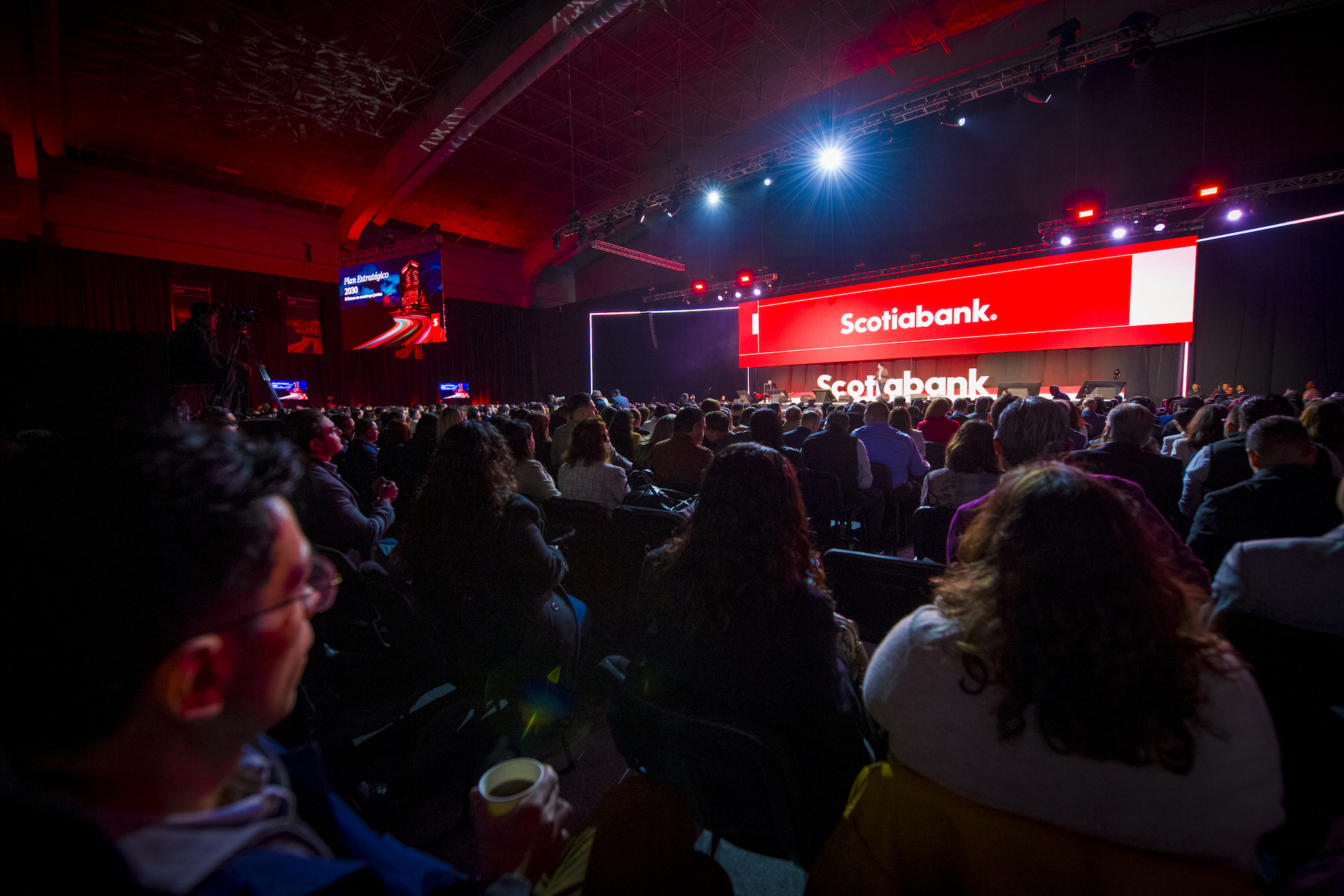
Lighting plays a particularly central role. Concert environments, volumetric effects, and large-scale projection setups are tested before on-site rehearsals begin, allowing the team to resolve spatial and atmospheric decisions earlier in the process.
Rather than functioning solely as presentation imagery, visualization becomes part of operational planning.
Clients frequently remark that the completed event resembles the renderings with near one-to-one accuracy — a result that reinforces trust during approvals and accelerates decision-making throughout production.
Also read: Exhibition Design at Scale: Inside G&A’s Visualization Workflow with D5 Render
Speed, Iteration, and Workflow Continuity
In Mexico’s highly competitive, pitch-driven market, responsiveness directly affects opportunity. By integrating real-time rendering into its workflow, ifahto reduced visualization time by one to two days per project compared to previous rendering pipelines.
This shift allowed the studio to increase proposal throughput while maintaining visual quality. Designers now complete two to three large-scale project proposals each week without extending production schedules, enabling the team to respond more effectively to fast-moving client timelines.
In an industry where presentations are often expected within less than 24 hours, D5’s real-time workflow allows lighting, materials, and environmental conditions to be adjusted continuously during review. Feedback can be translated into revised visuals on the same day rather than restarting lengthy rendering cycles.
“The savings we get from D5 help us grow the team and take on more projects,” says Aldo Moreno Cisneros. “It’s fast, intuitive, and efficient for the kind of work we do.”
The transition also reshaped onboarding and collaboration within the studio. New designers are able to reach production level within a relatively short timeframe, allowing visualization workflows to scale more consistently across teams.
Also read: Sell Renders Smarter: Psychology of 3D Visualization Impact
Real-Time Rendering and Experiential Design
For ifahto, real-time rendering has become less a visualization shortcut than an operational framework supporting the broader design process. By keeping visualization embedded within concept development, the studio is able to align atmosphere, execution, and storytelling earlier and with greater precision.
In experiential marketing, where audience perception often determines the success of a project before it is physically realized, that continuity becomes a competitive advantage.
When the completed event mirrors the visualization almost exactly, the rendering no longer functions simply as representation. It becomes part of how the experience itself is designed.
 English
 Español
 Français
 한국어
한국어 日本語
日本語