
Key Takeaways:
- Decision-First Visuals: Use visualization to clarify design during uncertain phases, not just for post-fix polishing.
- Atmosphere as Strategy: Space is perceived through intent, not just styled at the end.
- Strong competition entries are built on collaboration that sharpens decisions, aligning design intent and visualization.
In competition projects, revisions come constantly. I trust D5 because I know I can make changes the same day, sometimes within hours.
—Halil İbrahim Zeytinci, Oliworks Studio

Winning a competition is rarely about having more time, certainty, or a polished design. More often, it comes down to whether the core idea can survive the final stretch—those high-pressure days when decisions are compressed, materials are unresolved, and every choice risks weakening the original intent. That was the reality behind Slot Architects' entry for the Podgorica competition in Montenegro.
1. A Concept Designed to Create Change
Later praised by the jury as an "Event Factory," the proposal succeeded by embracing uncertainty and using visualization as a tool for ultimate clarity. For Slot Architects, architecture wasn't seen as a container for events, but as a system that actively generates them.
This mindset led to a design rooted in flexibility. Instead of assigning static programs to fixed rooms, the project was structured to support shifting uses across time, from the internal exhibition street, an urban spine of movement and overlap, to the industrial, prefabricated tectonics.
It was a fitting response to Podgorica's southern edge, an area still shaped by industrial remnants and uncertain futures. Rather than predicting what the city should become, the project leaves room for what it could become.
2. Entering at the Point of Decision
Visualization wasn't part of the process from day one. It arrived when it mattered most.
Visual artist Ibrahim of Oliworks joined in the final week before submission, working from a model provided by Slot. The design was still evolving, and materials were largely undecided. This is a familiar moment for competition teams: things that work on paper can fall apart in 3D. Atmosphere is still imagined. The risk isn't that the design is weak. It's that it's unclear.
This is where visualization became instrumental. It moved from output to input, supported by a real-time workflow that allowed decisions to stay fluid.
3. Speed That Shapes Decisions
There's no luxury of slow refinement in competitions. In this case, visualization wasn't used to polish. It was used to probe.
Multiple facade materials were tested quickly, not as aesthetic variations, but as perceptual trials. How does this surface feel up close? How does light behave across it? Does it reinforce the open, flexible intent, or undermine it?
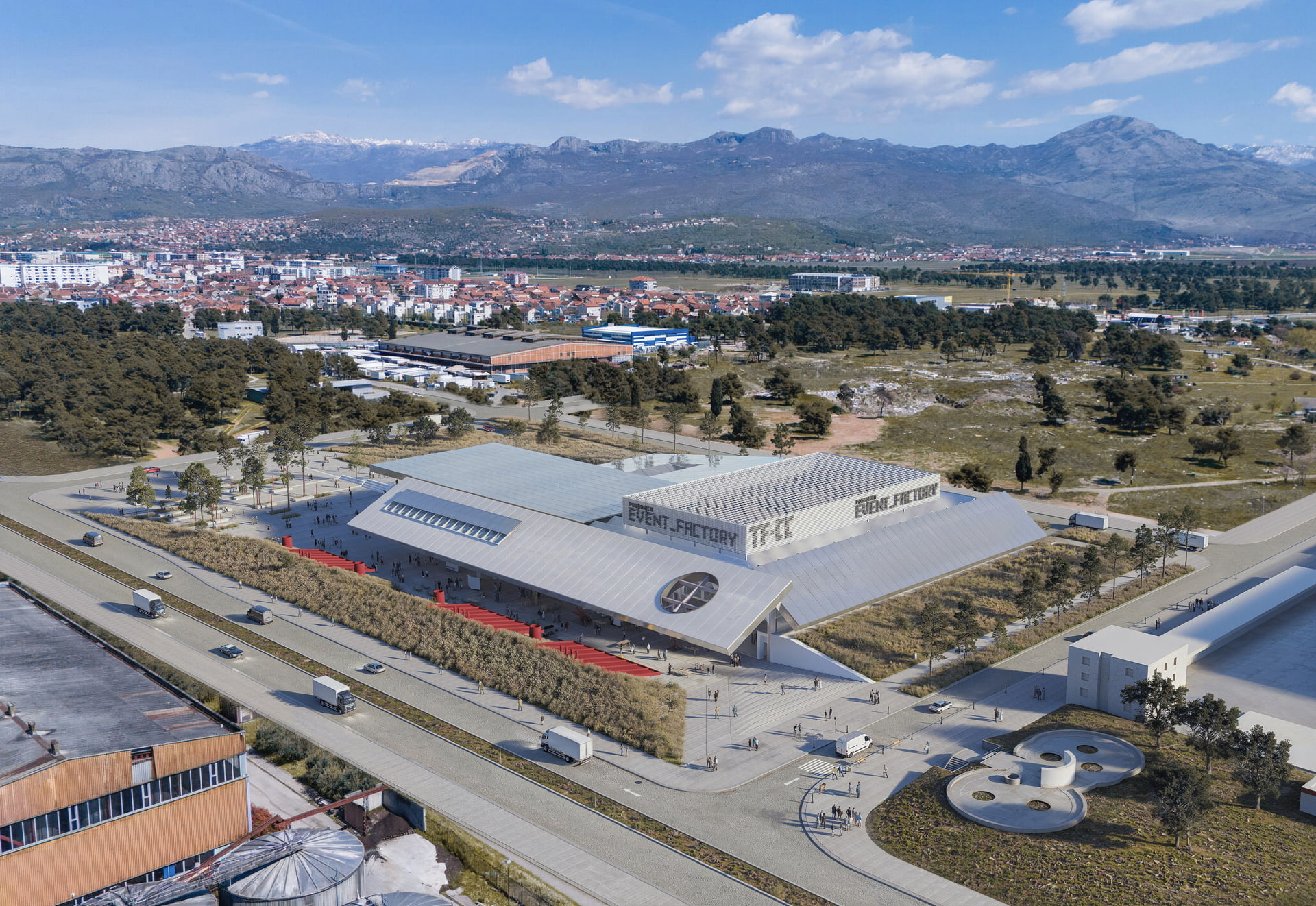
Using D5 Render, Ibrahim could move through versions in rapid succession: testing materials, lighting, and surface behavior without breaking the scene or restarting the setup. Speed mattered, but not for deadline's sake. Speed enabled design clarity while choices were still fluid.
"In competitions, you only have a few days," he explains. "You need speed, not just to finish, but also to explore. It's how you decide what works before it's too late."
Instead of locking in choices too early, the team could see what each one meant.
Also read: Mastering Architectural Landscaping with D5 Render Terrain Tool
4. Atmosphere as a Design Move
One of the most defining aspects of the final entry was its mood. Not overly cinematic, not hyperreal. Just clear, grounded, and atmospheric.
The visuals focused on what the space would feel like: light filtering through the exhibition street, interior and exterior spaces in dialogue, the landscape embankment softening the industrial edge. It wasn't about post-production polish. It was about getting the first render right, using real-time control over weather, light, and environmental balance so that atmosphere could guide every subsequent view.
Once the weather, lighting, and tone were established, every view carried that same visual language.
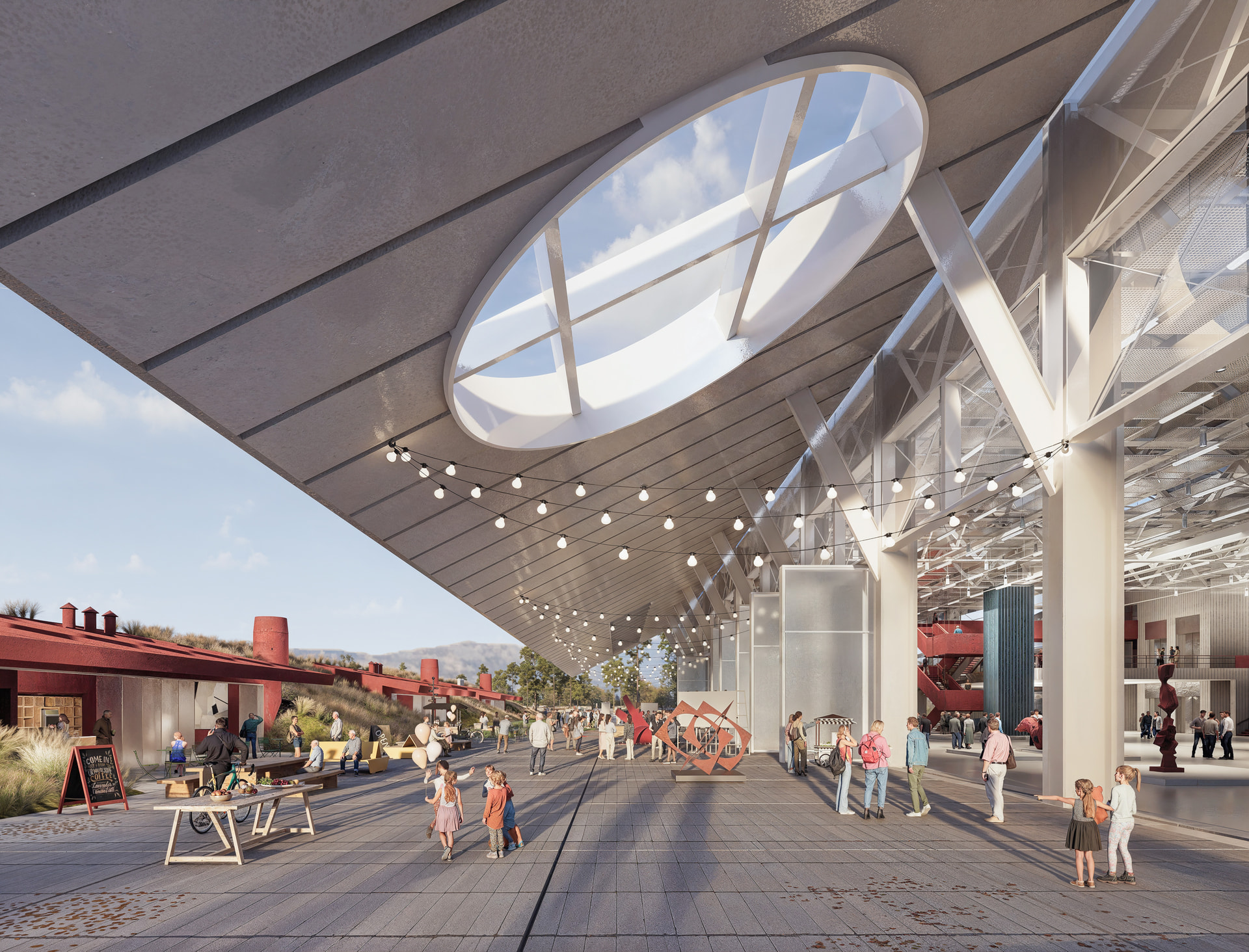
"I want the atmosphere and space to feel real yet designed.”
A workflow that allowed selective use of AI made this restraint possible—enhancing elements like vegetation and background context while keeping the architecture itself intentionally controlled. This balance prevented the visuals from outshining the design and kept the focus on spatial intent.
Learn more: How to create realistic rain, snow, and fog effects in 3 minutes
5. From Persuasion to Confirmation
For Slot, visualization wasn't about making the project look finished. It was about proving it still made sense.
Sectional perspectives and atmospheric views—kept consistent across revisions—helped the team verify what they couldn't fully articulate: that the spans felt open, not monumental. That circulation, landscape, and structure worked together as one spatial story, not just as parts.
By the final stretch, the visuals weren't exploring anymore. They were checking: is the project communicating what it's meant to?
That subtle shift, from persuading to confirming, often separates a strong entry from one that truly resonates.
6. Collaboration Under Pressure
With just a week before the deadline, SLOT Architects and Oliworks had to move fast—and in sync.
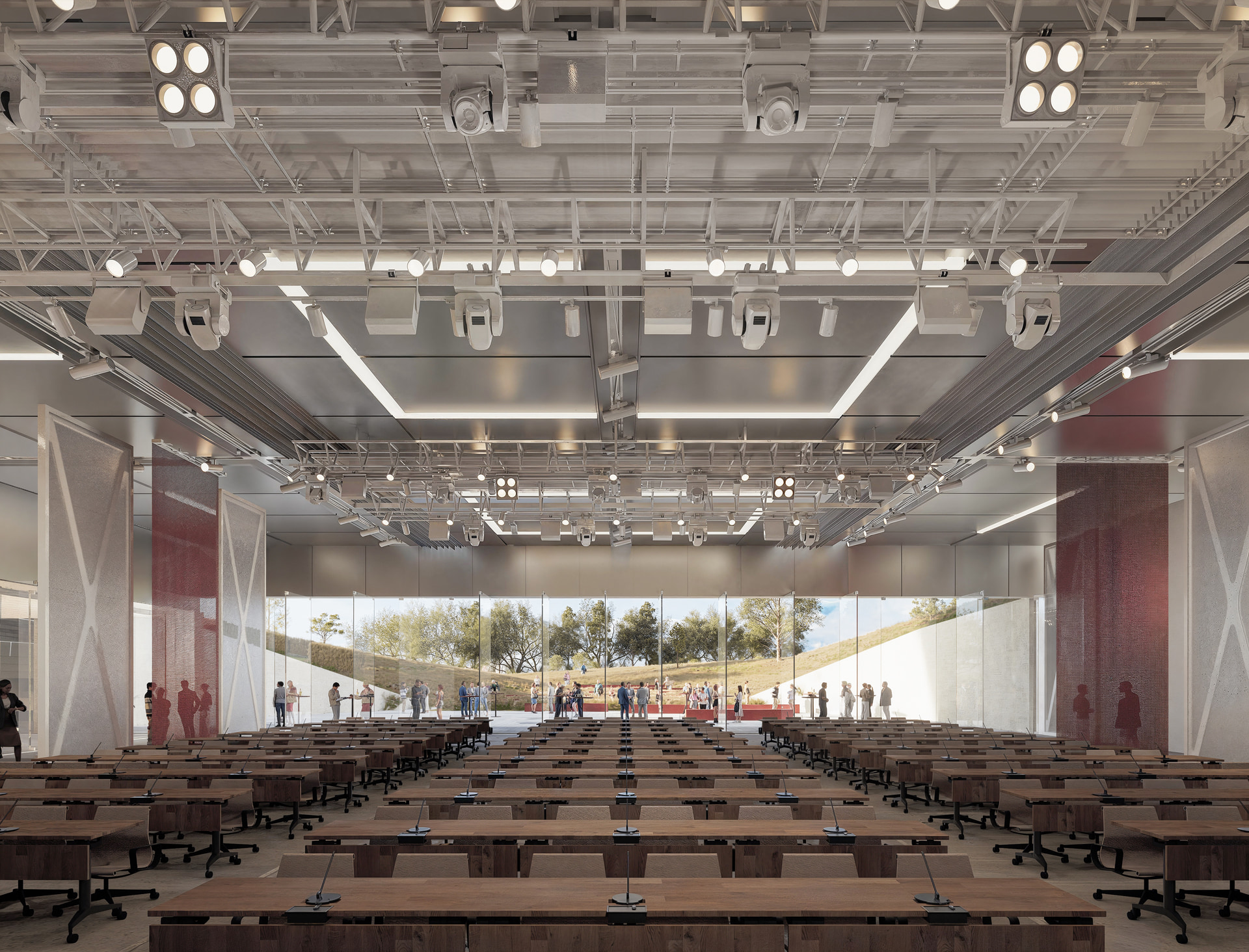
Slot led the design. Oliworks didn’t reshape it, but through rapid iteration, their visuals helped test materials, clarify atmosphere, and sharpen the final presentation.
On a tight timeline, trust and clarity mattered more than hierarchy. Distinct roles moved in sync, proving that under pressure, alignment turns complexity into clarity, fast.
7. How Wins Actually Happen
The Podgorica project didn't win because it was flawless. It won because the team made smart use of limited time, treated visualization as a tool for decision-making, not just presentation, and allowed uncertainty to stay visible until it could be resolved.
In the end, the project didn't just look convincing. It felt clear, and that feeling, delivered at the right moment, is often what wins.
8. See How D5 Fits Your Process
Interested in exploring how this workflow could support your team? Get in touch with us to discuss pricing, schedule a demo, or explore how D5 can fit into your design process.
9. Your Work Deserves the Spotlight
Has D5 transformed how you design, present, or collaborate? Turn your D5 Render project into a story that inspires designers around the world! Share your journey—and let the world see what’s possible.
By submitting your project, you could:
✅ Be featured in a global case study seen by thousands
✅ Co-host a D5 webinar and showcase your expertise
✅ Speak at official D5 events and elevate your industry presence
This is more than a feature—it’s your chance to grow your voice, build your brand, and inspire a global design community. Share your stories here.


 English
 Español
 Français
 한국어
한국어 日本語
日本語