
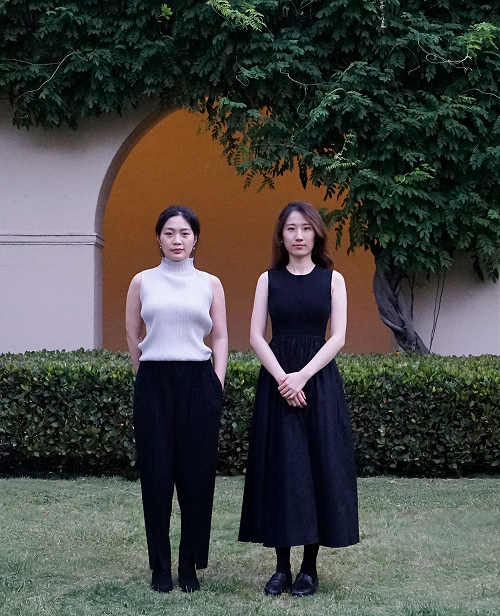
Winners of the Golden Mention Prize in The Field Station architecture competition, Jing Chen and Yanci Chen of YCJ Studio have crafted a proposal that intertwines ecological insight, spatial storytelling and contemporary visualization tools. Their winning project, Aqua Folium, exemplifies how architecture can emerge from close observation of landscape and material culture while projecting new possibilities for human–nature relationships.
Co-founders of YCJ Studio and practicing architects at Gensler on the U.S. West Coast, the duo bring more than a decade of collaboration shaped by graduate training at Washington University in St. Louis and the University of Michigan.
Their work has appeared across public, institutional and cultural projects in California and has been recognized by the Red Dot Design Award, Architizer A+ Awards and IDA Design Awards.
With Aqua Folium, they extend a practice grounded in rigorous contextual research and atmospheric expression — one that situates architecture as both an analytical and experiential endeavor.
💡 Key Takeaways: The YCJ Approach
- YCJ Studio bases their award-winning designs on rigorous ecological research, using natural motifs to drive architectural form.
- The team integrates D5 Render early in their workflow to test light, materials, and mood in real-time, bridging analytical work with visual storytelling.
- D5‘s realistic vegetation system was crucial for authentically visualizing the lush environmental character central to the project’s narrative.

1. Hydrocotyle as a Generative Motif: How Aqua Folium Began
For The Field Station competition, the team sought a conceptual anchor that could connect function, narrative, and ecology. Hydrocotyle spp., with its distinctive structure and adaptive growth pattern, emerged as a compelling starting point.
The plant’s morphology resonated with the qualities they hoped to cultivate — spreading networks, fluidity, and an intimate relationship with moist environments. Rather than serving as a visual reference alone, Hydrocotyle became a design driver, shaping both conceptual thinking and spatial atmosphere.
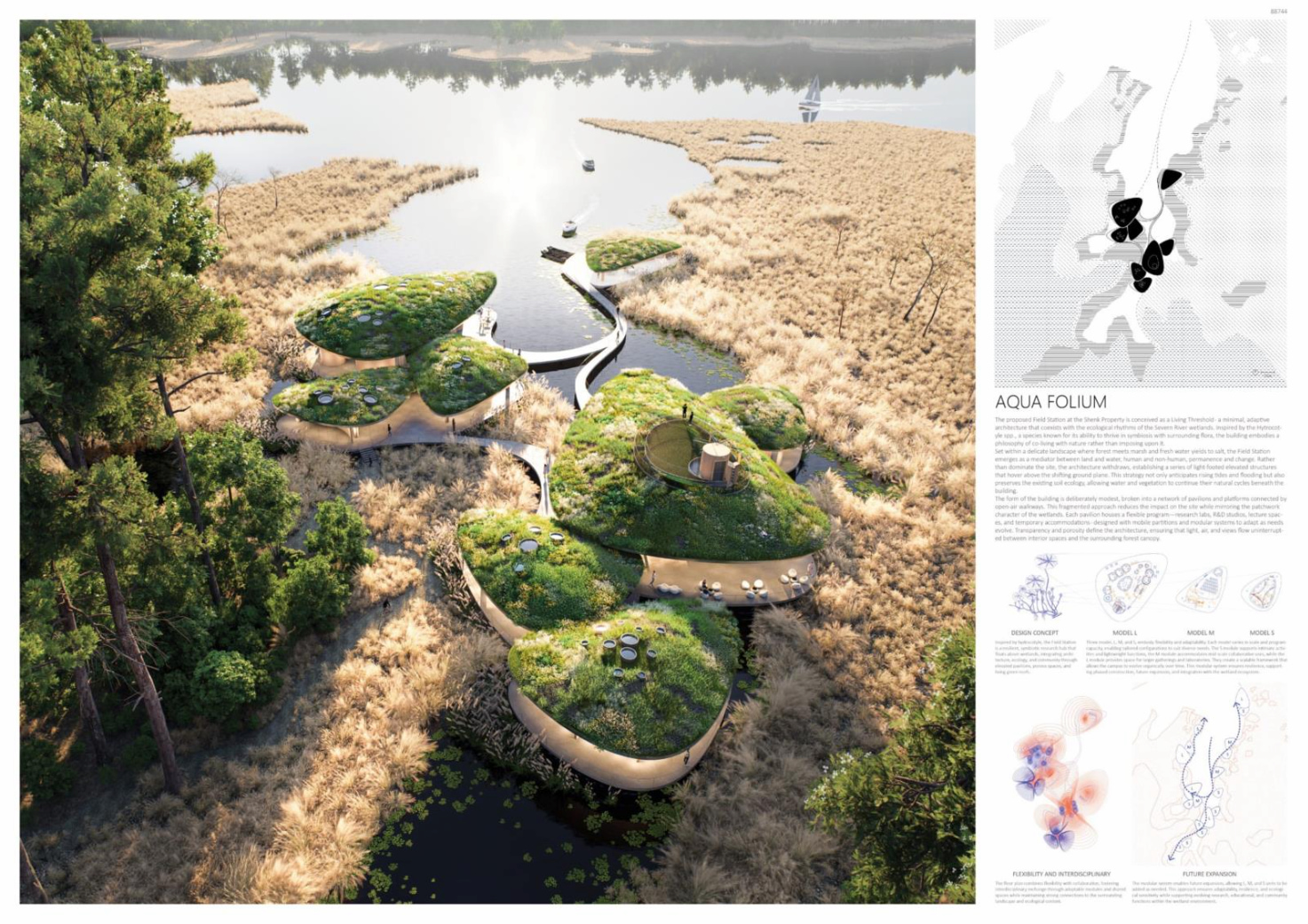
This approach reflects YCJ Studio’s broader method: maintaining an evolving personal archive of sketches, photographs, ecological observations, and visual notes. This living library grounds their conceptual work in real-world environmental and cultural insights.
2. A Research-Driven Workflow Supported by Rhino, Revit & D5 Render
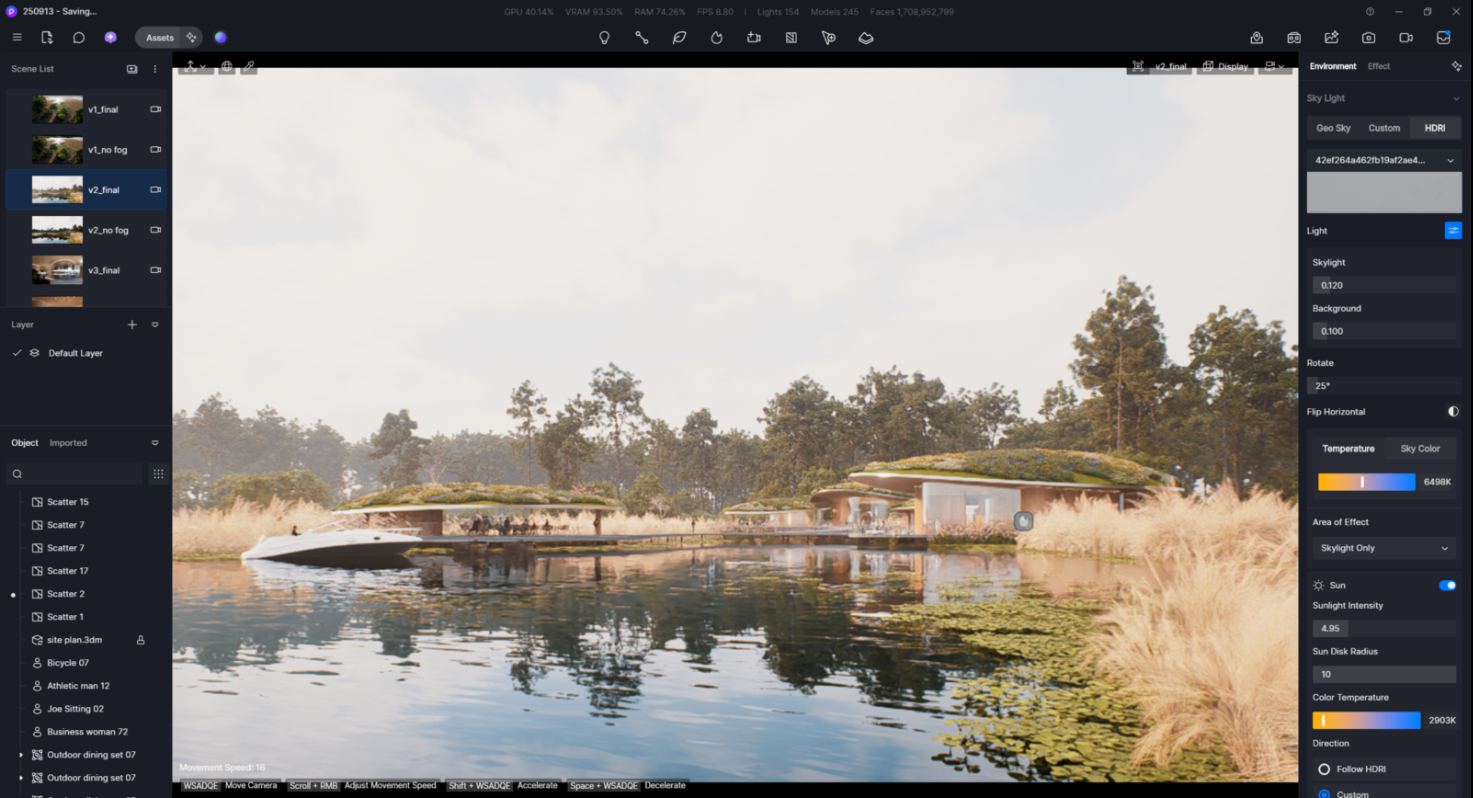
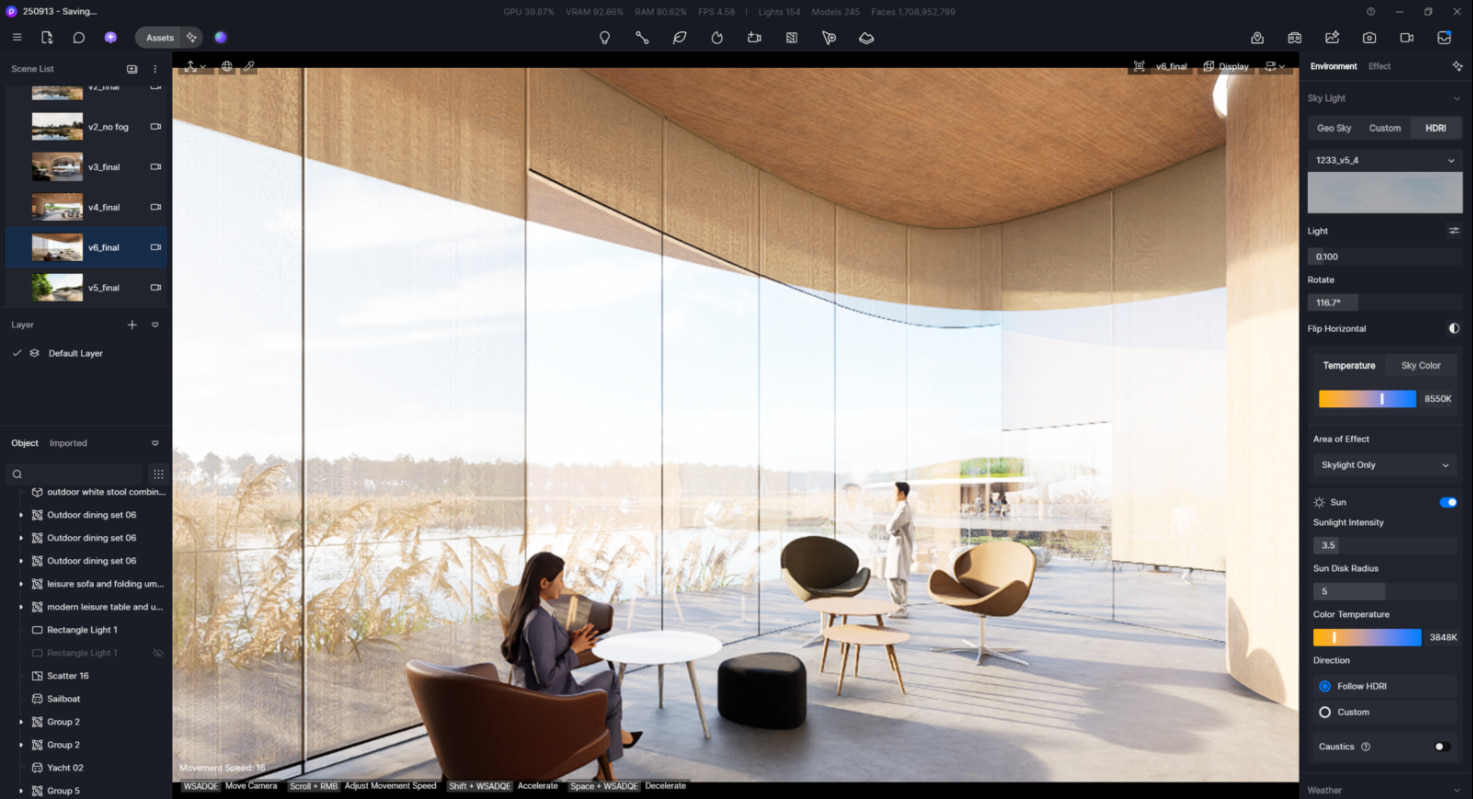
YCJ Studio approached Aqua Folium through a clear, research-led process — beginning with site analysis and contextual studies, then moving into conceptual mapping and exploratory study models. This workflow is reinforced by a toolset the studio relies on across all projects: Rhino for early geometric and spatial exploration, Revit for technical development, and D5 Render as the bridge that translates ideas into atmosphere.
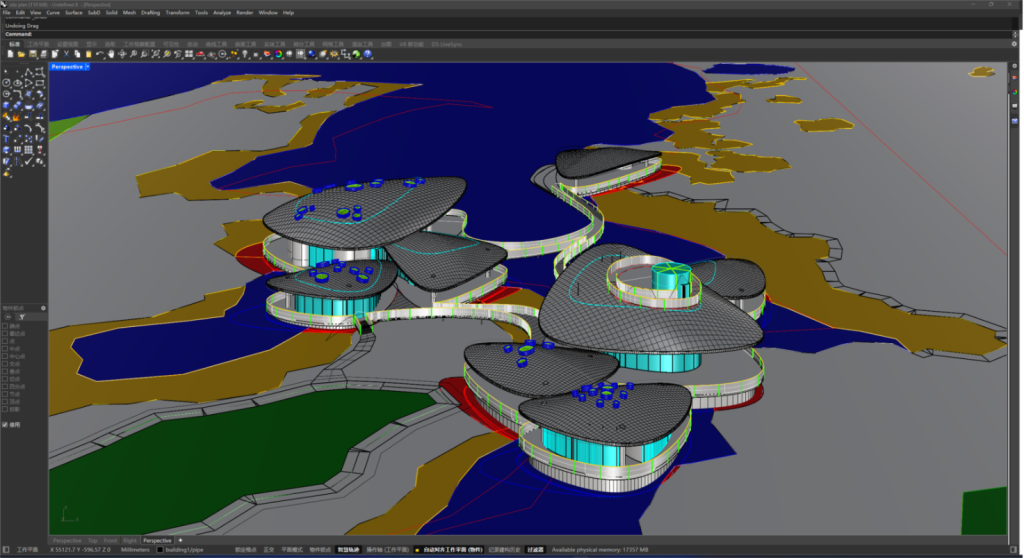
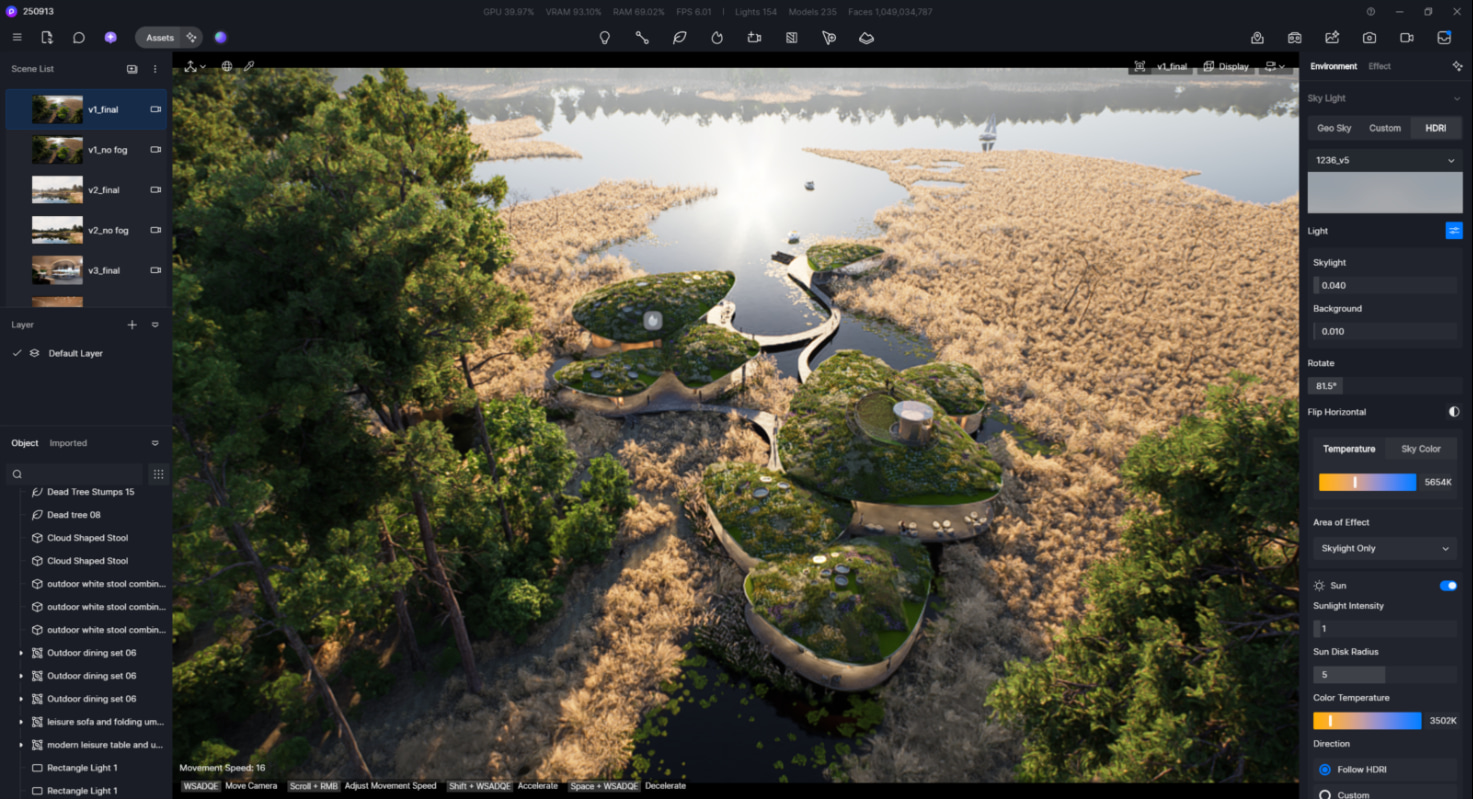
D5 enters the process early, allowing the team to test light, material and mood in real time, and later becomes the primary tool for producing competition visuals. This integrated approach ensures continuity from initial concept to final presentation, keeping both narrative clarity and experiential quality at the forefront.
3. Vegetation, Atmosphere, and Efficiency of D5 Render
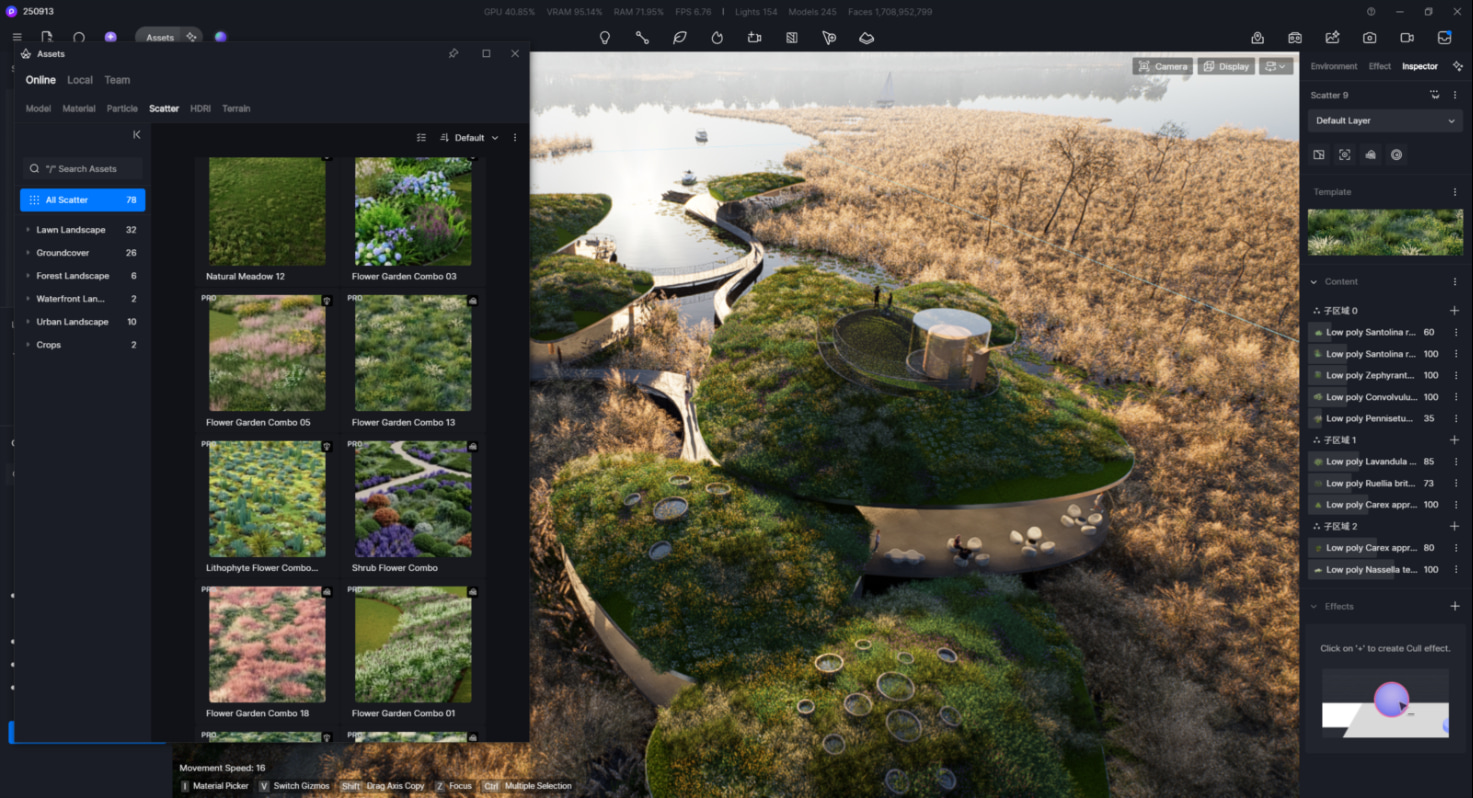
Because vegetation plays a central role in Aqua Folium, D5 Render‘s nature collection and toolkit became essential to shaping the project’s ecological atmosphere. Its botanically realistic library allowed YCJ Studio to build both native landscapes and lush rooftop gardens with authenticity, while procedural scattering tool D5 Scatter enabled fast iteration of density, composition and mood.
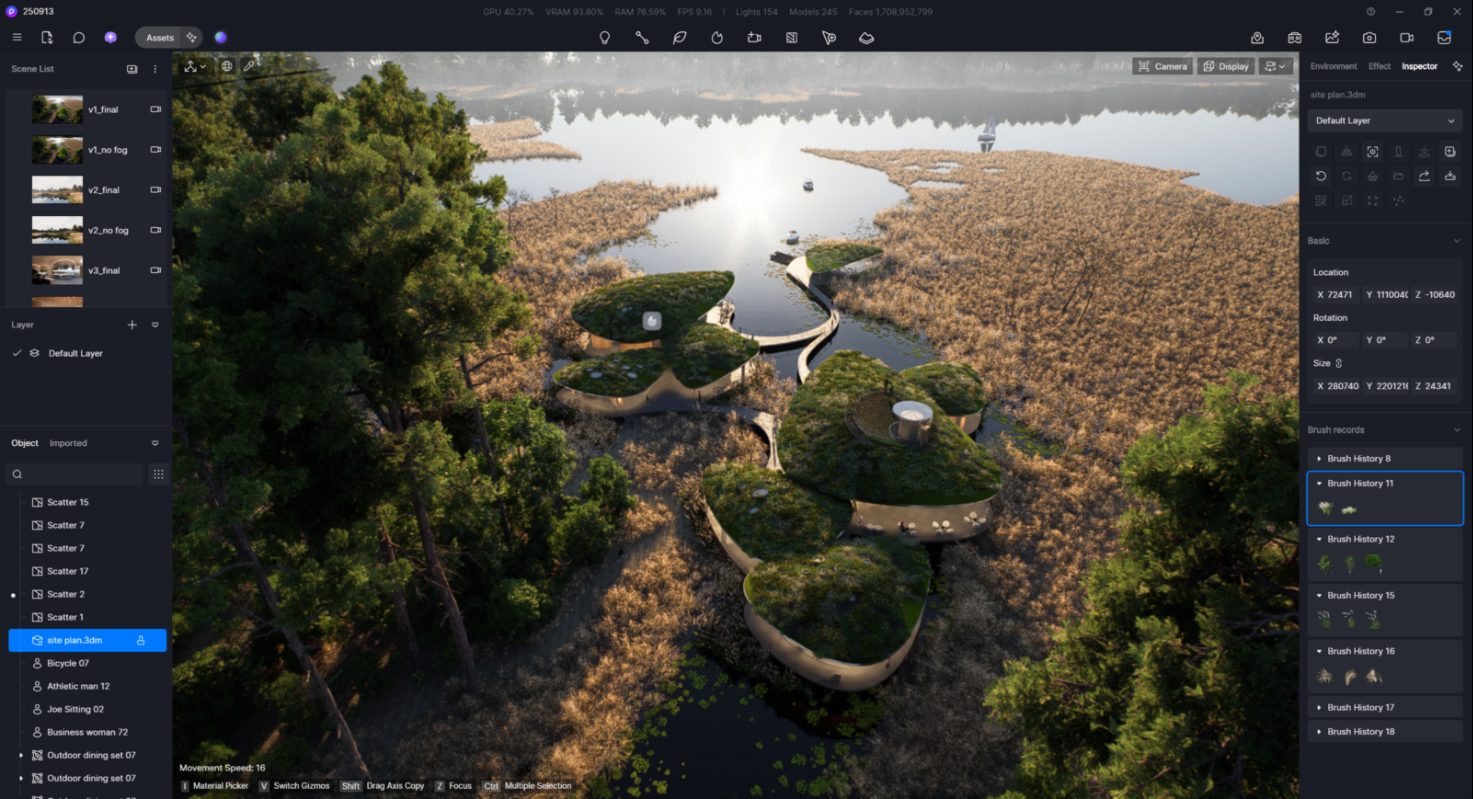
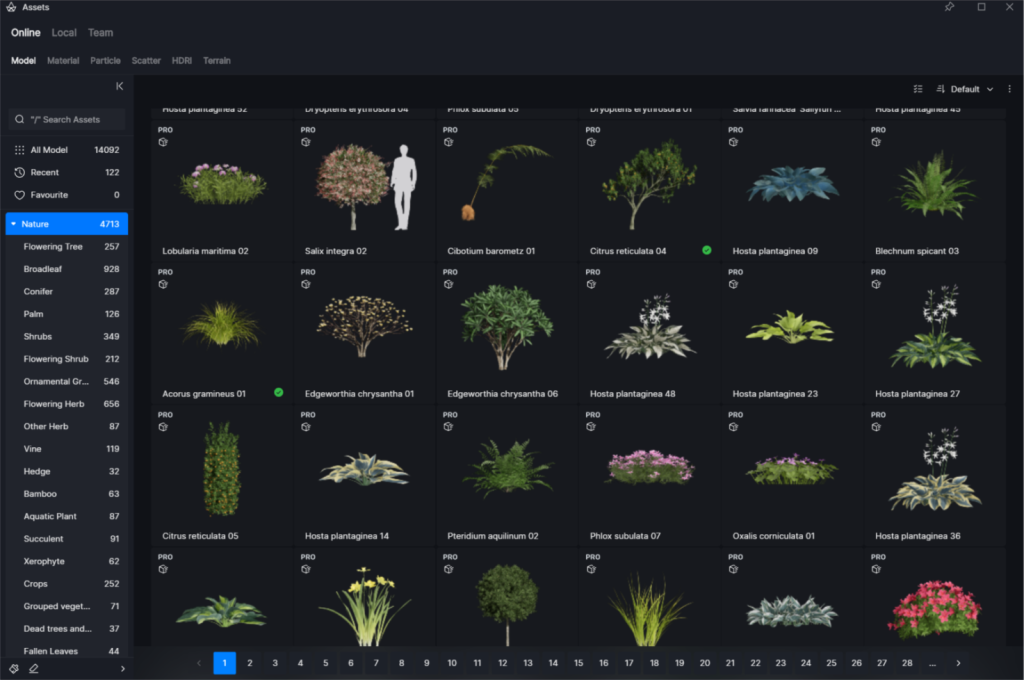
Beyond vegetation, D5‘s overall efficiency significantly supported the team’s workflow. Real-time rendering speed, high-quality assets, and well-calibrated HDRI lighting presets helped them focus on narrative clarity. Together, these strengths allowed the team to craft immersive, coherent visuals that accurately express the project’s environmental character and experiential intent.
4. Conclusion
Aqua Folium, winning project of the Golden Mention Prize in The Field Station competition, showcases YCJ Studio’s ability to blend ecological research, narrative depth and contemporary visualization into a cohesive architectural vision. Their process demonstrates how thoughtful use of digital tools can bridge rigorous analytical work with immersive atmospheric storytelling.
Fire up D5 Render and start creating today.
5. See How D5 Fits Your Process
Every studio works differently. If you’d like to see how D5 can integrate into your specific modeling tools and visualization pipeline, connect with our team below to discuss your workflow and goals.
6. Your Work Deserves the Spotlight
Has D5 transformed how you design, present, or collaborate? Turn your D5 Render project into a story that inspires designers around the world! Share your journey—and let the world see what’s possible.
By submitting your project, you could:
✅ Be featured in a global case study seen by thousands
✅ Co-host a D5 webinar and showcase your expertise
✅ Speak at official D5 events and elevate your industry presence
This is more than a feature—it’s your chance to grow your voice, build your brand, and inspire a global design community. Share your stories here.
Read More: Stories of Top Architects & Designers using D5 Render
KPF’s Innovation Leap with D5 Render: Boosting Efficiency and Cutting Costs
Why We Embraced New Landscape Design Technologies | SWA Shanghai
Beyond Rendering: BIG Unlocks D5’s Potential as an All-in-One Design Suite
Designing Fiction into Reality: How Dominik Los Won Eye Line 2025 with a Story-First Approach
Turning Emotion into Space: Behind the Scenes of a Winning Buildner Architecture Competition Project
Crafting Visual Masterpieces: Ahmed Abdelgafard’s Approach with D5 Render
FAQs
A: A successful workflow bridges technical precision with emotive storytelling. The Golden Mention-winning team at YCJ Studio utilizes a proven stack: Rhino for early spatial concepts, Revit for technical development, and D5 Render as the essential bridge. Integrating a real-time rendering engine like D5 early in the process allows for rapid iteration of light, material, and mood, ensuring narrative clarity under tight competition deadlines.
A: Achieving lush, authentic environments without sacrificing workflow speed is a common challenge. YCJ Studio addresses this in their “Aqua Folium” proposal by utilizing D5 Render’s robust, botanically accurate asset libraries. Furthermore, leveraging procedural tools, such as D5’s scattering features, enables designers to quickly iterate on the density and natural composition of complex landscapes like rooftop gardens.
A: Modern research-driven practices suggest visualization should be an active design tool, not just a final step. YCJ Studio introduces real-time rendering early to test conceptual ideas against environmental realities. By using efficient tools like D5 Render during the design phase allows architects to analyze light, atmosphere, and experiential quality simultaneously with form, leading to a more cohesive final project.
A: Communicating abstract concepts requires a fusion of precise modeling and atmospheric control. YCJ Studio used initial sketches and Rhino models to define the geometry based on plant morphology. To express “fluidity” visually, they relied on real-time rendering to manipulate high-quality HDRI lighting and materials instantly, crafting an immersive mood that accurately expressed their complex environmental intent.
A: Beyond a strong concept, the “atmosphere” of the presentation is vital. Winners like YCJ Studio succeed by blending rigorous analytical work with immersive storytelling. They achieve this by adopting rendering tools known for rendering speed and high-quality assets. This efficiency buys the design team time to refine the visual narrative, ensuring the final images are both beautiful and deeply meaningful.
 English
 Español
 Français
 한국어
한국어 日本語
日本語