
Key Takeaways:
- At Ennead, real-time visualization shifts critical spatial, experiential, and organisational decisions earlier—when circulation, section, and adjacencies can still be meaningfully adjusted, avoiding costly downstream consequences.
- By working inside a model sync with D5, designers, consultants, and clients respond to the same spatial reality, reducing misinterpretation and accelerating alignment across disciplines and stakeholders.
- Embedding visualization directly into the design process allows designers to test light, material, sequence, and atmosphere themselves, turning visualization from a presentation artefact into a collaborative decision-making medium.
Studio Overview
- Location: United States and Shanghai, China
- Team Size: 200, with 30+ Designers and Architects across 6 Building Typologies and Centers use D5
- Studio Type: A large, multidisciplinary architectural firm working on complex public projects
- Project Types: Large-scale public projects, Healthcare facilities, Academic campuses, Cultural and performing arts buildings
- Modeling Tools: Rhino and Revit
When Visualization Became Structural, Not Supplemental
At Ennead, complexity is not the exception. It is the baseline.
Large-scale healthcare facilities, civic institutions, academic campuses, and cultural projects share a common condition: early decisions are disproportionately consequential. Circulation logic, sectional relationships, adjacencies, and spatial sequencing quickly cascade into structure, systems, envelope strategies, and cost. Once those foundations are set, even minor revisions ripple across disciplines.
The inflection point came when project complexity, delivery speed, and stakeholder expectations converged. Visualization was no longer a downstream communication artifact. It was being used live with clinicians, boards, public agencies, and cultural stakeholders during schematic design and design development. At the same time, expectations shifted toward same-day, same-meeting feedback on daylight, material intent, façade logic, and spatial experience.
Ennead’s legacy workflow—Revit and Rhino models feeding offline rendering pipelines with long render cycles and heavy post-processing—became a constraint. Visualization was slowing design velocity and fragmenting BIM and computational workflows rather than integrating them. The issue was not image quality. It was structural separation.
That realization made the shift unavoidable.
Before → After: Rewiring the Design Loop
Previously, Ennead’s design loop was sequential:
Model development → Export → Scene rebuild → Rendering → Review → Redline → Re-render.
Each handoff introduced latency and interpretation. Rhino-based form-finding and parametric façade studies advanced in one environment. Revit documentation models evolved in another. Visualization happened downstream, detached from both. Iteration required geometry cleanup, material reassignment, lighting reconstruction, and view guessing. When clients requested adjustments during live meetings, the pipeline could not keep pace.
Today, that loop has collapsed into a concurrent model.
Design authoring, visualization, and review occur in parallel within a shared spatial environment. BIM and Rhino models remain live. Spatial testing happens while geometry is still evolving. Circulation, scale, daylight, and material transitions are evaluated during working sessions—not deferred to presentation milestones.
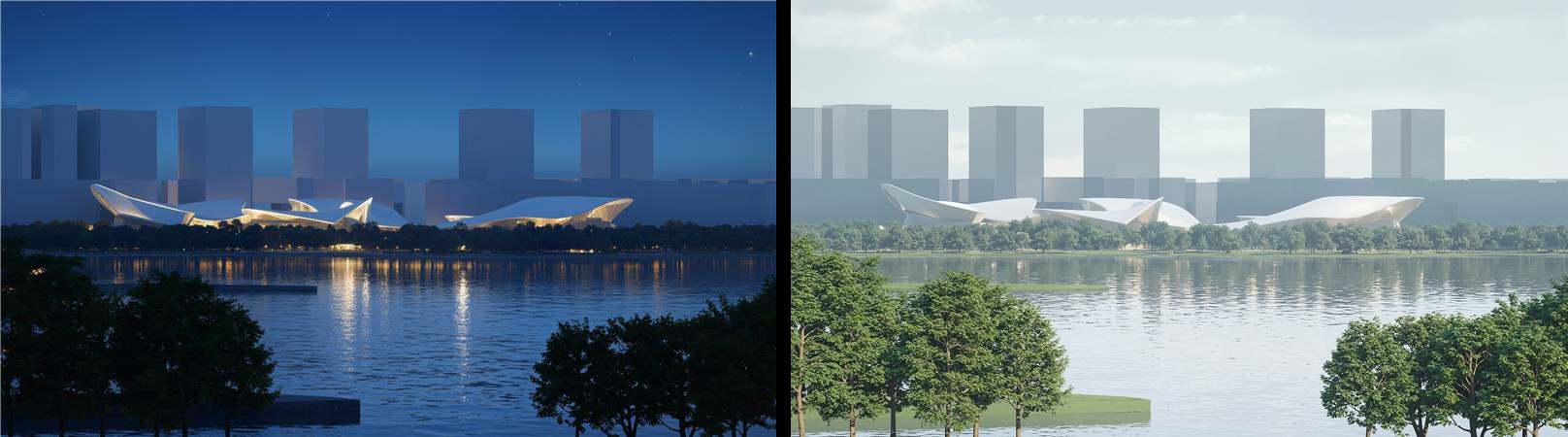
The shift is not about faster rendering. It changes when alignment happens and who participates in it.
Also read: D5 Rhino LiveSync: Effortless Real-Time Rendering Workflow
Workflow Anatomy: How It Operates Now
A typical internal session now functions as a live convergence point:
- Parametric studies from Rhino remain interoperable with Revit models.
- Material substitutions are tested directly in the shared scene.
- Time-of-day conditions are adjusted in real time.
- Façade logic updates are reflected without scene rebuild.
- Sightlines and sectional compressions are evaluated spatially, not abstractly.
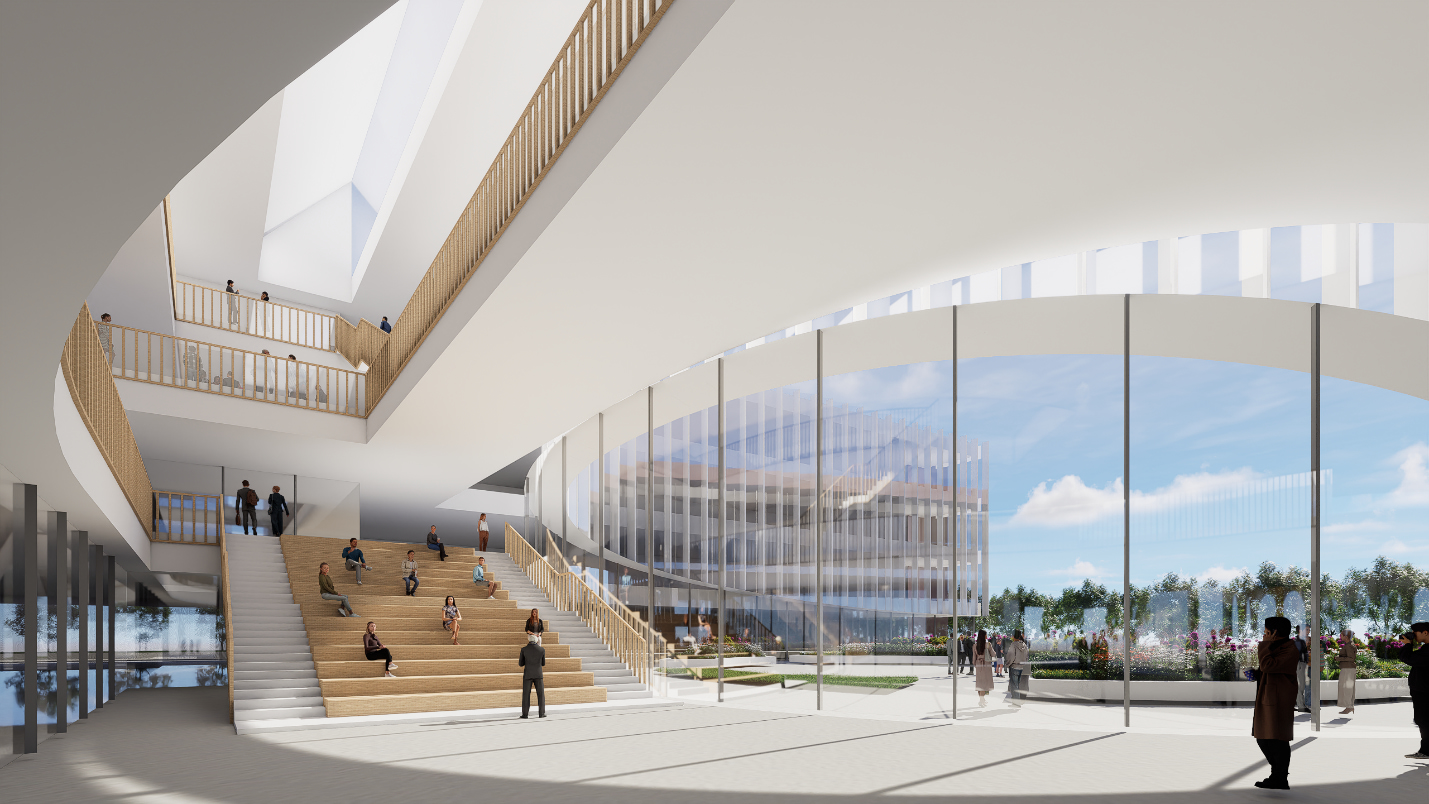
Because the environment is shared, architects, design technologists, and leadership respond to the same spatial conditions simultaneously. Decisions are carried forward not only through drawings, but through agreed spatial views and sequences that preserve intent across phases.
With D5 for Teams, this shared environment is not a presentation file—it is active design infrastructure. Contributors across offices work within the same scene context, replacing sequential translation with concurrent iteration. The platform becomes the spatial meeting ground where BIM, computational studies, and experiential testing converge.
Also read: D5 Studio: Streamline Design Workflows & Boost Collaboration
From Proving Ideas to Aligning People
Clarity has shifted from proving concepts to aligning stakeholders around lived experience.
Internally, teams use shared visualization to understand how sequences unfold, how light shapes emotion, and how material choices register at scale. When everyone can effectively “stand” in the same space, discussions move beyond preference toward shared intent.
Externally, clients respond to experience rather than representation. Feedback targets use, comfort, and adjacency while decisions are still flexible—rather than challenging fundamentals late in development.
As Robinson Strong, Computational Designer, puts it:
Visualization isn’t about polish. It’s about clarity. When embedded in the design process, it shortens feedback loops, strengthens design conviction, and saves time rather than burdening the last mile.

Where Misalignment Used to Surface
Misalignment often emerged at transition points—when a design moved from concept to coordination, or from internal alignment to external review.
Spatial assumptions that were clear in plan could diverge in section. Circulation that appeared efficient diagrammatically could feel compressed during peak use. Daylight strategies validated in drawings could underperform experientially.
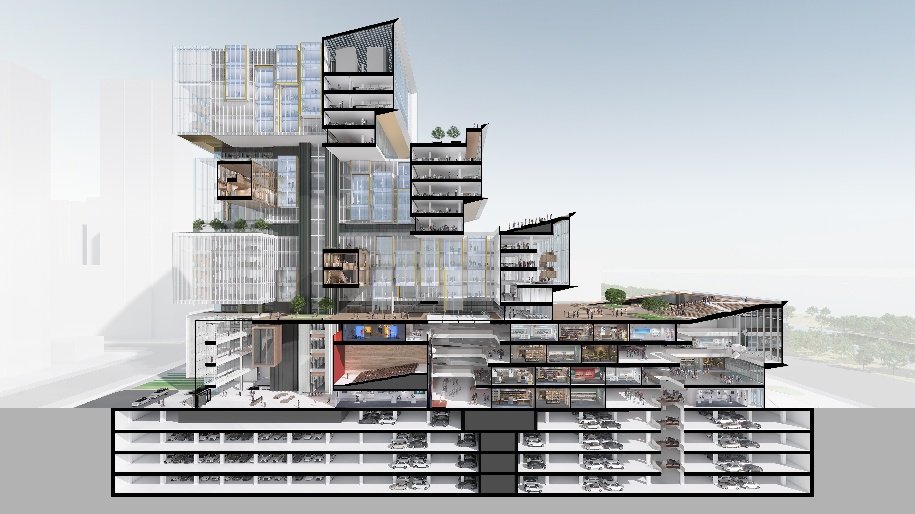
In one complex public project, a real-time walkthrough revealed that a key circulation space felt constrained at moments of highest occupancy—an issue invisible in plan and section. Because BIM and visualization were tightly coupled, sectional adjustments were made before structural coordination began, preventing weeks of downstream redesign.
The value became undeniable when testing no longer required returning to the authoring model for every iteration. As Architect LaNee Carter notes:
D5’s value became undeniable when we could update and test material changes directly in the renderer without going back into Revit, allowing for faster iterations across multiple views.
Master Planning and Expanded Visual Storytelling
The shift has also expanded how Ennead approaches master planning. Visualization is no longer confined to building-scale representation; it supports district-scale storytelling, contextual testing, and phased development strategies. Atmosphere, material identity, and landscape integration can be explored across larger territories while remaining linked to live design models.
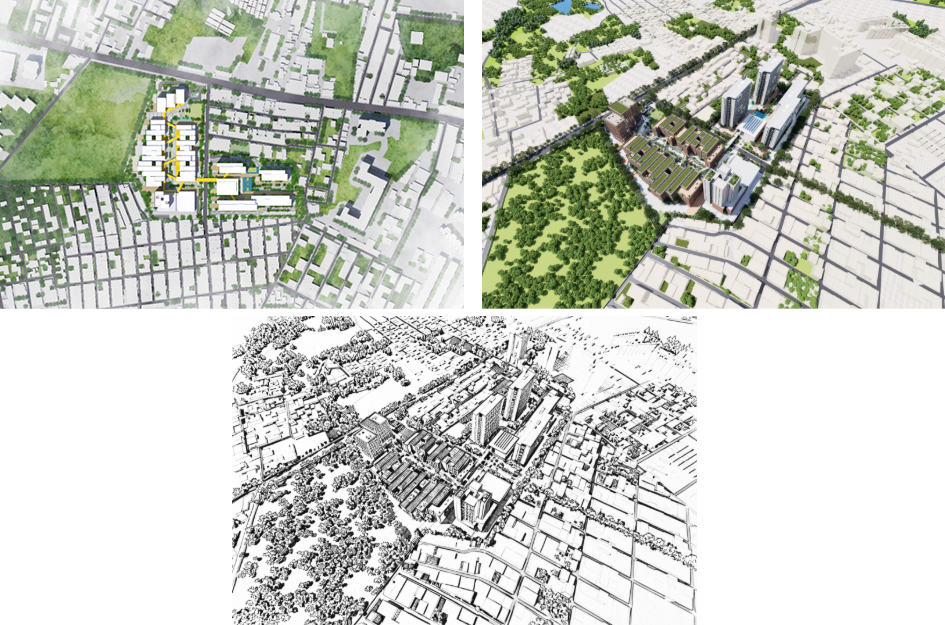
AI-assisted rendering and style transfer further diversify visual storytelling without detaching it from design intent. Early scenes can be elevated rapidly to test mood, environmental character, and narrative direction while core geometry and planning logic remain intact. Rather than replacing design judgment, these tools reduce manual overhead and allow teams to evaluate experiential qualities earlier.
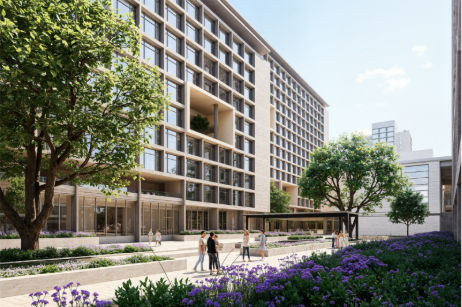
As Kevin Kim, Senior Designer, reflects on the shift:
Before this, visualization felt restricted by the limitations of the mainstay programs. Now it feels like a new versatile tool has diversified the possibilities of visual storytelling.
Scaling Across Typologies
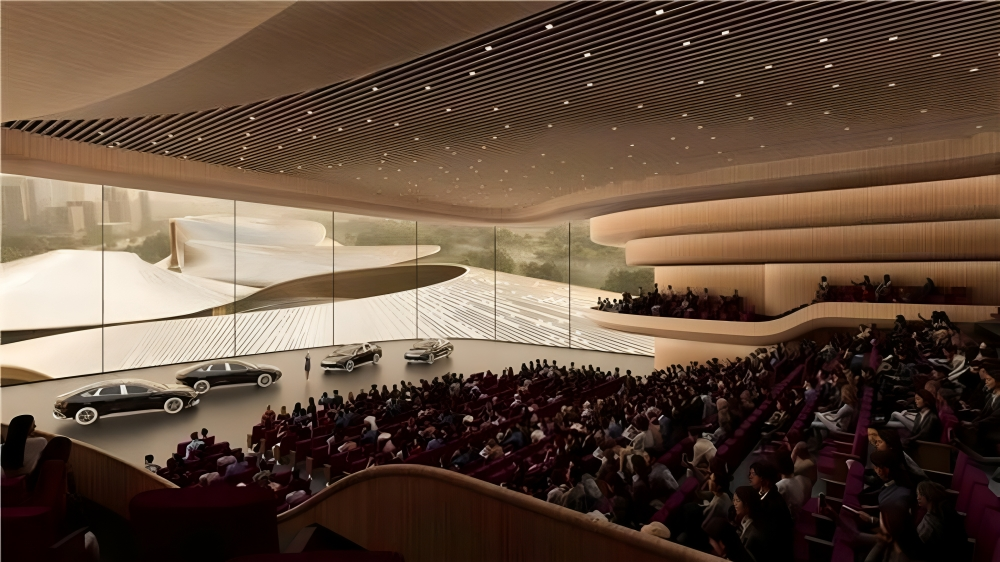
Ennead’s shift was not tied to a single building type. Healthcare interiors demand simultaneous evaluation of circulation, daylight, privacy, and material continuity. Performing arts projects require time-dependent testing of arrival sequences, sightlines, and audience-performer relationships. Competition work compresses iteration cycles while demanding immediate spatial legibility.
Across typologies, the requirement is the same: spatial decisions must be tested while they are still flexible.
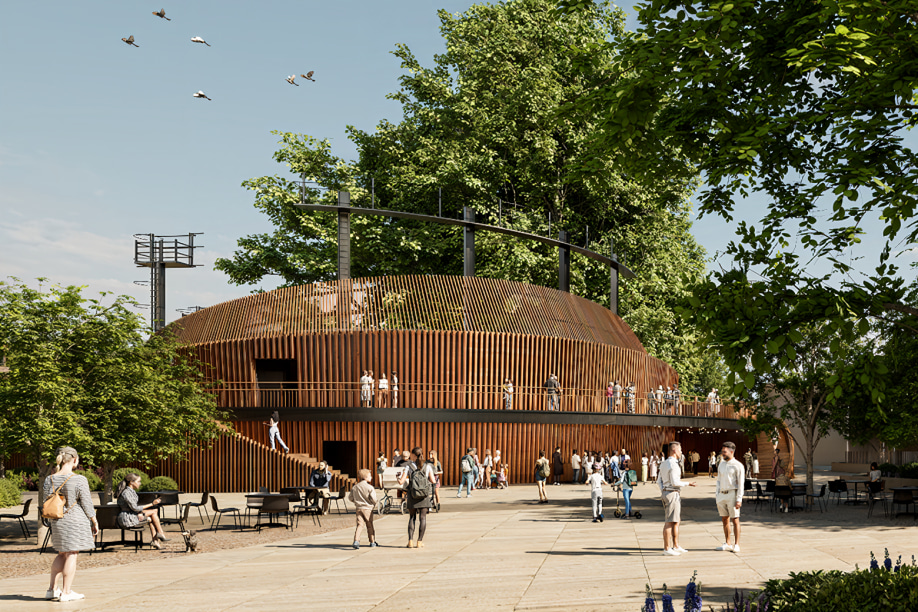
D5’s real-time engine and AI-assisted scene setup accelerate lighting studies, entourage population, and atmosphere generation without detaching visualization from BIM and Rhino models. By reducing manual setup and post-production overhead, teams focus on design intent rather than rendering mechanics.
Visualization becomes a medium for live spatial reasoning—not a polished artifact.
Also read: Immersively Explore Spatial Designs Through Virtual Tours
Outcomes in practice
Faster feedback, fewer late changes, and stronger shared understanding.
Since embedding visualization directly into the architecture design process, Ennead has observed a compression of feedback loops. Design questions that once took days to resolve are now answered in hours or minutes. Fewer late‑stage revisions are required, as spatial and experiential issues are resolved earlier. Internal alignment has strengthened, with teams responding to the same spatial conditions rather than parallel interpretations. Clients, in turn, are able to react to experience rather than representation, shifting feedback towards use, comfort and sequence.
A Cultural Shift in Practice
The transformation is technical, but it is also cultural.
As Gayatri Desai, Director of Design Technology, summarizes:
D5 represents more than a rendering tool; it marks a cultural shift in our practice. Visualization is no longer something that follows design—it has become an active design instrument that evolves alongside it.
Before, visualization validated decisions after they were made.
Now, it shapes them while they are still in motion.
The compression of feedback loops, tighter BIM-computational integration, and shared spatial authorship have redefined how Ennead stabilizes design intent under increasing project complexity.
The result is not simply faster images.
It is a rewired design loop, where shared visualization operates upstream, alignment happens earlier, and design velocity is preserved rather than fragmented.
See How D5 Fits Your Process
Interested in exploring how this workflow could support your team? Get in touch with us to discuss pricing, schedule a demo, or explore how D5 can fit into your design process.
7. Your Work Deserves the Spotlight
Has D5 transformed how you design, present, or collaborate? Turn your D5 Render project into a story that inspires designers around the world! Share your journey—and let the world see what’s possible.
By submitting your project, you could:
✅ Be featured in a global case study seen by thousands
✅ Co-host a D5 webinar and showcase your expertise
✅ Speak at official D5 events and elevate your industry presence
This is more than a feature—it’s your chance to grow your voice, build your brand, and inspire a global design community. Share your stories here.


 English
 Español
 Français
 한국어
한국어 日本語
日本語