
Most architects know the feeling when a design finally starts to come together—and the frustration when that momentum gets disrupted.
Not by complexity, but by friction.
Exporting. Waiting. Switching tools. Reorienting. Restarting. Each interruption seems small,but together they erode focus. By the time the workflow resumes, the spark often doesn’t.
It’s not creativity that’s the problem.
It’s the fragmented design process that keeps pulling architects out of it.

A Workflow Built Around Limits, Not Flow
For decades, architecture evolved around tool limitations. Modeling, visualization, asset sourcing, and delivery lived in separate environments because they had to. Over time, that structure became standard. Design first. Visualize later. Add context at the end.
As technology advanced, the tools became faster, but the workflow stayed fragmented. That separation, once necessary, now gets in the way.
Design decisions are made early without context. Visualization becomes decoration rather than discovery. Refinement feels like rework. Over time, intent gets diluted. Not because the ideas are weak, but because the process pulls them apart.
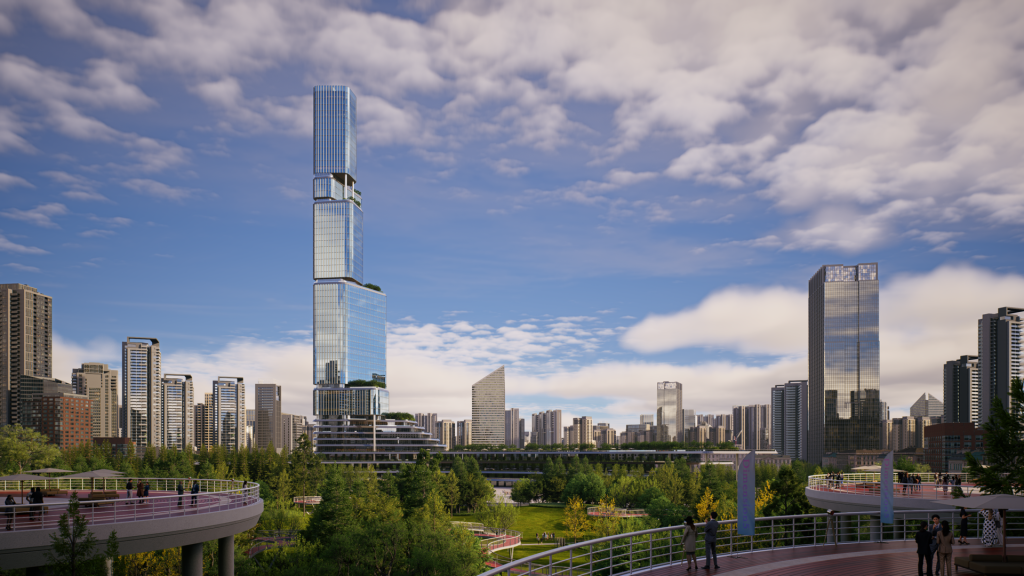
Why Speed Alone Wasn’t the Answer
The industry’s first instinct was speed. Faster renders. Quicker exports. More efficient pipelines. But speed only addresses delay, it doesn’t resolve disruption.
Every export still breaks concentration. Every tool switch still resets context. The thinking is interrupted. The momentum is lost. Even the fastest workflow falls apart if it requires designers to stop, translate, and restart their ideas in a different tool.
Architecture isn’t a linear production line. It’s iterative, contextual thinking. What architects needed wasn’t acceleration. It was continuity.
D5: Built for Flow
This is where the shift becomes tangible. In 2026, the architecture workflow no longer has to be a series of disconnected steps. It can become one continuous, creative loop.
D5 was built around this principle. Instead of treating modeling, visualization, and delivery as isolated phases, it brings them into one environment where ideas can evolve without interruption. From early exploration to final presentation, the tools remain connected. The intent stays intact.
Visualization isn’t an afterthought—it’s embedded in the thinking. Materials and light aren’t layered on later—they’re tested from the start. Context isn’t external—it’s part of the same scene. Design decisions gain weight because they’re made while everything is still visible, connected, and alive.
How It Plays Out in Practice
The result is not just speed—it’s flow.
Flow comes from removing the friction between them. That’s why D5’s ecosystem is designed as a seamless loop, not a series of steps.
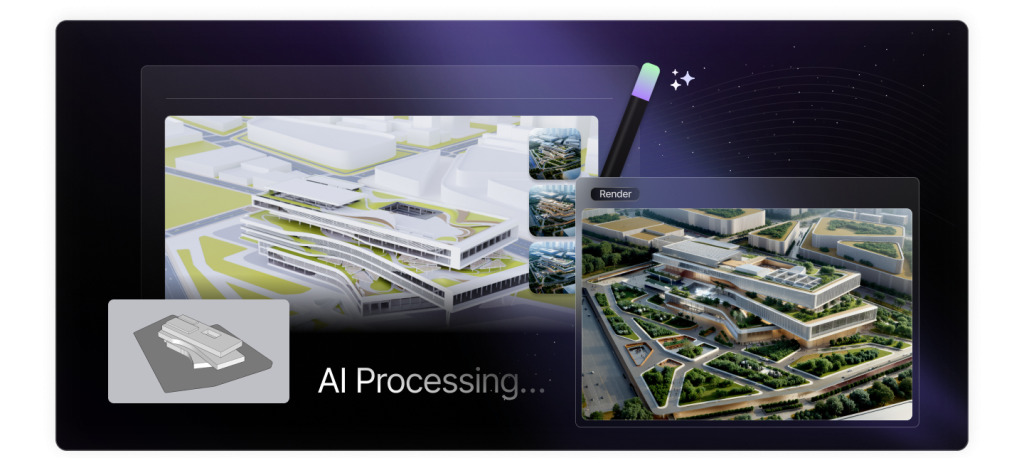
D5 Lite brings AI-native real-time visualization directly into early design tools like SketchUp, bridging the gap between concept and development. As part of D5’s AI-driven End-to-End Design Suite, it lets architects visualize instantly. No exports, no extra steps. Built on the D5 Engine with embedded AI, it lowers the barrier to pro-grade rendering and keeps ideas moving forward from the very start.
.gif)
From there, D5 Render 3.0 takes over with true-to-life realism—displacement materials, volumetric clouds, and dynamic context tools like Cesium and procedural buildings. Meanwhile, D5 Works offers AEC-ready assets and a smooth integration that removes the need for outside libraries or format conversion.
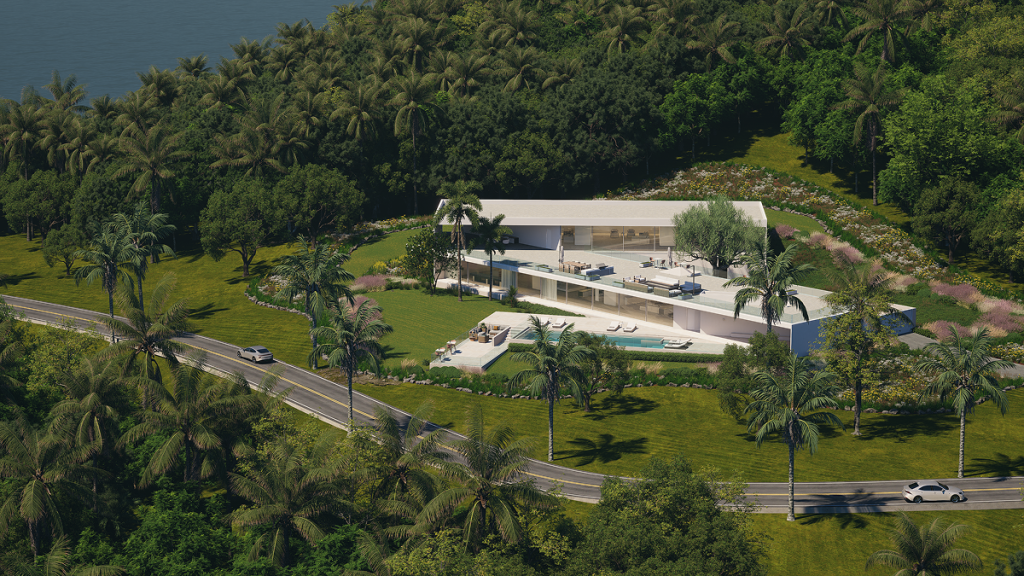
Each tool plays a role—but together, they protect creative momentum. The result is a unified workflow where design stays intact, from the first sketch to final delivery.
What Architects Gain When Flow Is Protected
When flow becomes the default, everything changes. Design improves because decisions are made in context. Client conversations move faster because the visuals speak for themselves. Teams collaborate with less friction because they’re no longer chasing files or syncing tools.
Most importantly, architects stay connected to their work. They’re not just producing deliverables. They’re shaping ideas with clarity, from start to finish.
It’s about making every step of the process part of the design.
This Is a Rebuilt Process. It’s a New Foundation.
D5 isn’t just a renderer. It’s a redefinition of the architectural design process. One that aligns with how architects actually work—visually, iteratively, and contextually.
In 2026, the most important shift may not be a new style or a new tool. It’s about restoring focus, removing the noise, and allowing great ideas to stay uninterrupted.
This is the future of design. Not broken into stages. But built as a loop. Built for flow.
 English
 Español
 Français
 한국어
한국어 日本語
日本語