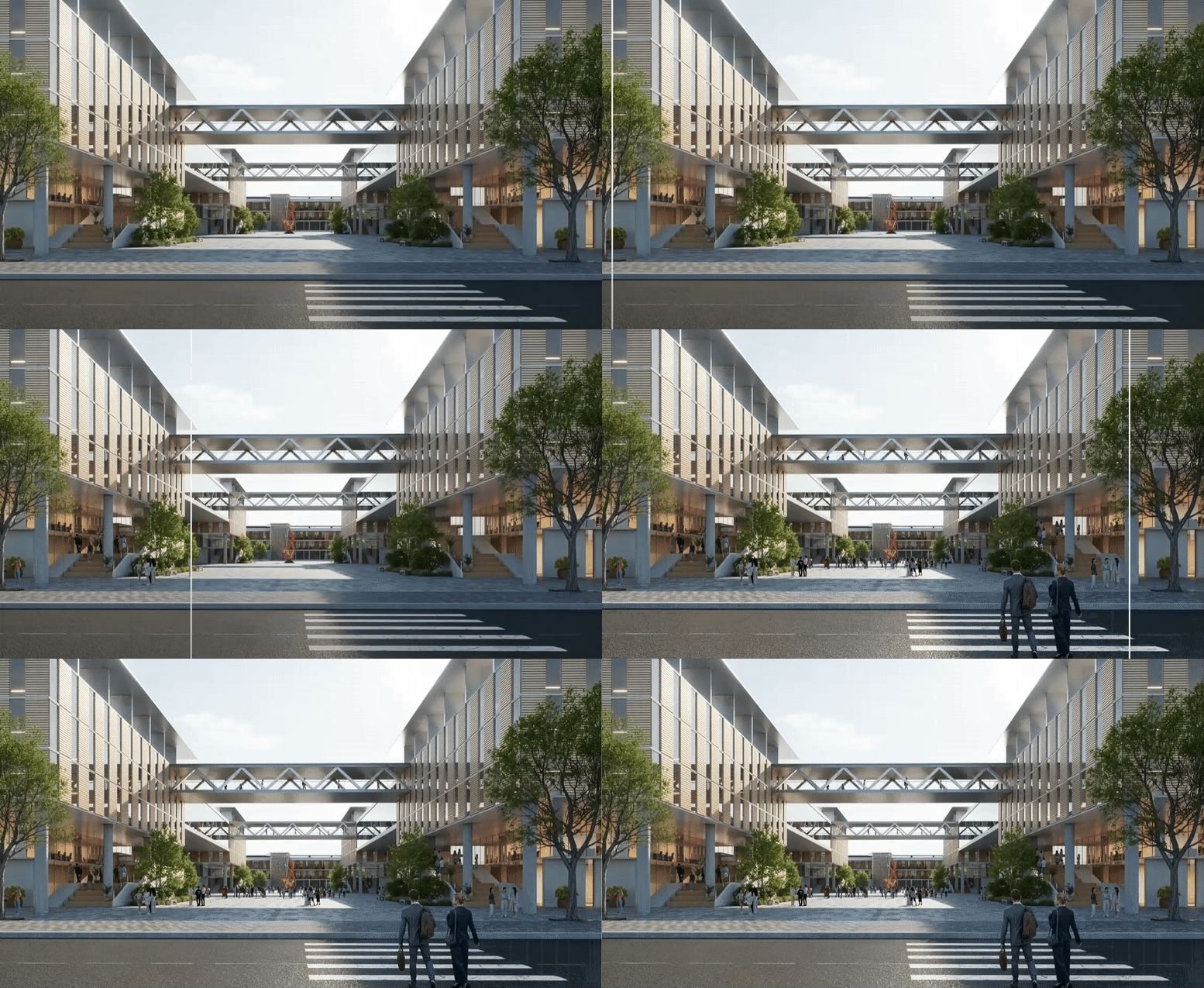
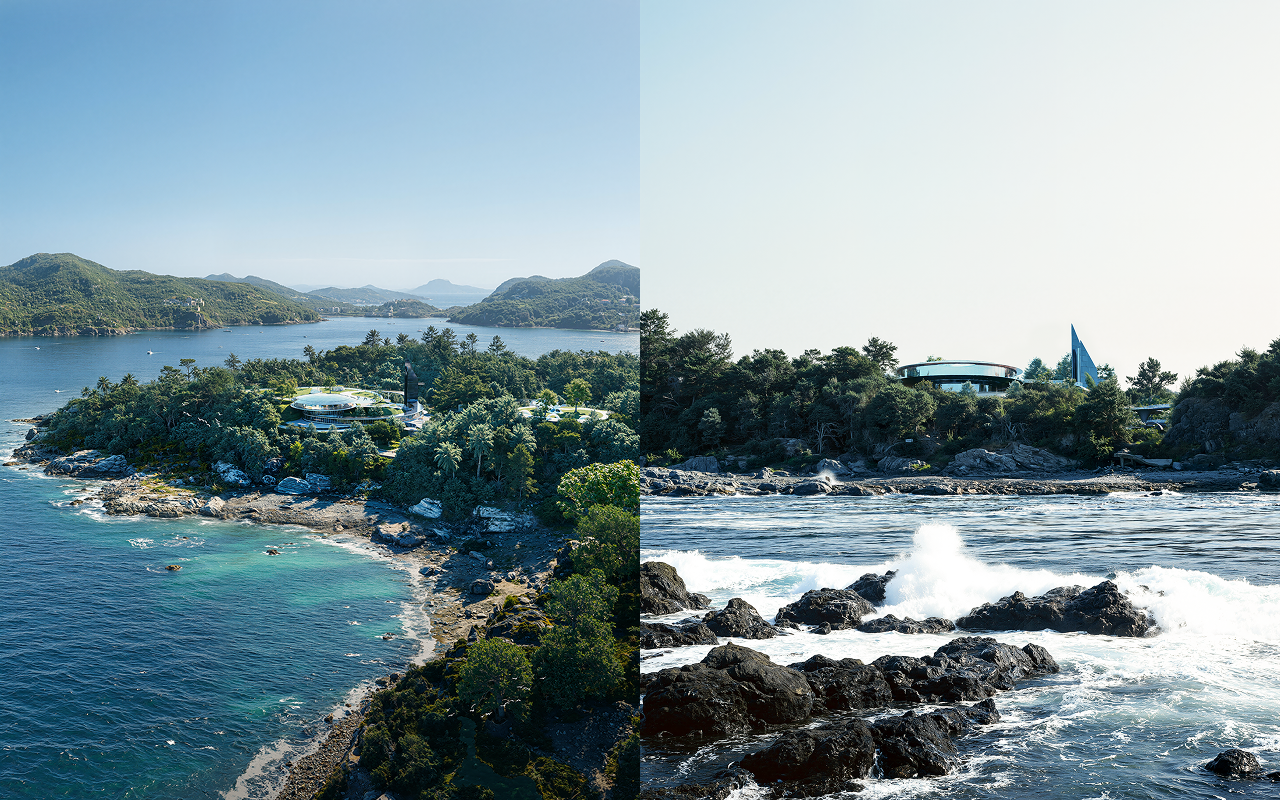
.jpg)


Architecture changes lives. So does the way we design it. D5 helps us do both.
Key Takeaways:
- Collaboration drives efficiency and quality: D5 for Teams lets AODK’s architects, interior designers, and landscape specialists co-create in one file, ensuring design consistency while streamlining coordination.
- A single platform for design and storytelling: D5 unites concept, visualization, and presentation in one workflow, turning each project into both a design solution and a marketing asset.
- AI as an ally for human design: AODK uses D5’s AI features to enhance creativity and craft more human-centered, experiential architecture.
Studio Overview
- Location: US
- Team Size: 29 people
- Studio Type: Architecture firm with in-house interior design and landscape architecture divisions; focused on wellness-driven and experiential design
- Project Types: Wellness Resorts and Retreats (Hospitality), Vision Development emphasizing biophilic design and authentic experiences (Mixed-Use), and High-End Single-Family Homes (Residential)
- Modeling Tools: AutoCAD and Revit (for drawings), SketchUp (for 3D modeling)

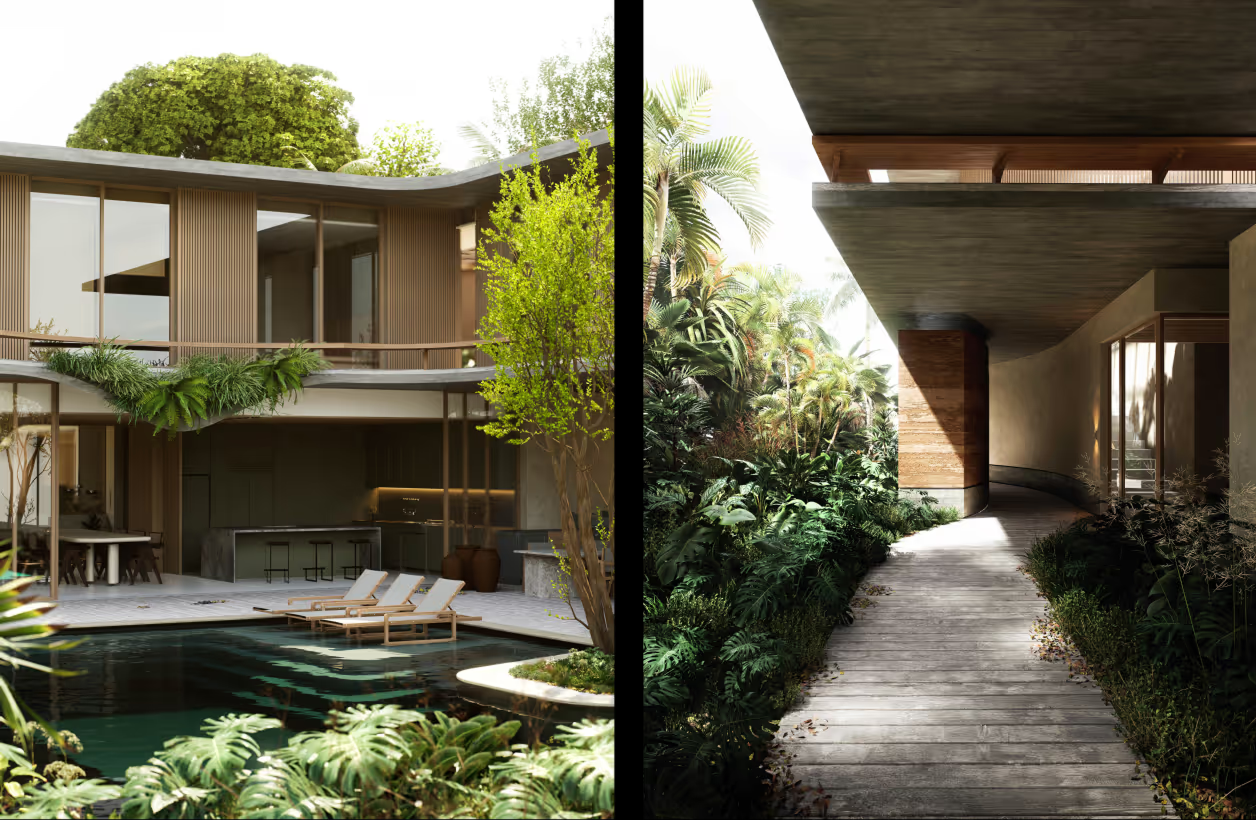
1. The Ravine House: Where Design Begins
Before there was a house, there was a meeting of waters.
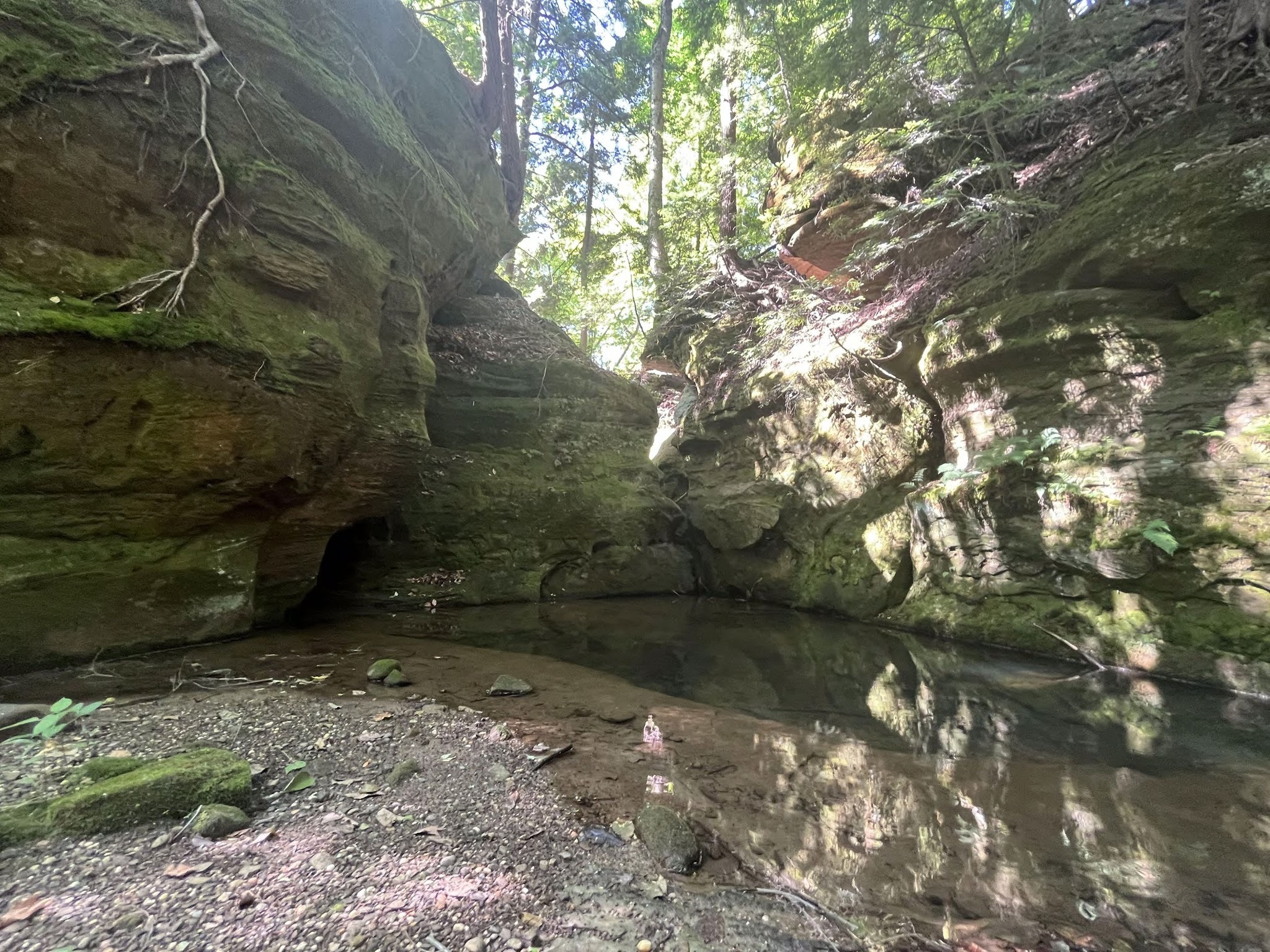
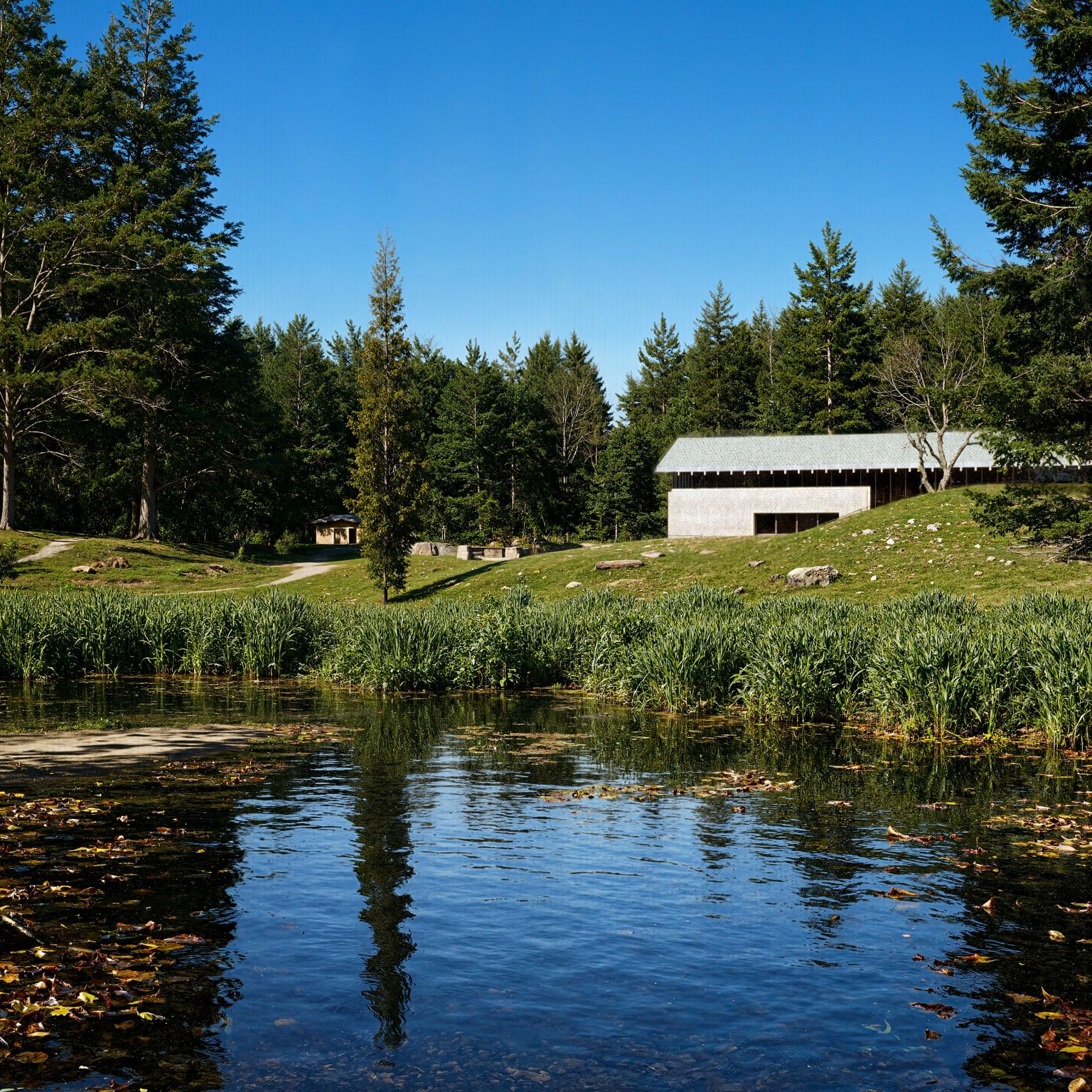
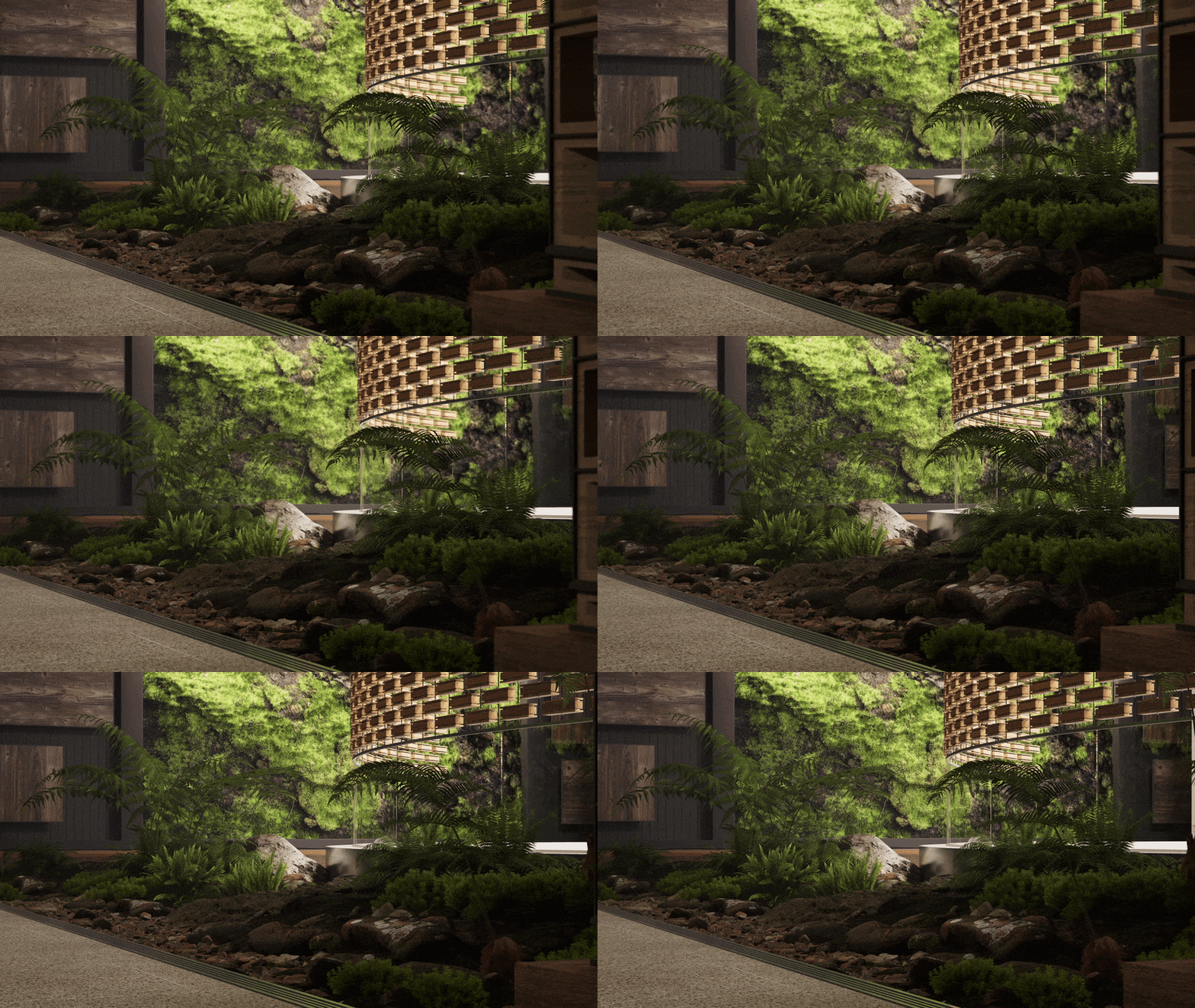
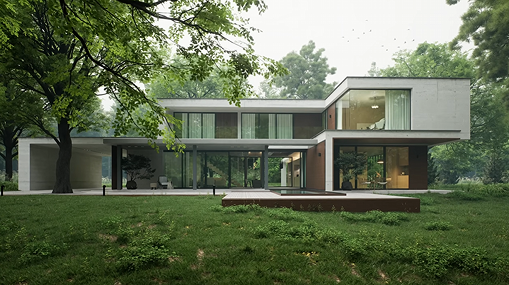
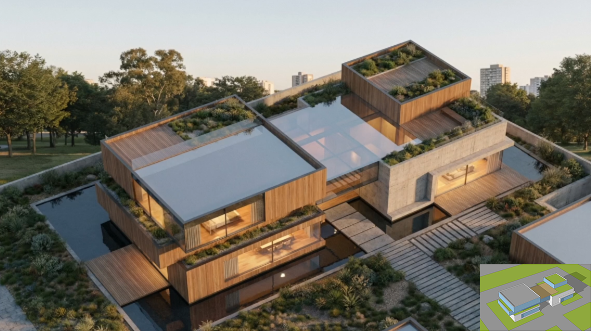
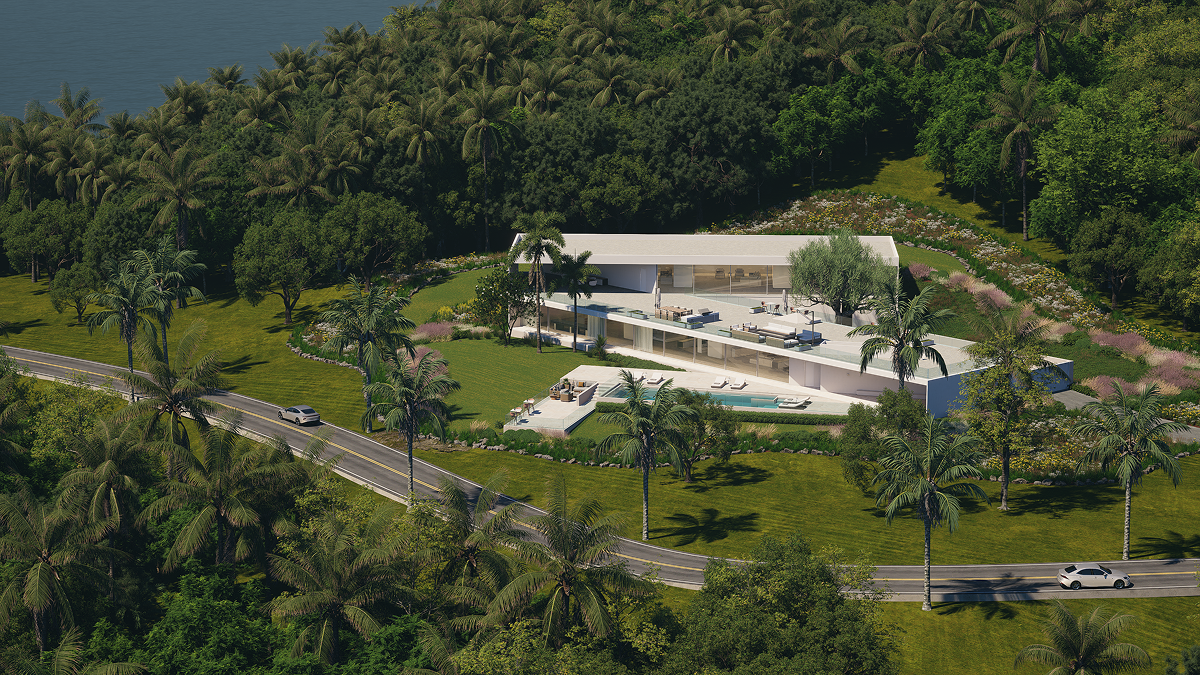
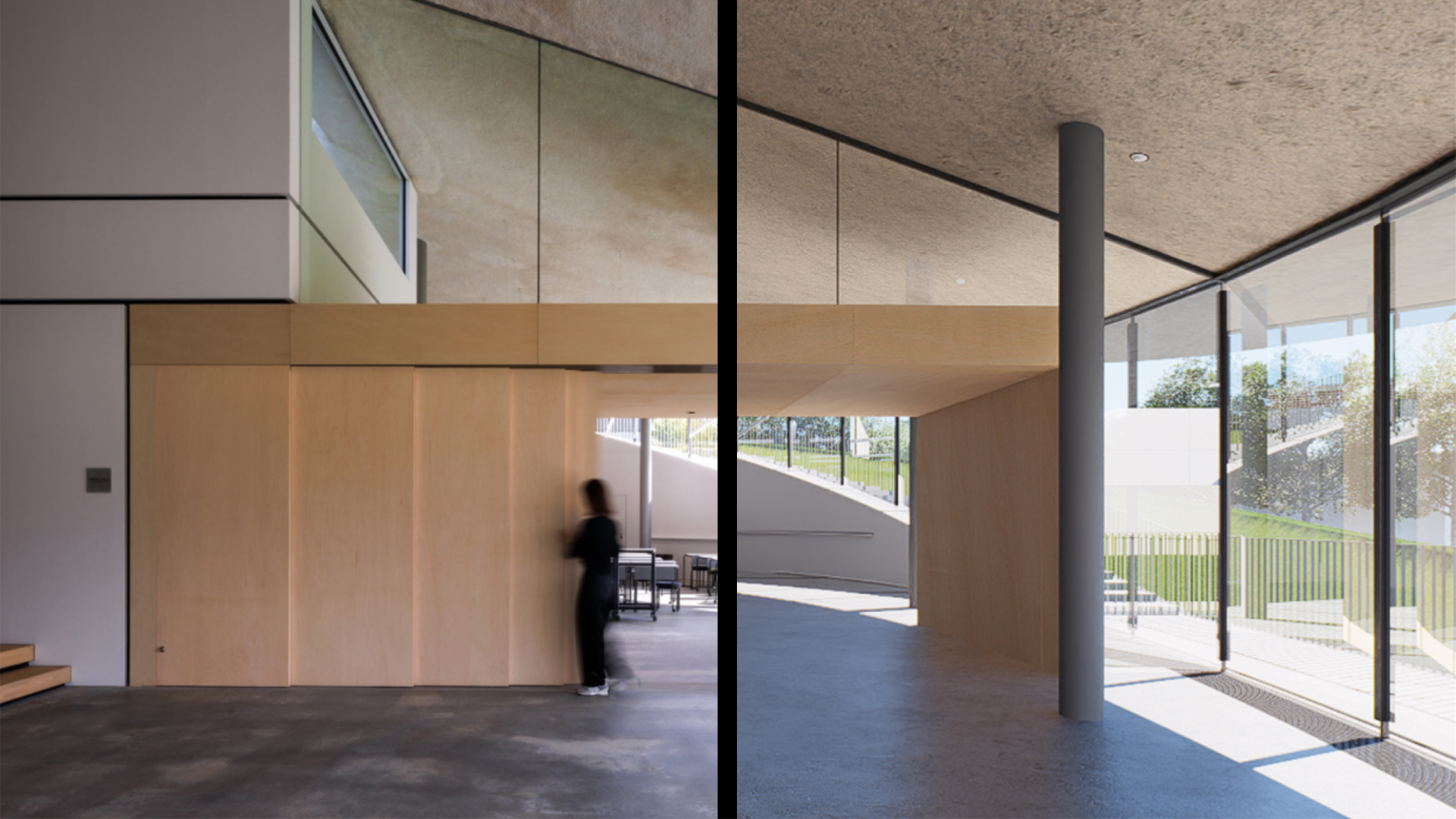
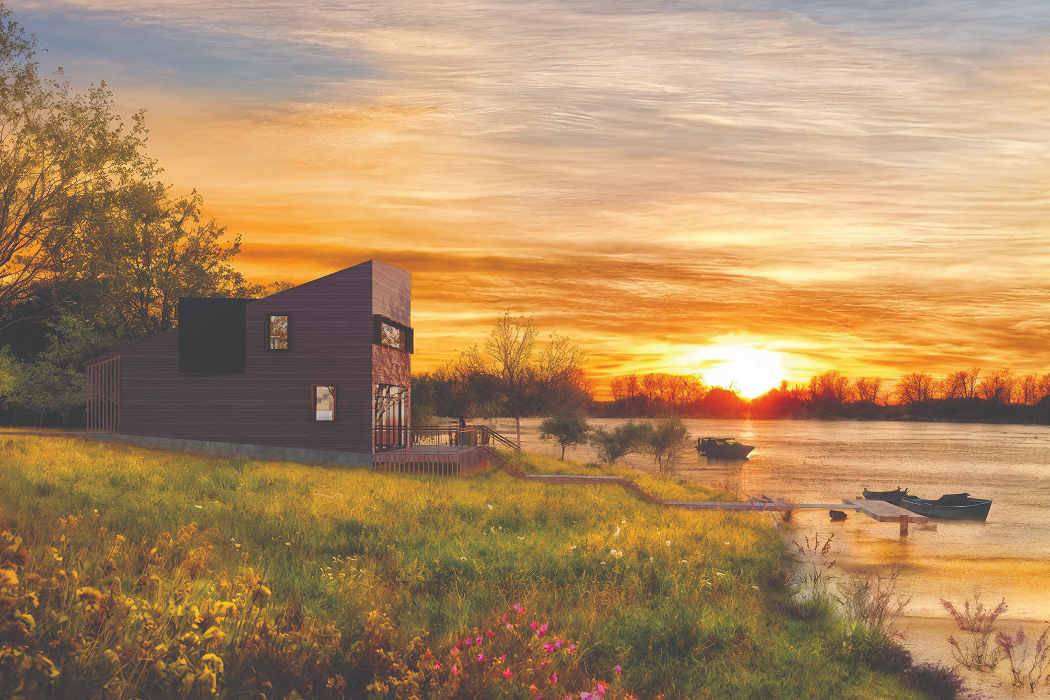
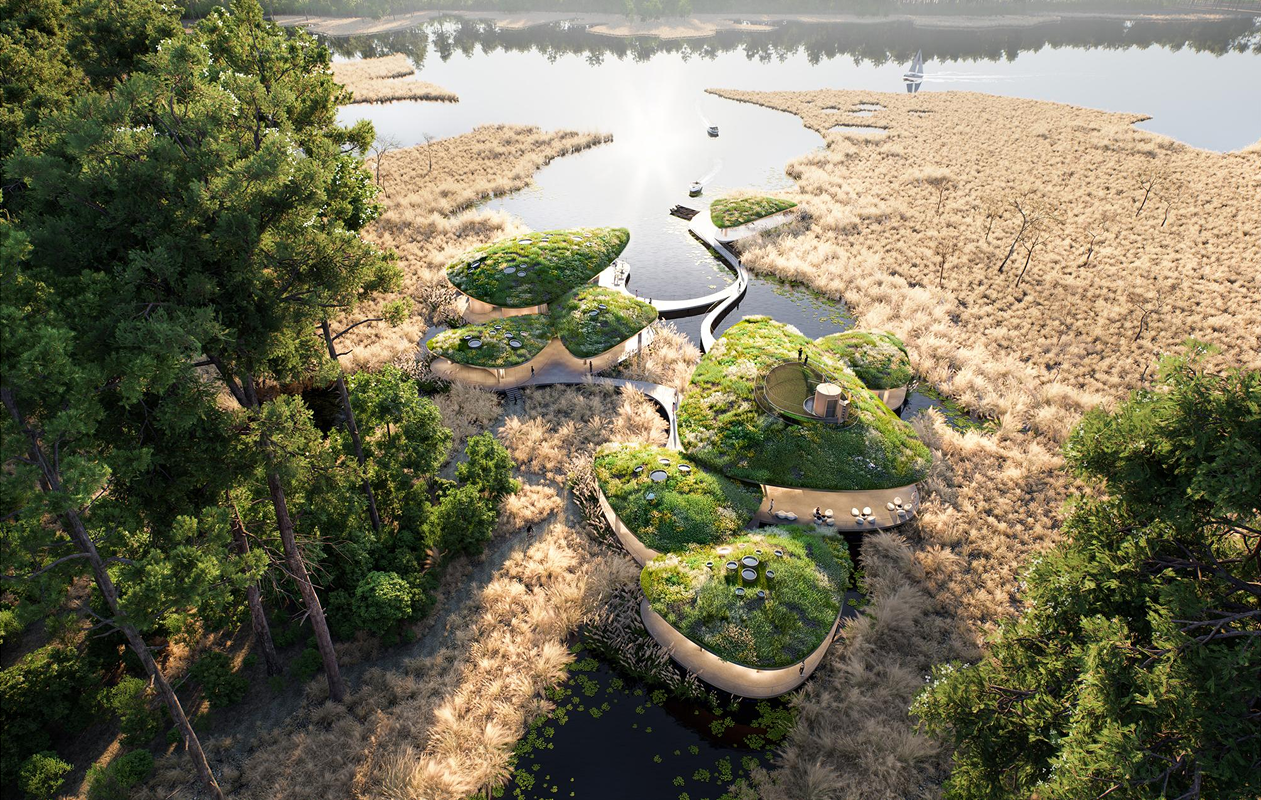
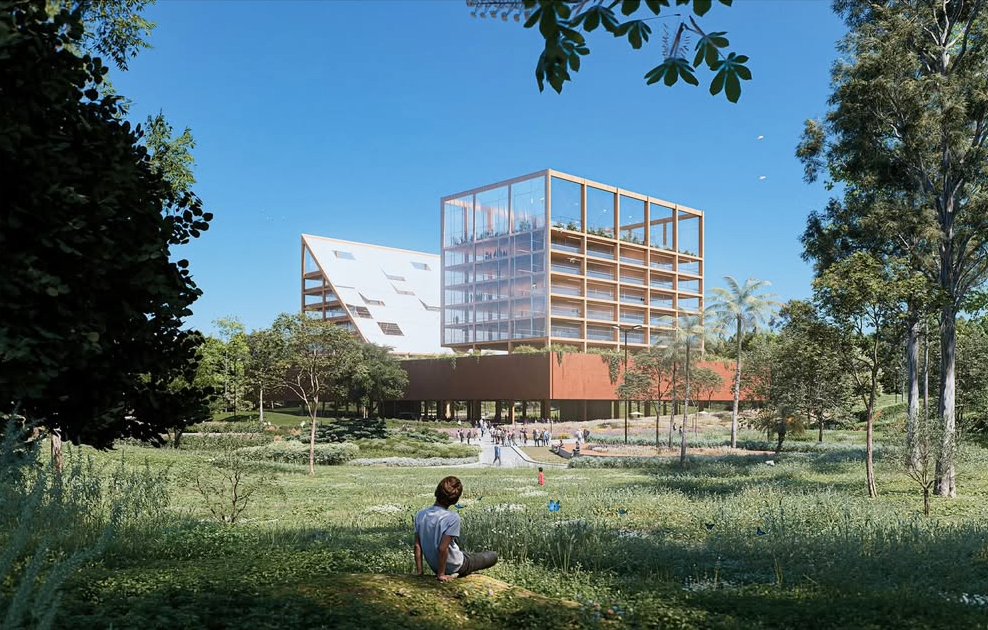
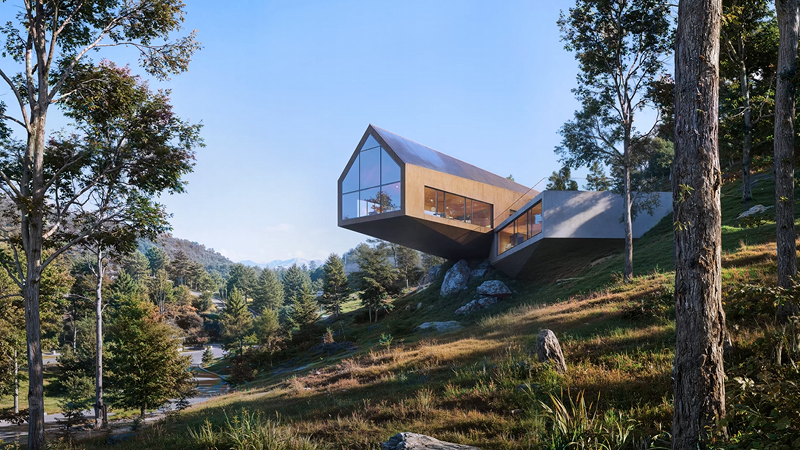
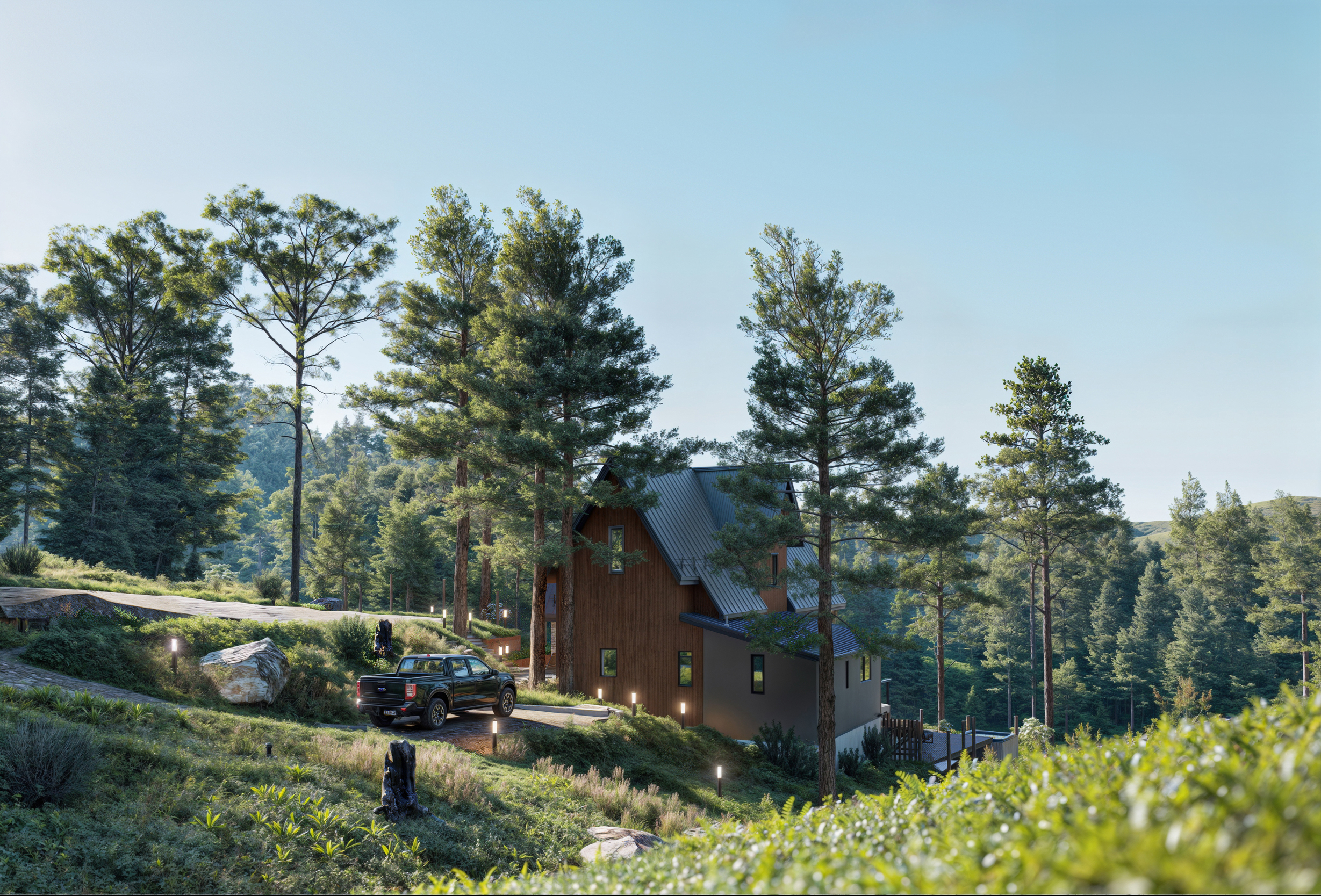
Set within protected woodland, the site is shaped by streams carving through stone—a landscape defined by convergence and time. The design begins here, not with form, but with place.

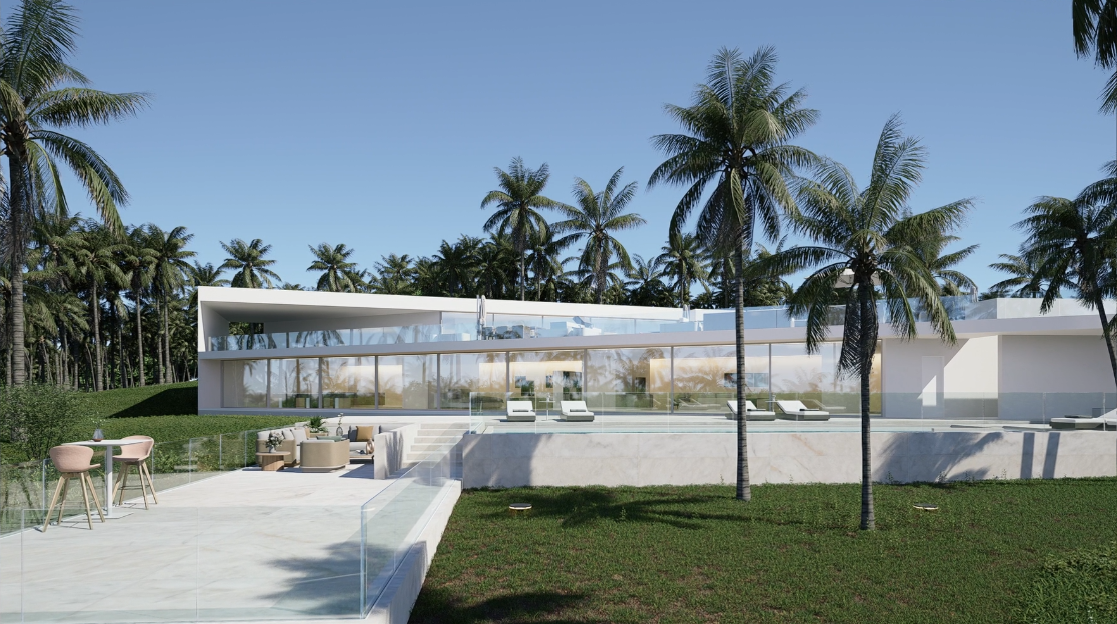
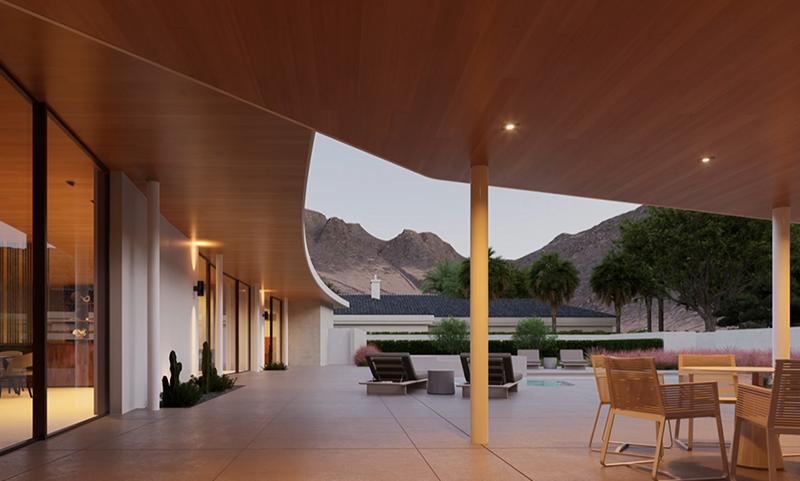
Rather than building on the ravine, AODK aligns with it. Two elongated volumes stretch across the hillside, compressing the approach and leading to a crossing—an entry where tension gathers before the space unfolds.
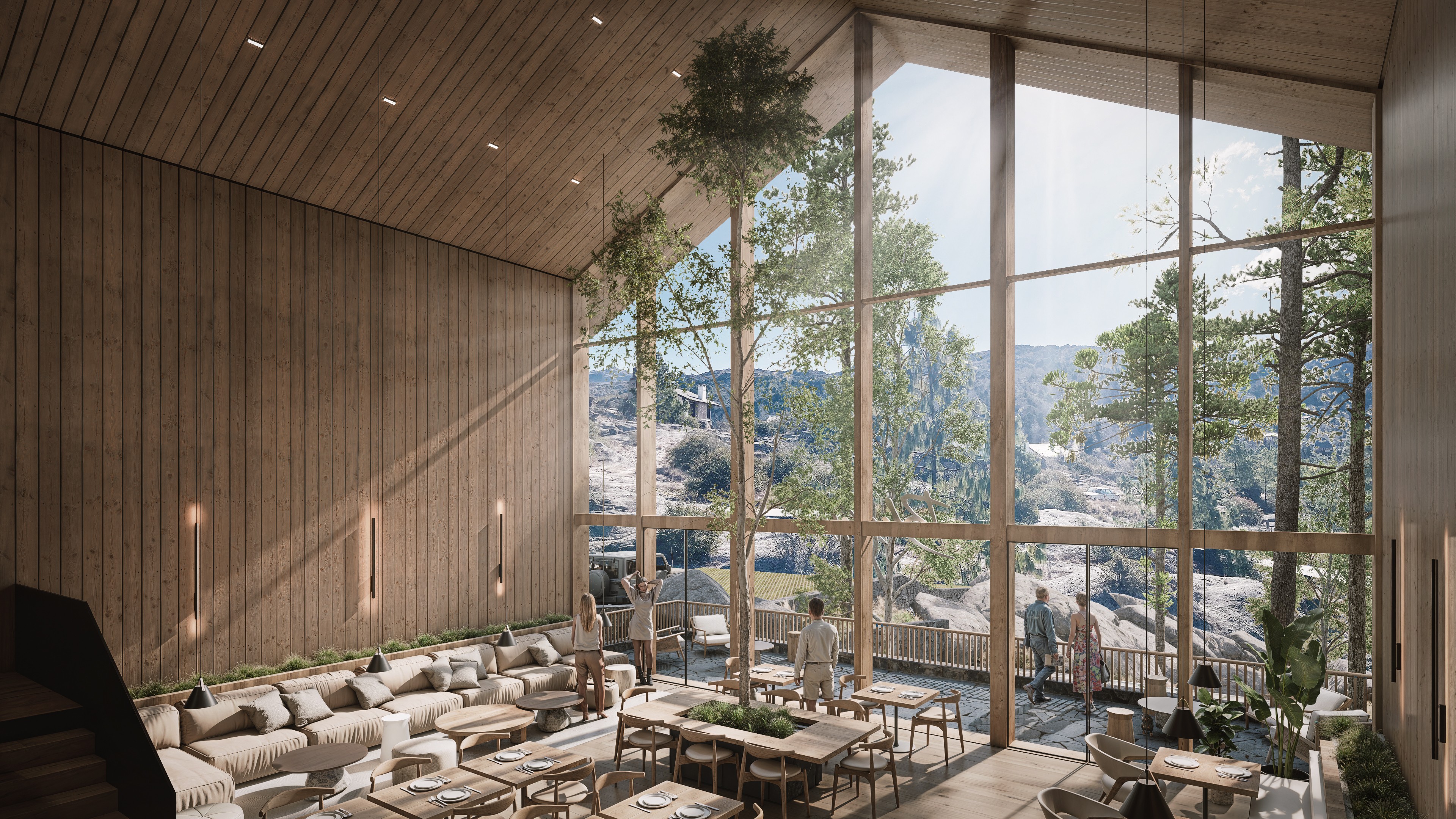
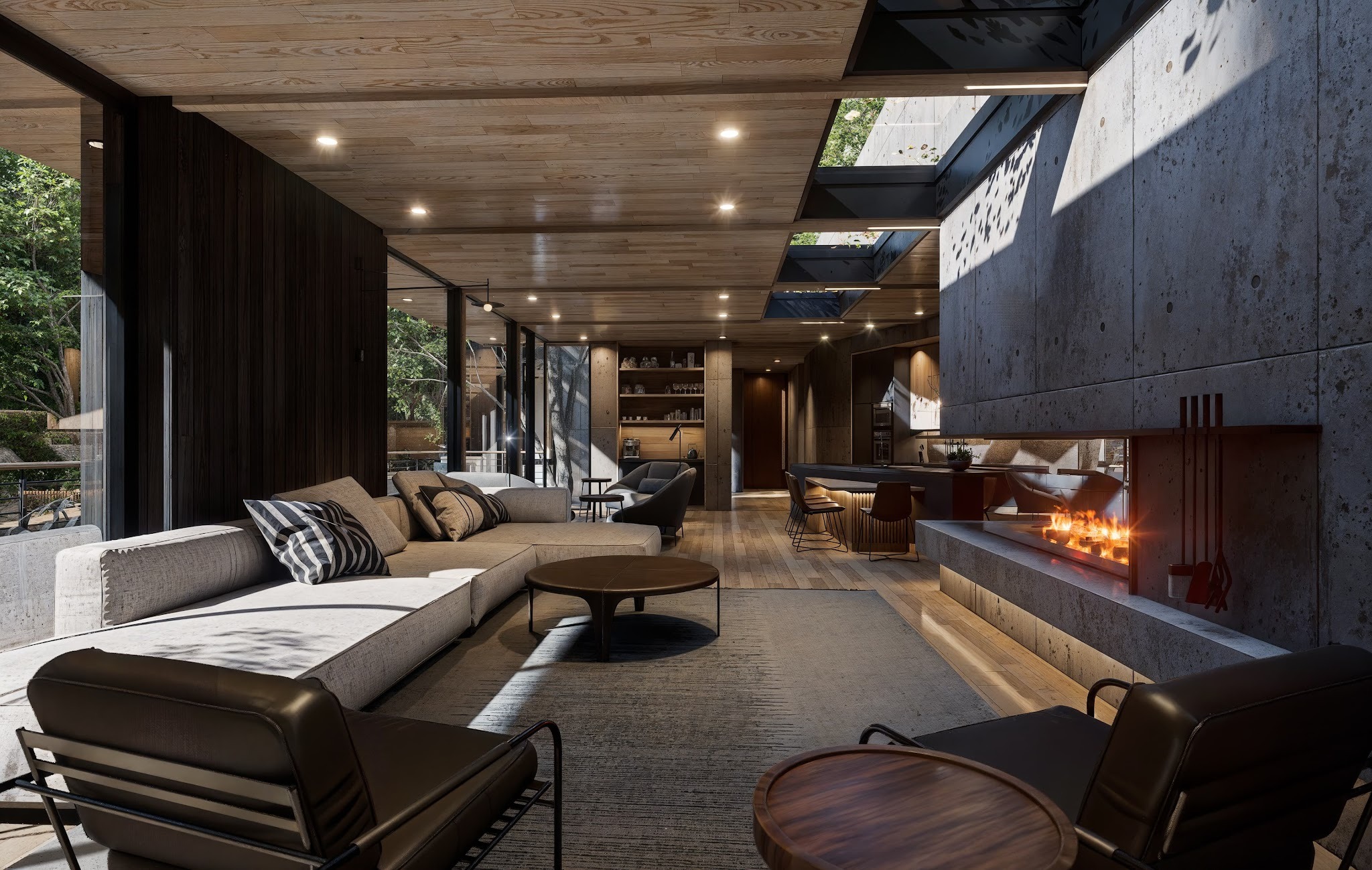
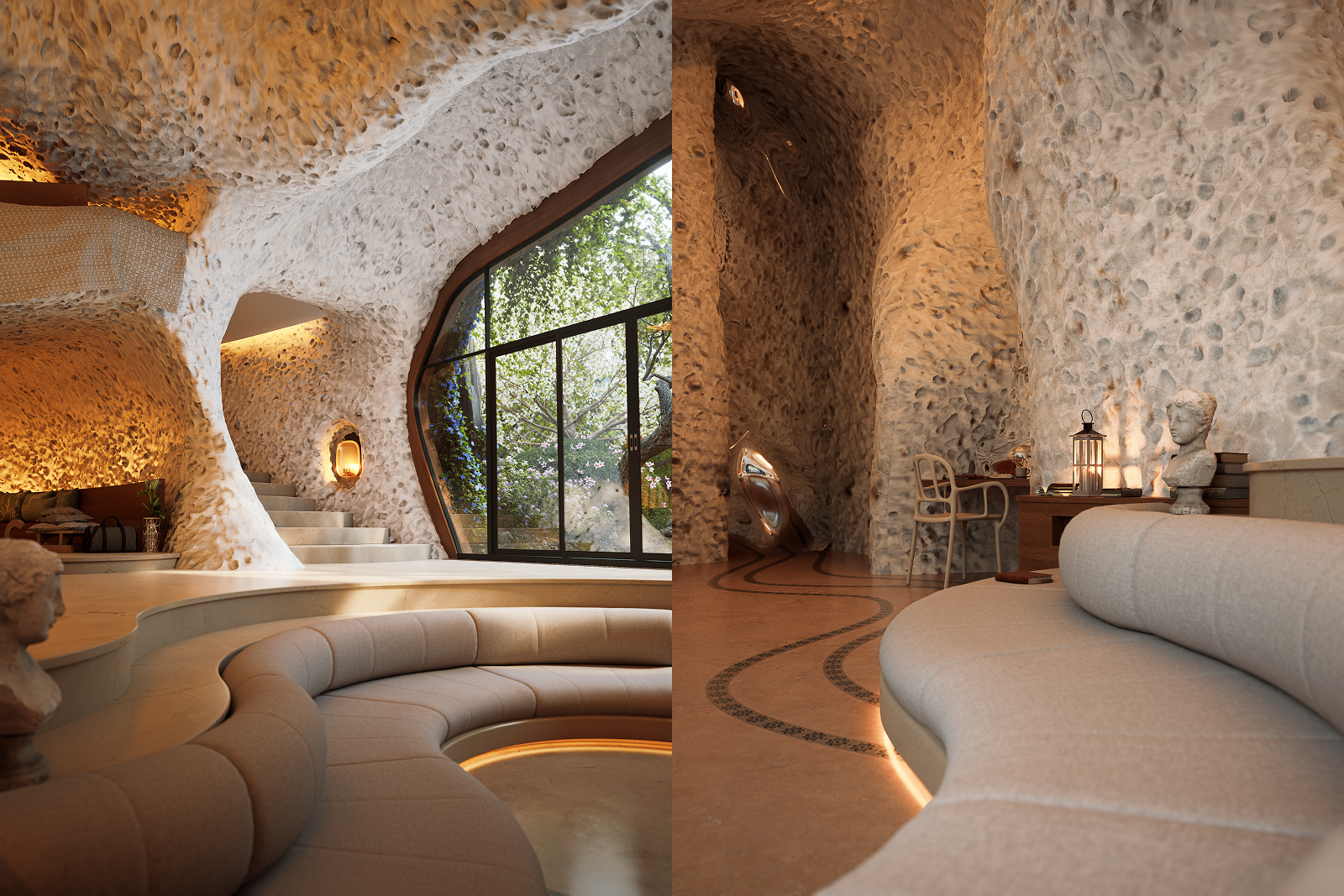
From this point, the experience splits: one path opens to a bright living space facing the canopy, the other descends into quieter rooms embedded within the slope. Interiors are carved into these planes, creating a sense of inhabiting terrain.
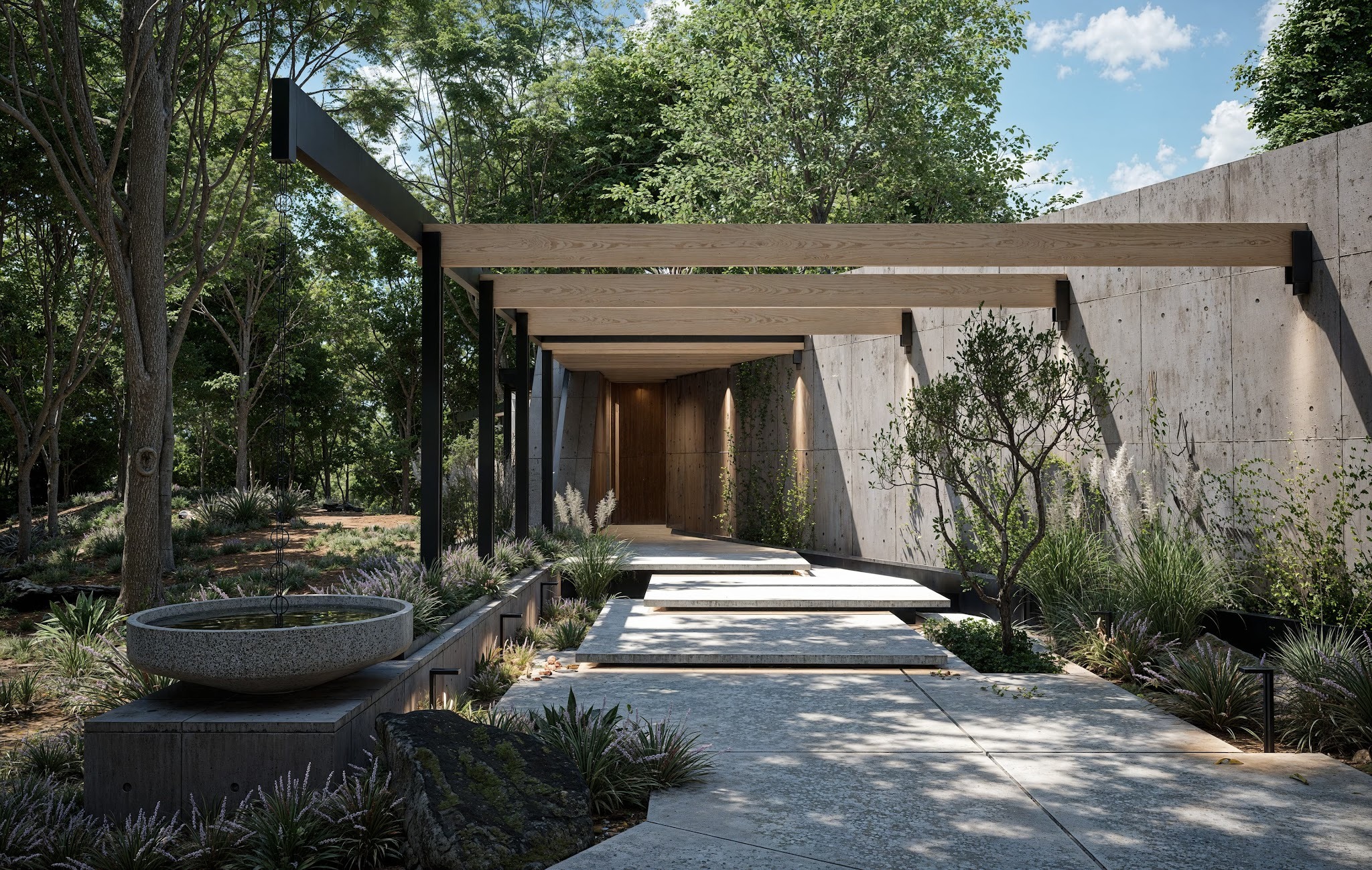
Compression gives way to release. Light enters from above, views extend through the trees, and the landscape continues through the house.
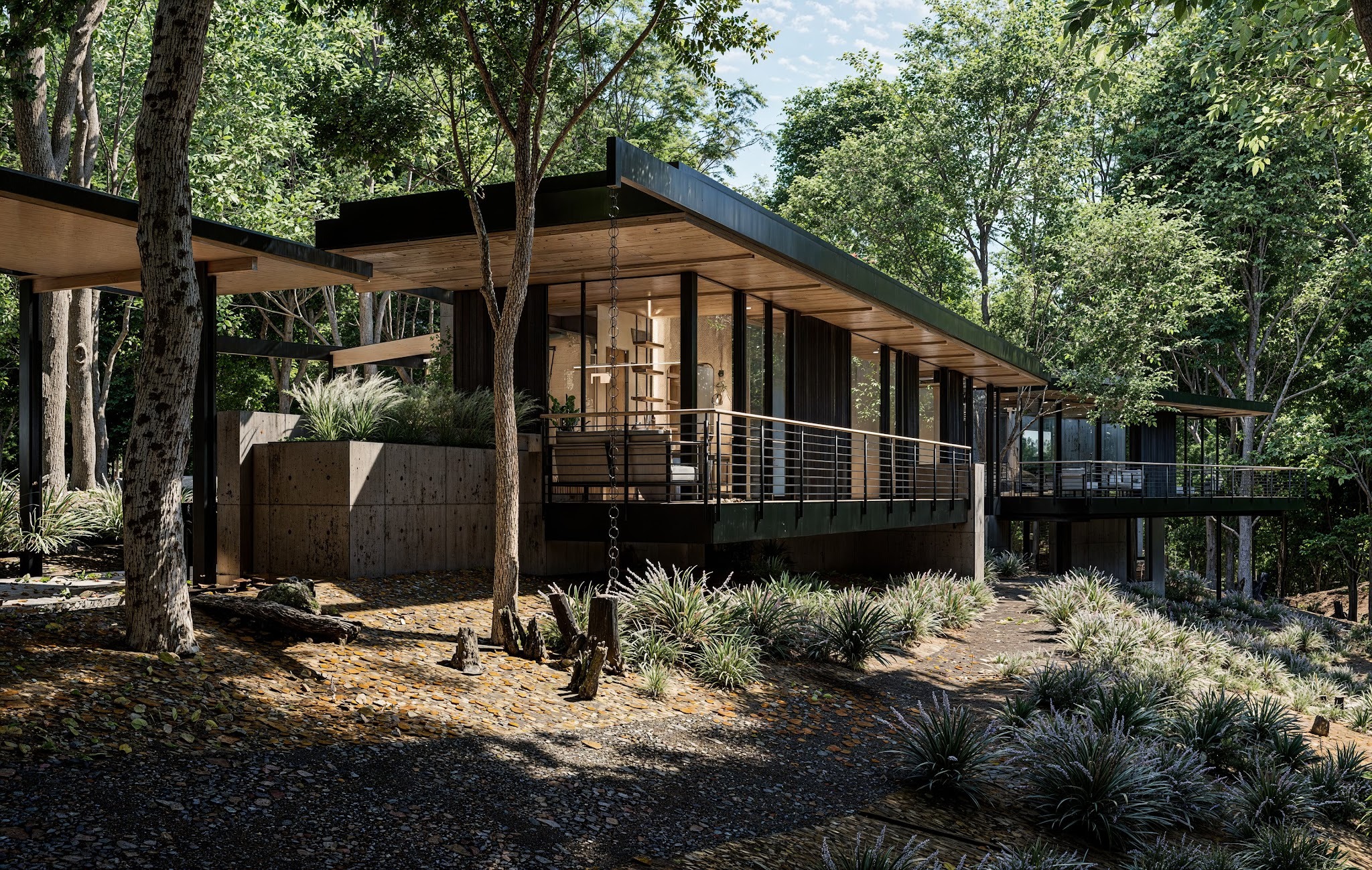
Vegetated roofs and rain chains reinforce this continuity, making natural processes part of the architecture.
This is not a house placed in nature, but one shaped by it—and designed collaboratively from the start.
Using D5 for Teams, AODK developed this entire narrative collaboratively and in real time—testing spatial sequences, refining materials, and aligning decisions with clients as the design evolved.
“We were able to switch materials during the meeting and get immediate approval,” recalls Design Director Sergiu Stoian.
The project moved from schematic design to design development in roughly three months. Not because it was simple—but because everyone involved could see, understand, and shape it together.
2. Designing for Experience
Architecture changes lives.
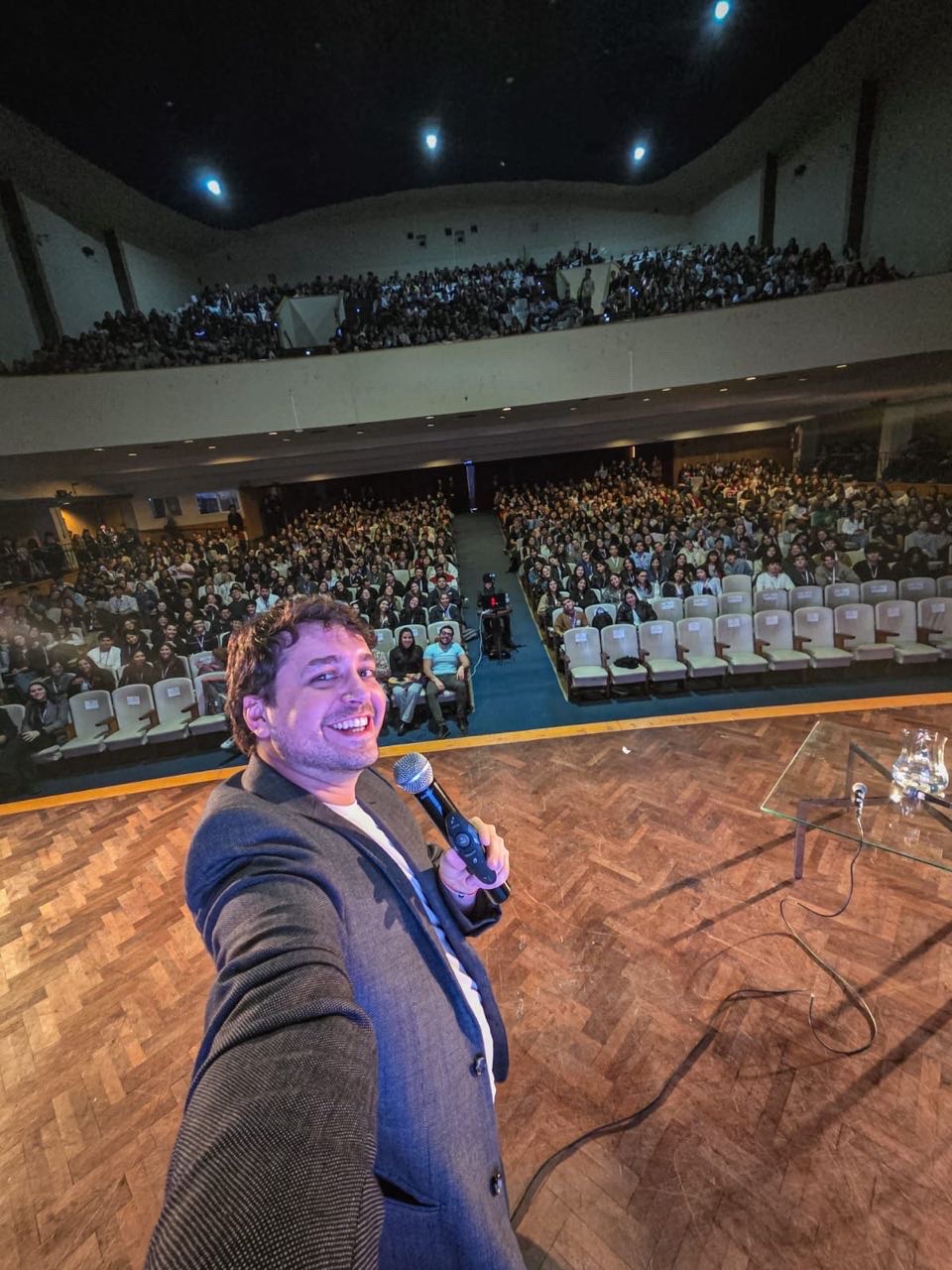
That phrase sits at the core of AODK’s philosophy. The studio’s projects—often modern, rooted in biophilia and wellness—focus on crafting spaces that feel alive. “We design experiences, not just structures,” says Stoian.
To achieve that, the team needs tools that match their pace of creativity. With about 22 people across architecture, interiors, and landscape, traditional renderers proved too slow and too fragmented. Clients needed to understand atmosphere, light, and materiality early—not at the end.
That need led AODK to D5 Render in 2021.
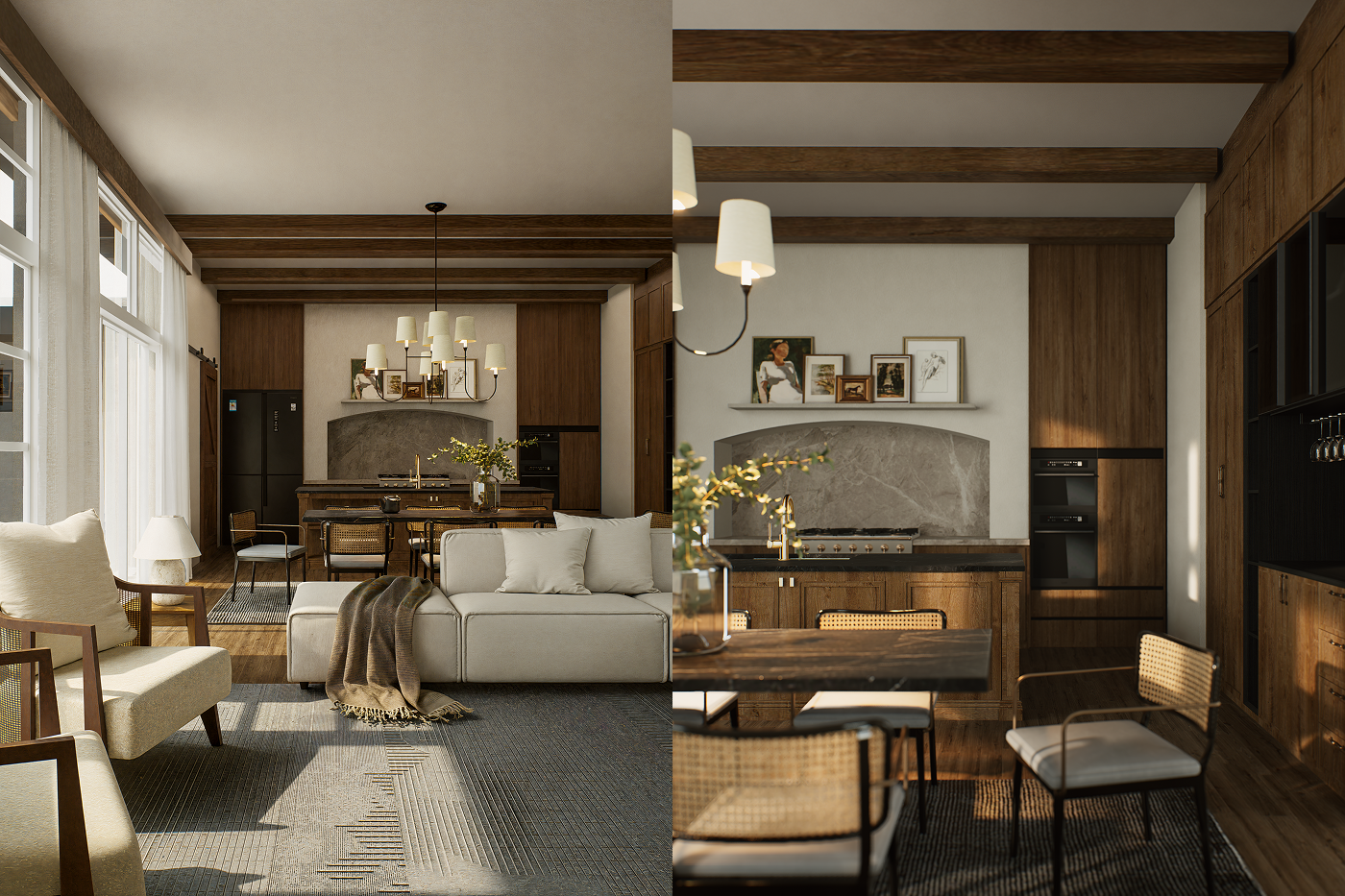
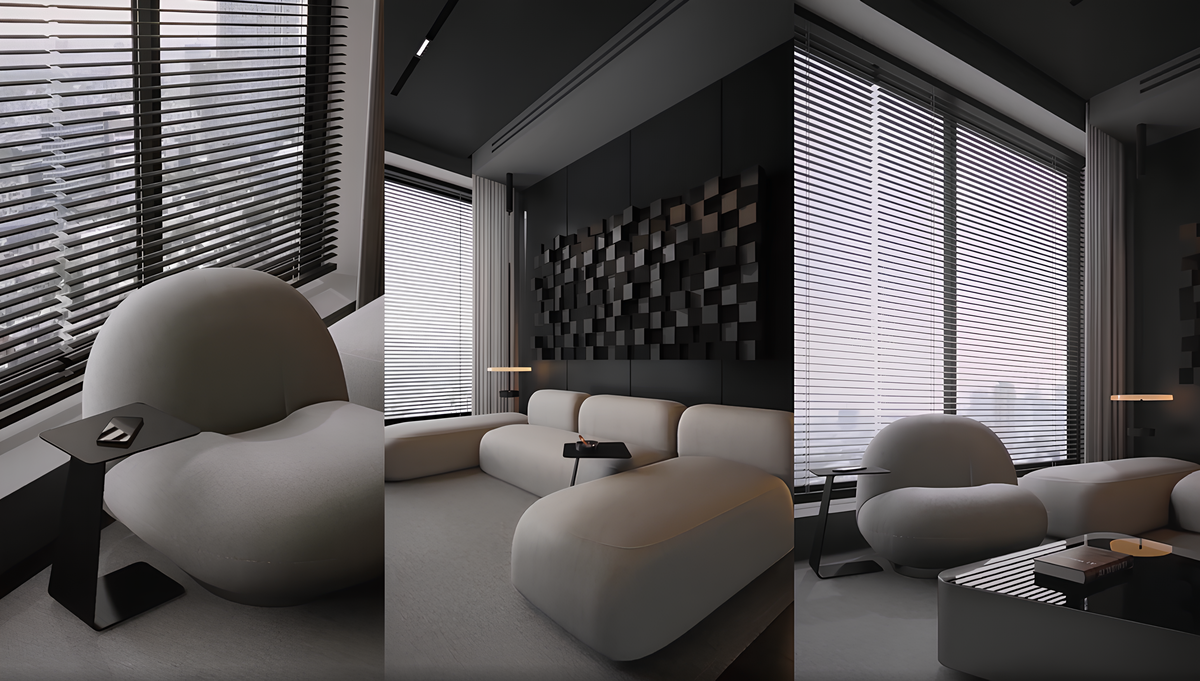
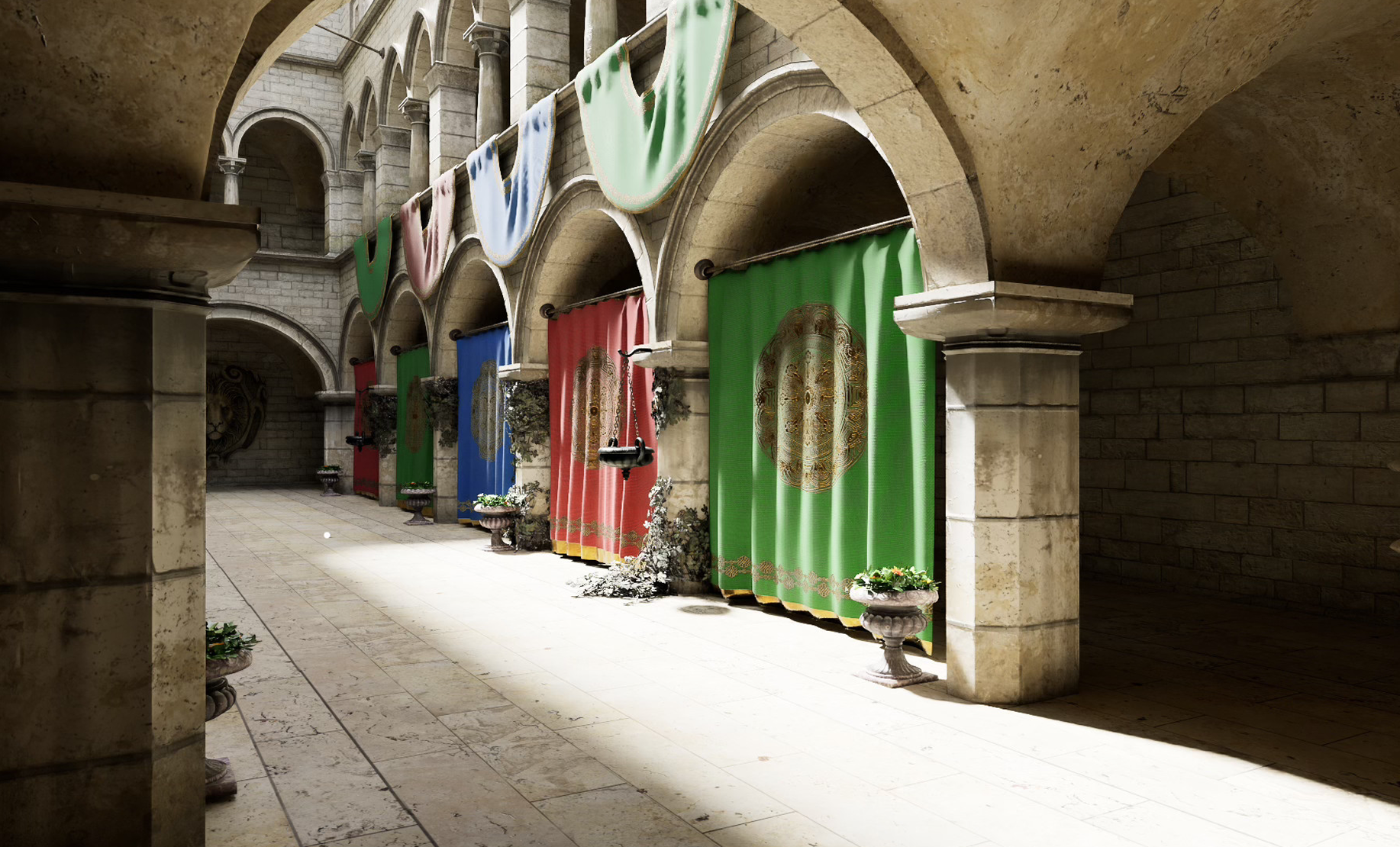
“The first time we tested D5, I zoomed into a fabric material and said, ‘Lucas, look at this!’ It just felt real,” Stoian recalls.
Also read: Seamless Texture Generator: Boost D5 Render Visuals
3. From Visualization Tool to Design Language
Initially adopted for interiors, D5 quickly expanded across the workflow.
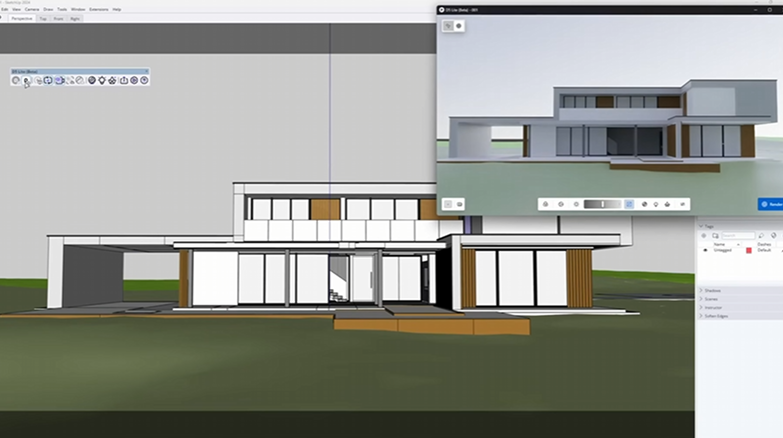
Designers could push SketchUp models directly into D5, apply lighting, materials, and context, and immediately communicate ideas. Visualization stopped being a final step—it became part of design thinking.
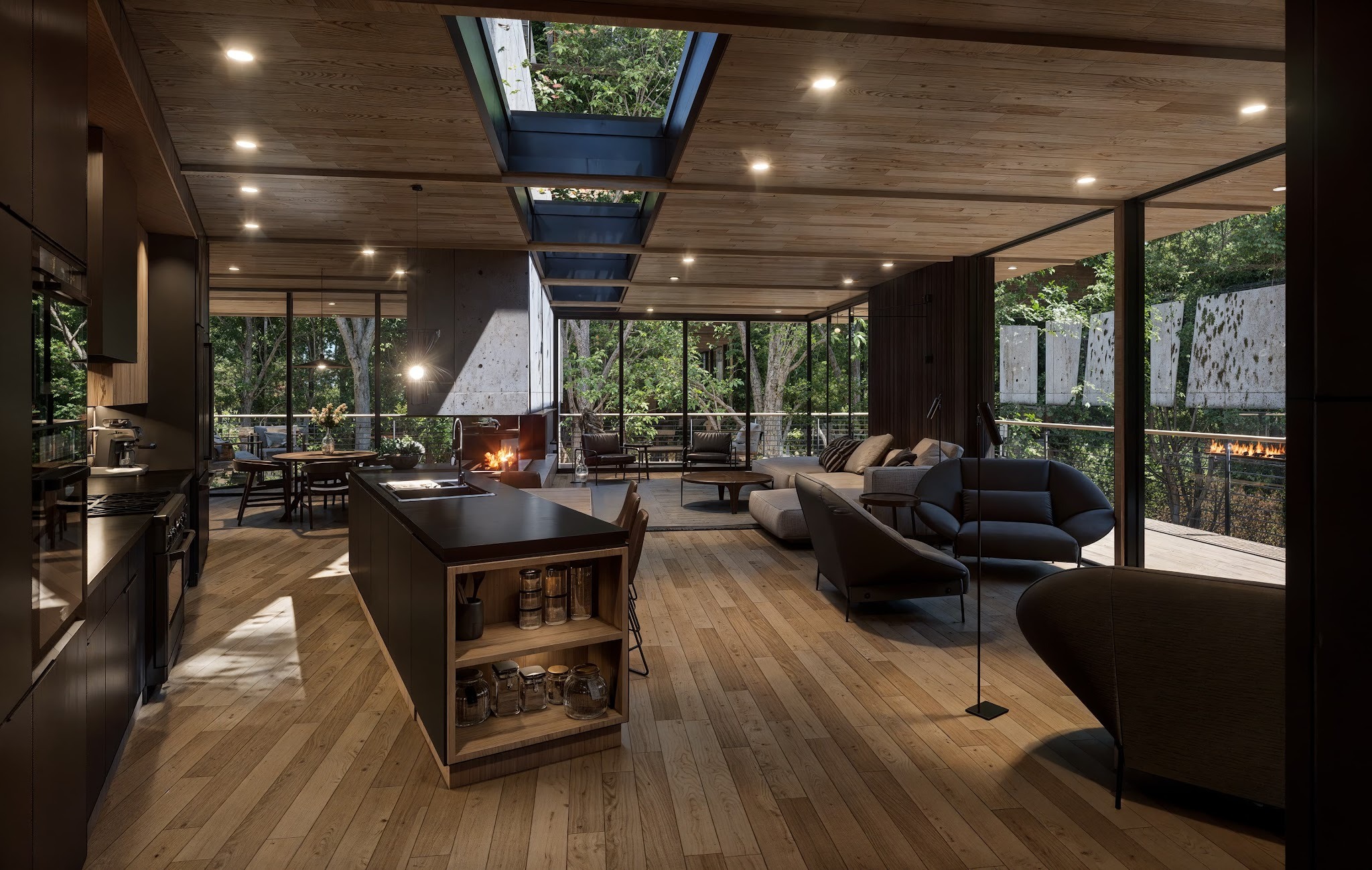
Even at the schematic stage, AODK presents realistic massing, natural lighting, and spatial atmosphere. Early conversations become clearer, faster, and more aligned.
“We don’t wait until the end anymore,” says Stoian. “We design through visualization.”
4. Collaboration That Scales: D5 for Teams in Practice
As the studio’s projects grew larger and more complex—multi-building wellness centers, forest retreats, and resort developments—the old single-user model no longer fit. Waiting for one person to finish rendering before another could edit became a bottleneck.
That’s when AODK upgraded to D5 for Teams.
The difference was immediate.
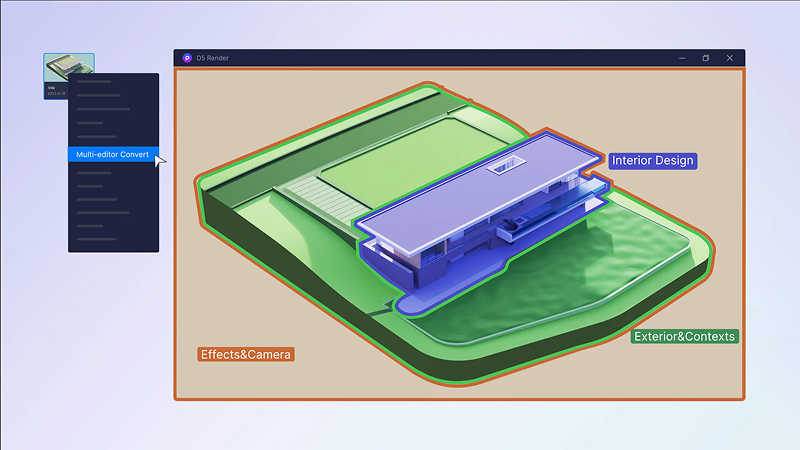
Now, multiple specialists—an architect shaping form, a landscape designer placing trees, an interior designer fine-tuning light and materials—can all work within the same D5 project file simultaneously. The team calls it “live collaboration mode,” where everyone is literally building the same experience together.
Before Teams, we’d have to ask, ‘Who’s in the D5 file?’ Now, we’re in it together—no delays, no waiting.
— Sergiu Stoian, Design Director
Shared Libraries, Shared Vision
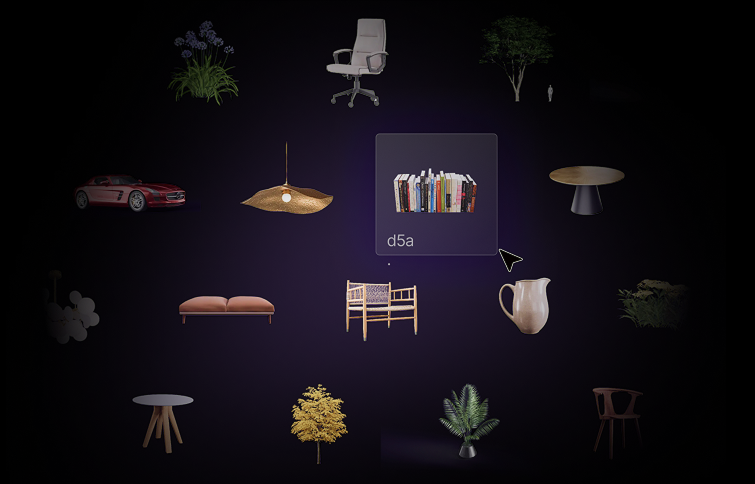
One of AODK’s biggest wins is project and asset consistency. The Teams license lets them centralize their materials, vegetation, lighting, and camera presets, creating a shared visual language that reflects the studio’s design identity.
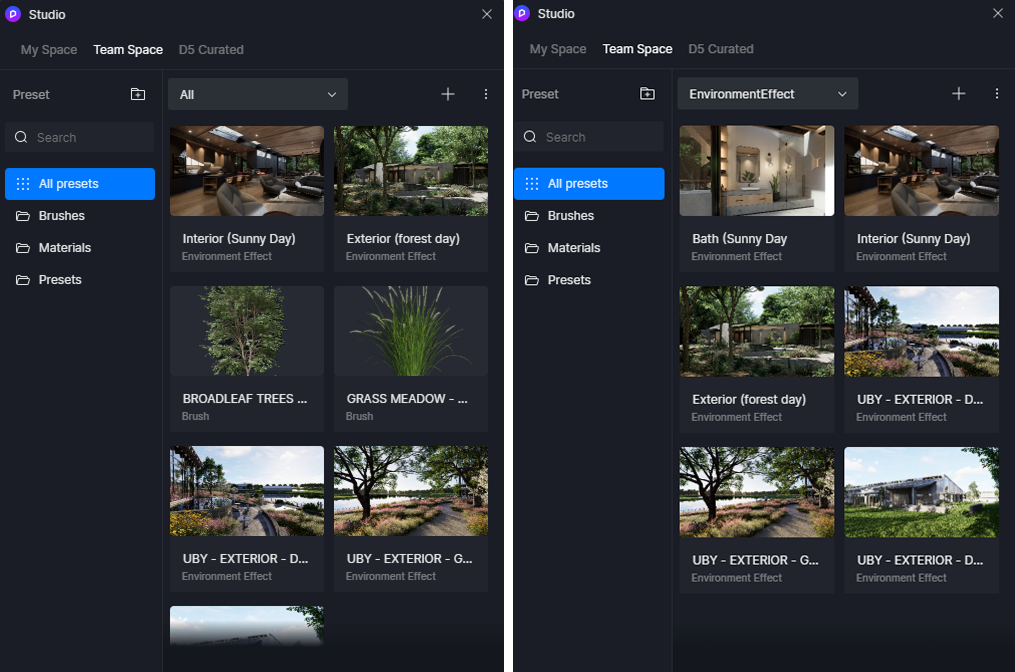
This is especially useful for a firm that blends disciplines. “Our interiors and architecture share the same story,” explains Marketing Director Lucas Staib. “Because everyone’s pulling from the same D5 library, the site, structure, and interiors all speak the same language.”
Easy Adoption for a Multidisciplinary Team
For a studio used to Revit and BIM workflows, adapting to D5 Teams was intuitive. The setup required minimal tech support—just some initial server configuration—and the rest felt natural. Layer management, syncing, and versioning were already part of their design DNA.
“It didn’t change who we are,” says Stoian. “If anything, it reinforced our collaborative culture. D5 just made it visible.”
Also read: D5 Studio: Streamline Design Workflows & Boost Collaboration
5. From Collaboration to ROI
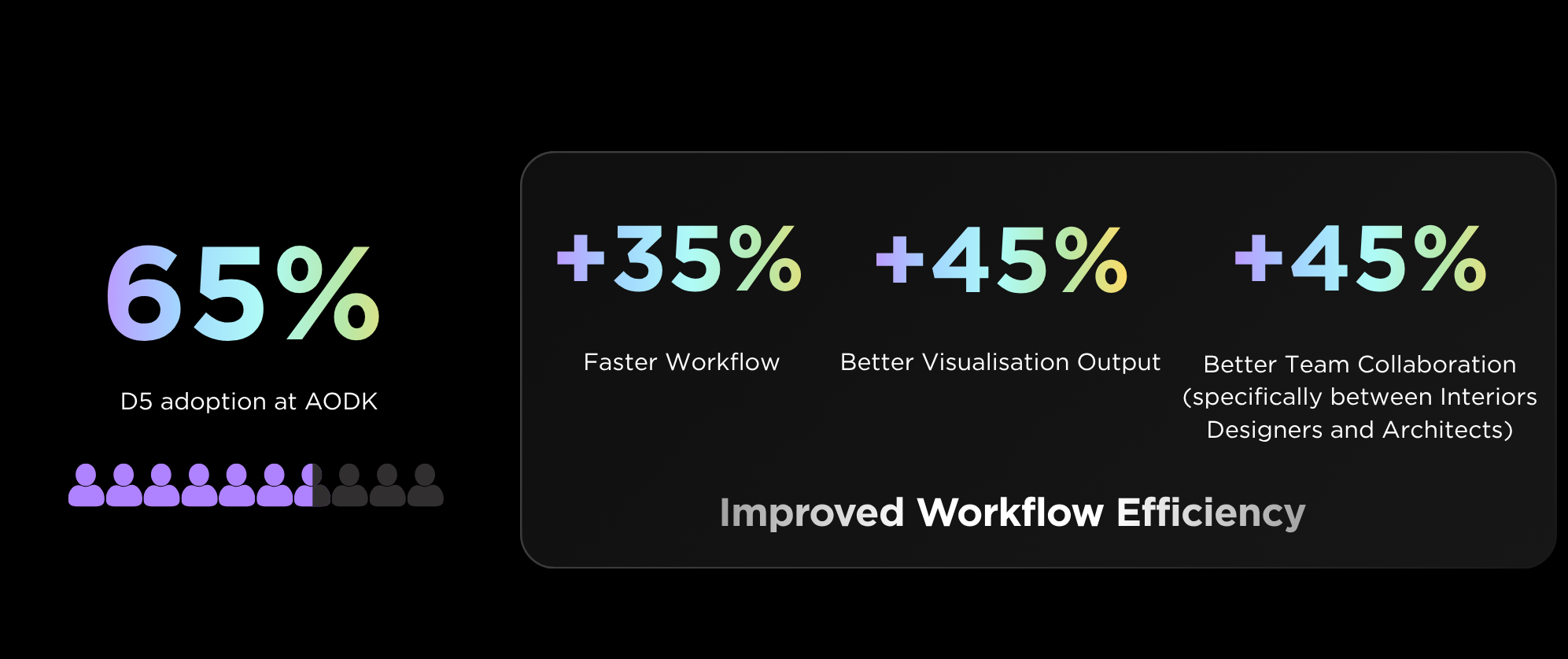
The impact of D5 Teams goes beyond visuals—it reshaped how AODK delivers projects.
Faster communication. Clients understand concepts earlier through immersive, real-time walkthroughs. Meetings that once required multiple revisions now produce actionable approvals in a single session.
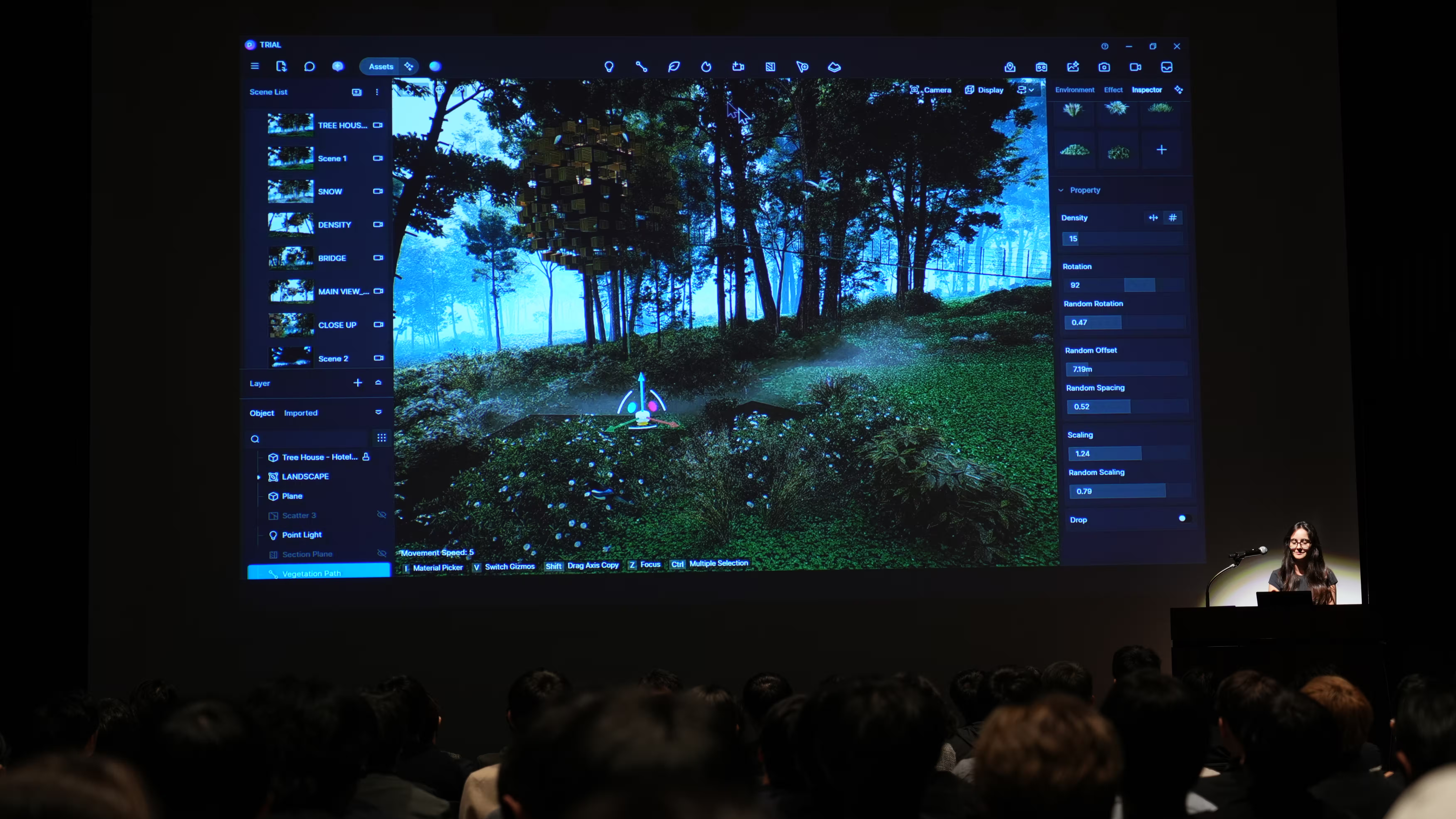
Agile iteration. Live SketchUp sync and editable scatter tools allow the team to test options on the fly—height, massing, materials, or lighting—without exporting or re-rendering.
Resource efficiency. With shared projects and libraries, the firm’s 10–12 active D5 users collaborate seamlessly, maximizing license usage and minimizing idle seats.
Business value. Each project moves faster, saving both studio and client time. The same models often double as marketing content—a direct byproduct of the real-time workflow.
Being able to make changes live during the meeting is insanely effective—time saved is money saved,
6. Lessons for Other Firms
Adopt early, grow with it. D5 evolves rapidly, and early users benefit from shaping its roadmap and mastering its updates ahead of the curve.
Don’t silo visualization. When renderers are embedded in design, not outsourced to the end, creativity expands. The conversation becomes visual, and clients stay engaged.
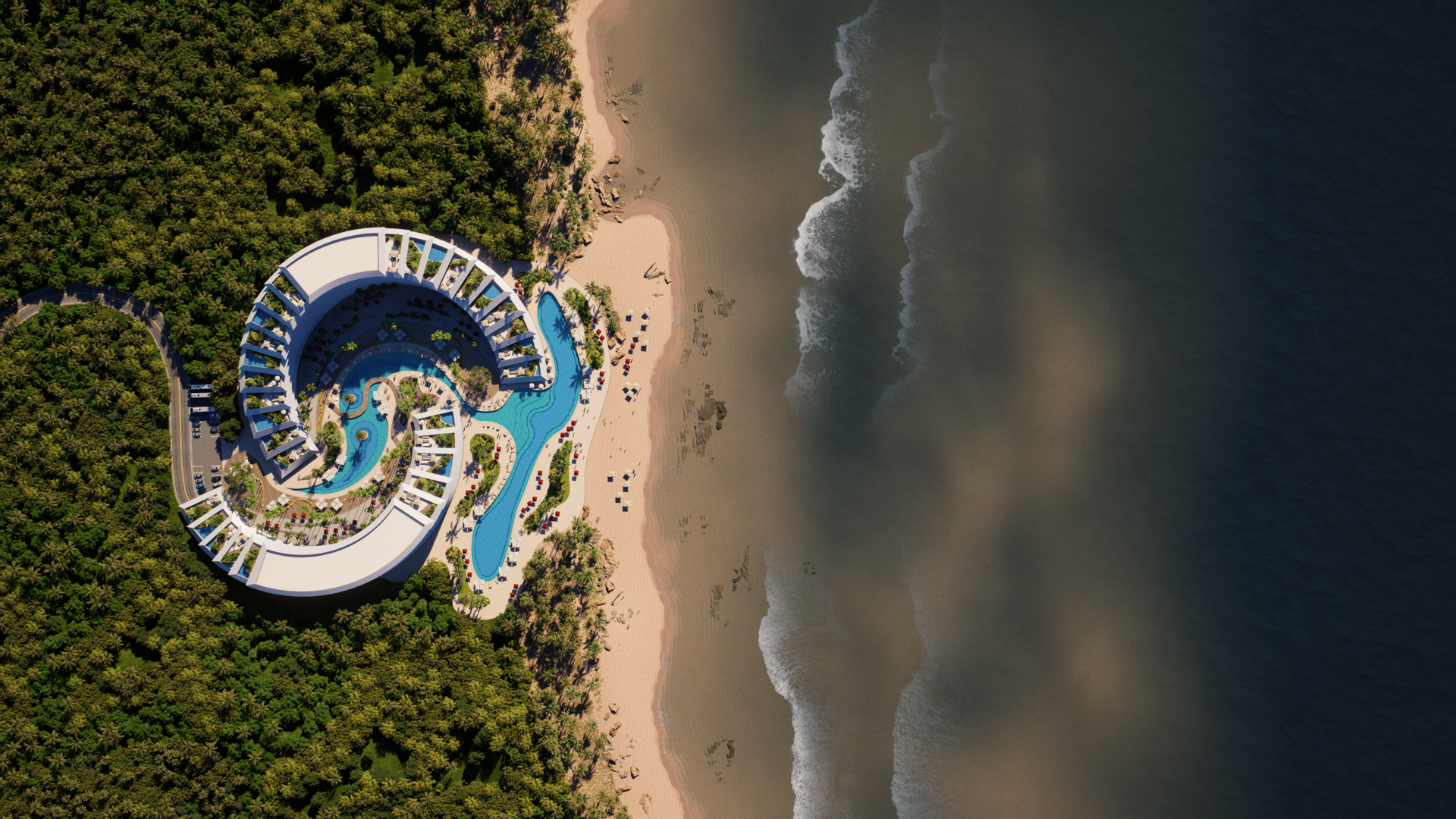
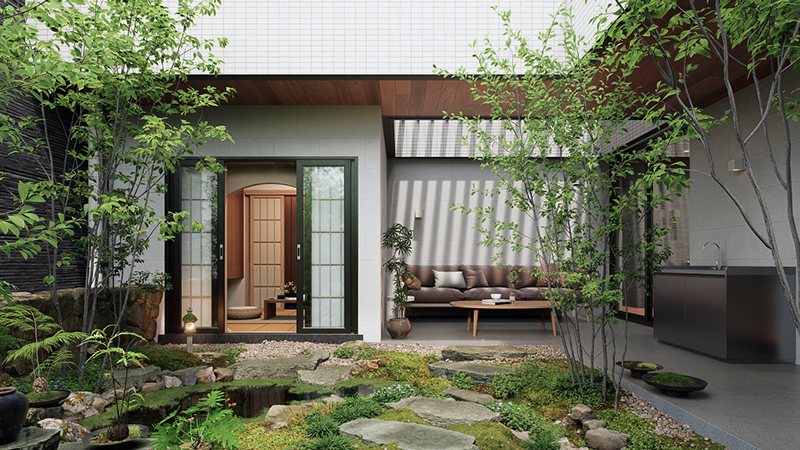
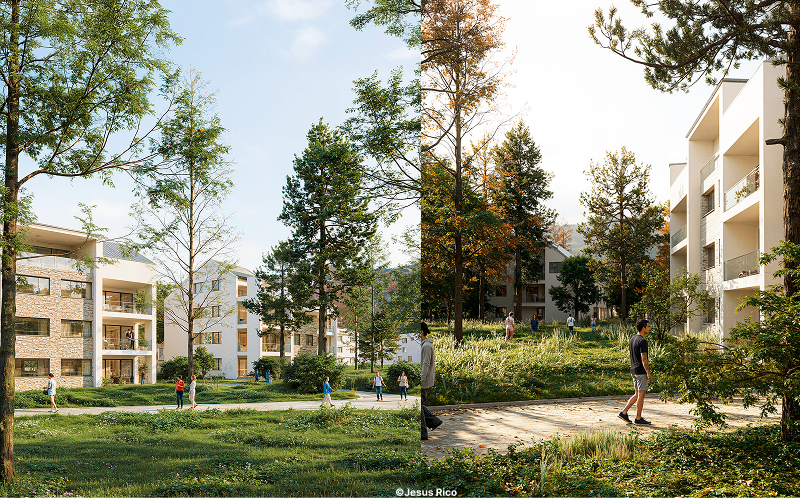
Experiment beyond interiors. AODK once used D5 mainly for interiors. After Ravine House, they realized its power for exteriors and landscapes too—eventually replacing Lumion entirely.
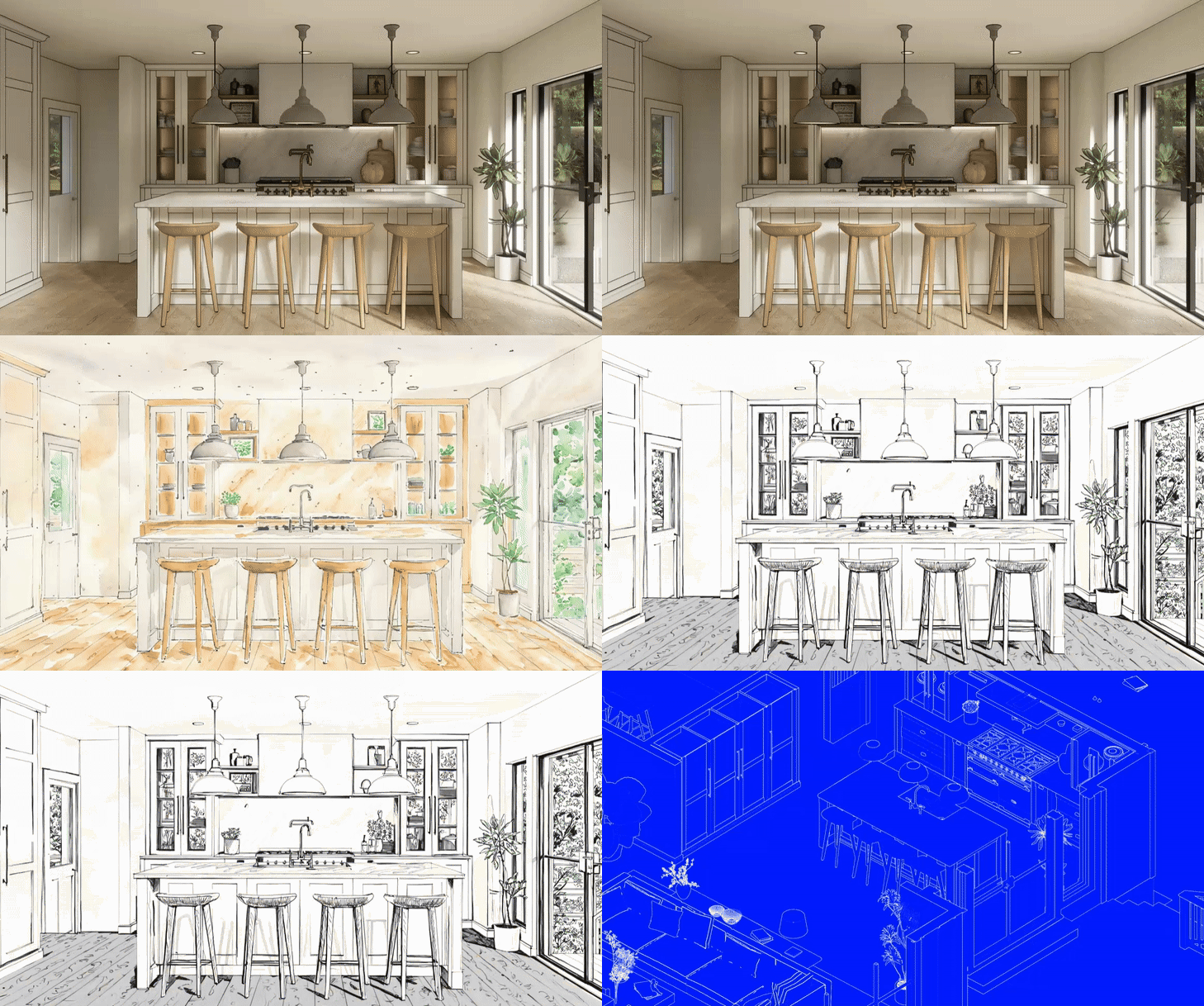
Let AI serve humanity. For AODK, D5’s AI tools—upscaling, sketch styles, auto-lighting—don’t replace creativity. They amplify it. “In an AI-driven world,” Stoian says, “the goal is to design more humanely, not less.”
7. A New Way to Design Together
At AODK, architecture is never a one-person act—it’s a living collaboration. And D5 for Teams has become the medium that captures that spirit in real time.
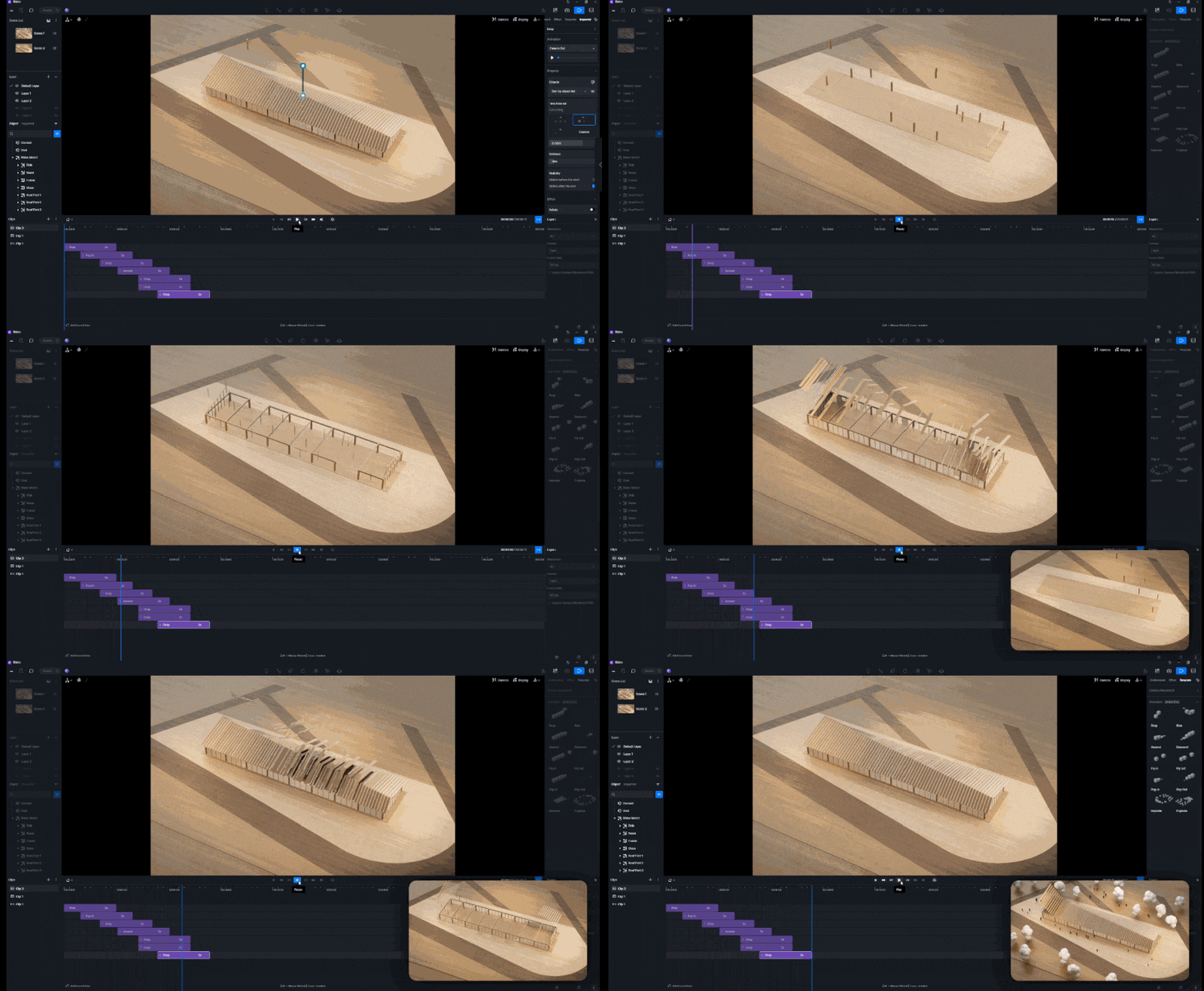
D5 has re-inspired AODK to use more and more experiential 3D videos as part of our schematic / concept presentations!
What used to take days of coordination now unfolds in a single shared environment, where design, storytelling, and technology move as one.


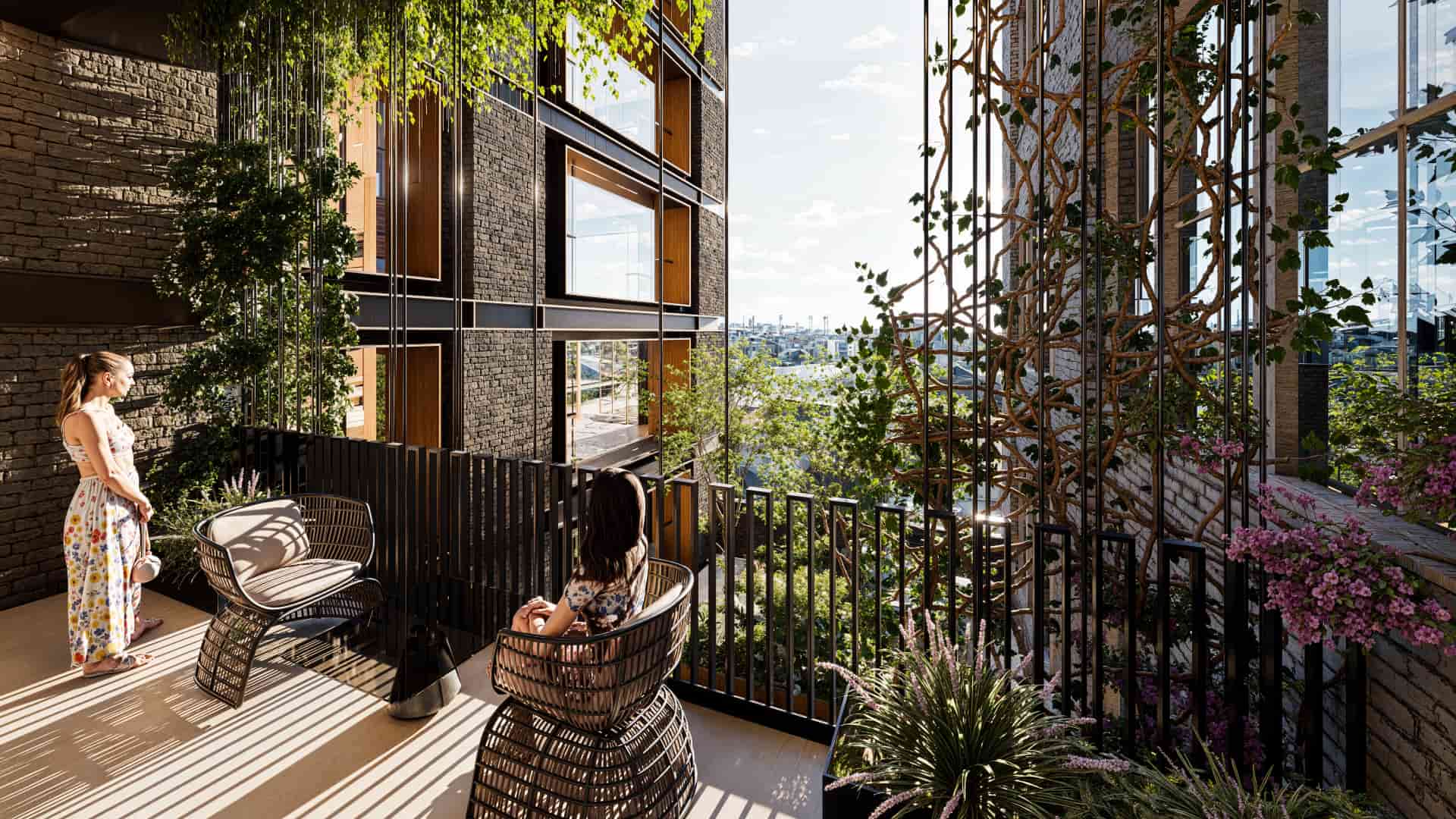

.png)
.png)



.jpg)


.png)
1%20(2).png)


%20(1).png)
.png)
.png)