
Across architectural education, the gap between learning and practice remains difficult to bridge. Students are expected to demonstrate professional capability early, often without the opportunity to build it in conventional ways.
In response, alternative routes into practice are emerging—driven not by formal employment, but by the ability to communicate design convincingly.
One of the most visible of these routes is architectural visualisation.
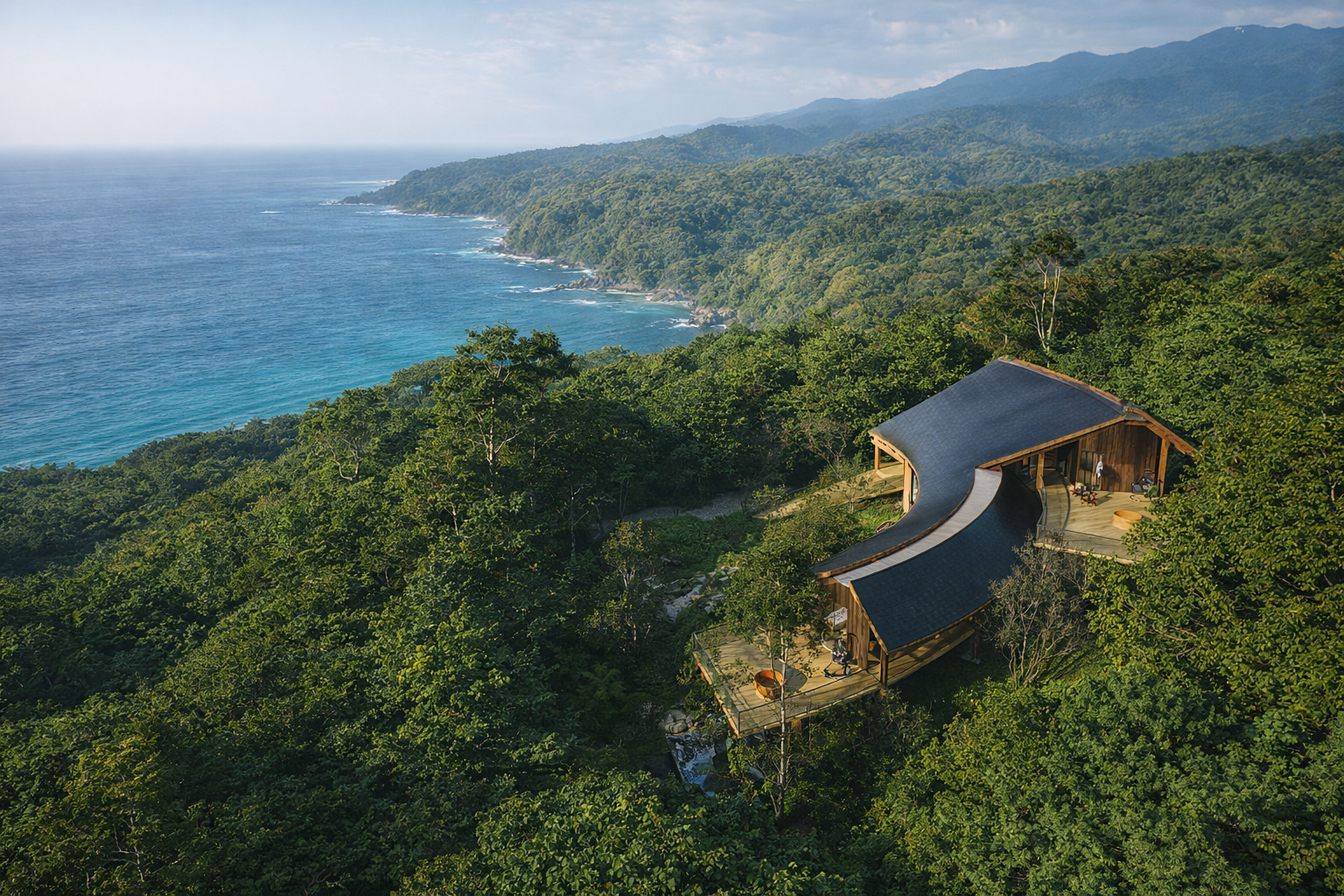
A proposal for a hospitality development in Yakushima, Japan shows two residences set in a semicircular plan facing a lake. Light is diffused through mist, vegetation is dense and humid, and private onsens anchor the architecture to water and landscape.
The project is unbuilt. It exists entirely as visualisation.
Yet the images are read as real—spatially grounded and atmospherically precise, often mistaken for photographs.
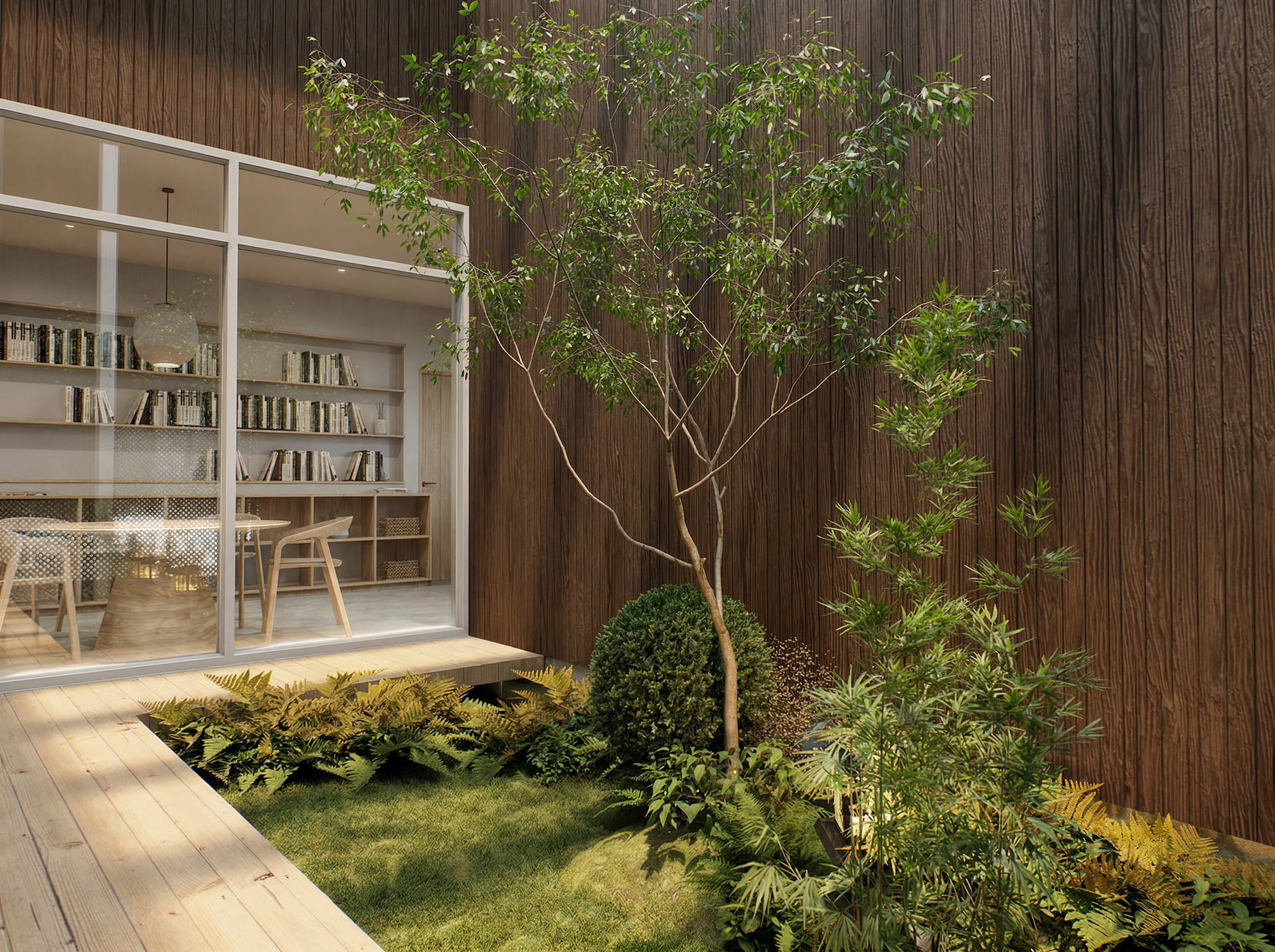
A second project, developed for the HIKARI Design Competition 2026, shifts from context to concept. Responding to the theme “architecture with heart,” it centres on the nakaniwa as a spatial and social core, using light, shadow and material transitions to communicate not just form, but intent and occupation.
Together, these projects illustrate a broader shift: visualisation is no longer only representational. It is evaluative, communicative and increasingly professional.
Project Context

The projects described above were visualised by an architecture and urbanism student at Universidade Federal da Paraíba, in collaboration with the respective design authors. The visualiser is Isadora Helena Nogueira, a D5 Campus Ambassador. Alongside her academic work—spanning teaching assistantships, research and outreach—she has developed a parallel practice in architectural visualisation.
Key Takeaways
- Visuals are proof, not just presentation: High-quality images help students build credibility and gain client trust, even without extensive experience.
- Real-time workflows change how design happens: Continuous iteration allows lighting, materials and atmosphere to be tested alongside modelling—shifting visualisation into the design process.
- Visualisation creates new entry paths into practice: Students can build portfolios, win clients and compete with studios through strong visual output, not just traditional career routes.
A parallel route to practice
For the author of these images, the shift is not theoretical.
Her work in visualisation began informally—producing images for classmates while exploring how projects could be communicated more clearly. What began as experimentation circulated through peer networks, evolving into paid work and eventually a primary source of income.
A turning point came through her involvement in the D5 Campus Ambassador Program. Studying the tool in order to teach it, producing content and exchanging workflows with peers shifted her practice from individual use to shared knowledge.
This dual role—producing and teaching—accelerated both learning and visibility.
In parallel, it introduced a more professional discipline: explaining process, structuring work and communicating clearly. In freelance terms, these signals—consistency, clarity and visibility—became as important as the images themselves.

Images as a proxy for competence
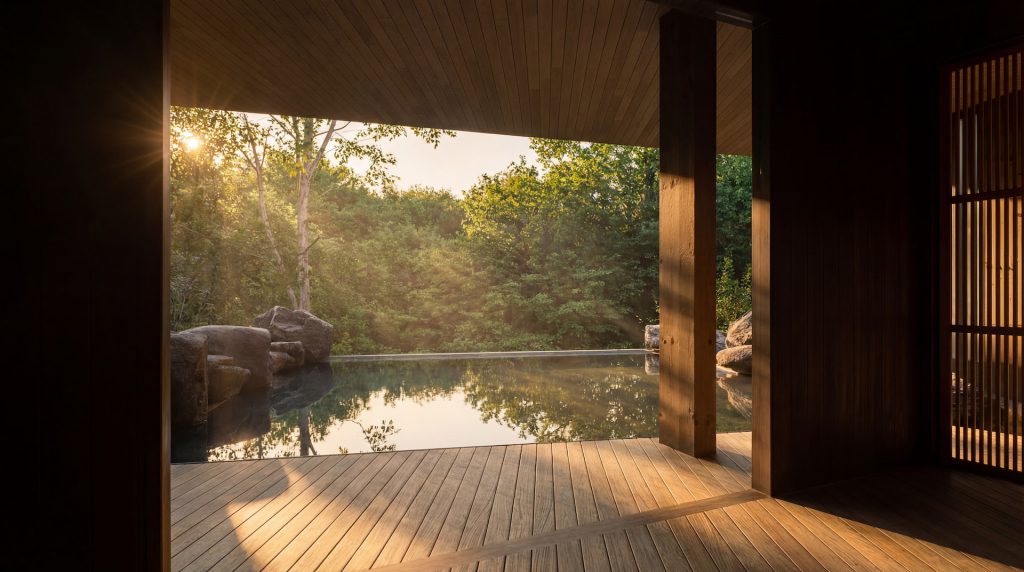
In early-stage practice, the ability to communicate intent is often as significant as the intent itself.
Clients tend not to engage deeply with technical drawings. Instead, they respond to representations that approximate the built outcome.
Most of the time, clients cannot technically assess plans or sections, but they do understand images.
In this context, visualisation becomes a form of validation. Perceived competence is closely tied to the quality of representation.
From sequential to continuous workflows
When rendering takes too long, you stop experimenting.
A conventional pipeline—modelling, rendering, post-production—is largely sequential, with each revision carrying a time cost that limits alternatives.
Real-time tools such as D5 Render reconfigure this process. Work becomes iterative and continuous, allowing lighting, materials and environmental conditions to be tested alongside modelling, rather than after it.

In practice, this involves adjusting HDRI lighting, atmosphere, weather effects such as fog or rain, and vegetation through scattering systems—building spatial coherence directly within the scene instead of relying on layered post-production. Water, reflections and camera settings can be calibrated in parallel, enabling rapid comparison between variations.
AI tools operate alongside this workflow as a supplementary layer—introducing variation or human presence without reconstructing scenes—while real-time rendering maintains control over spatial and material logic.
The result is not simply faster output, but a shift in how design decisions are made: iteration becomes continuous, and visualisation moves upstream into the design process itself.
Also read: How to Render Realistic Ocean Waves with D5 Render in 5 Minutes
Perception and parity
The impact becomes visible at the point of client interaction.
High-quality visualisation allows projects to be understood quickly, often collapsing distinctions between student work and professional output.
In some cases, renders are mistaken for photographs.
They asked where the project was located, but it was just a render.
For freelancers, this creates a form of parity. Visual quality allows early-career practitioners to operate within the same visual register as established studios.
Changing entry conditions
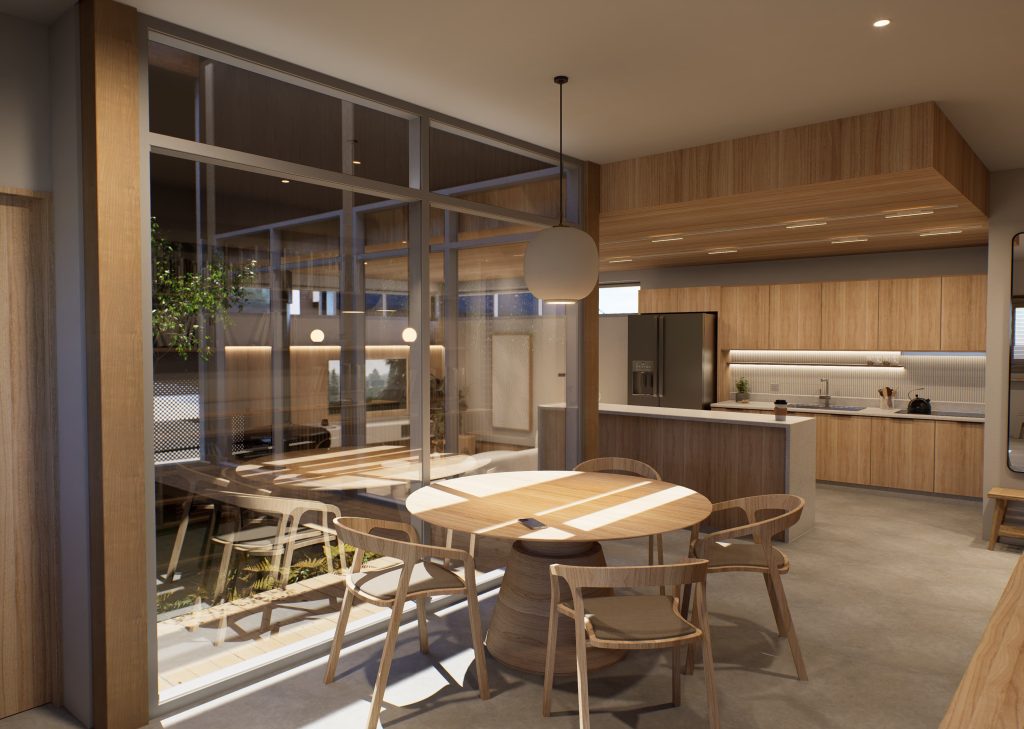
What emerges is not a redefinition of architectural practice, but a shift in how it is accessed.
Visualisation provides an alternative entry point—enabling students to engage with real projects, build client relationships and develop a body of work independently.
Rather than a final stage, representation becomes part of how design is evaluated, communicated and commissioned.
Conclusion
For early-career practitioners, the challenge is no longer only how to gain experience, but how to demonstrate capability.
In this context, real-time visualisation operates less as a production tool and more as an instrument of access.
It does not replace expertise—but it accelerates how quickly that expertise can be recognised.

 English
 Español
 Français
 한국어
한국어 日本語
日本語